
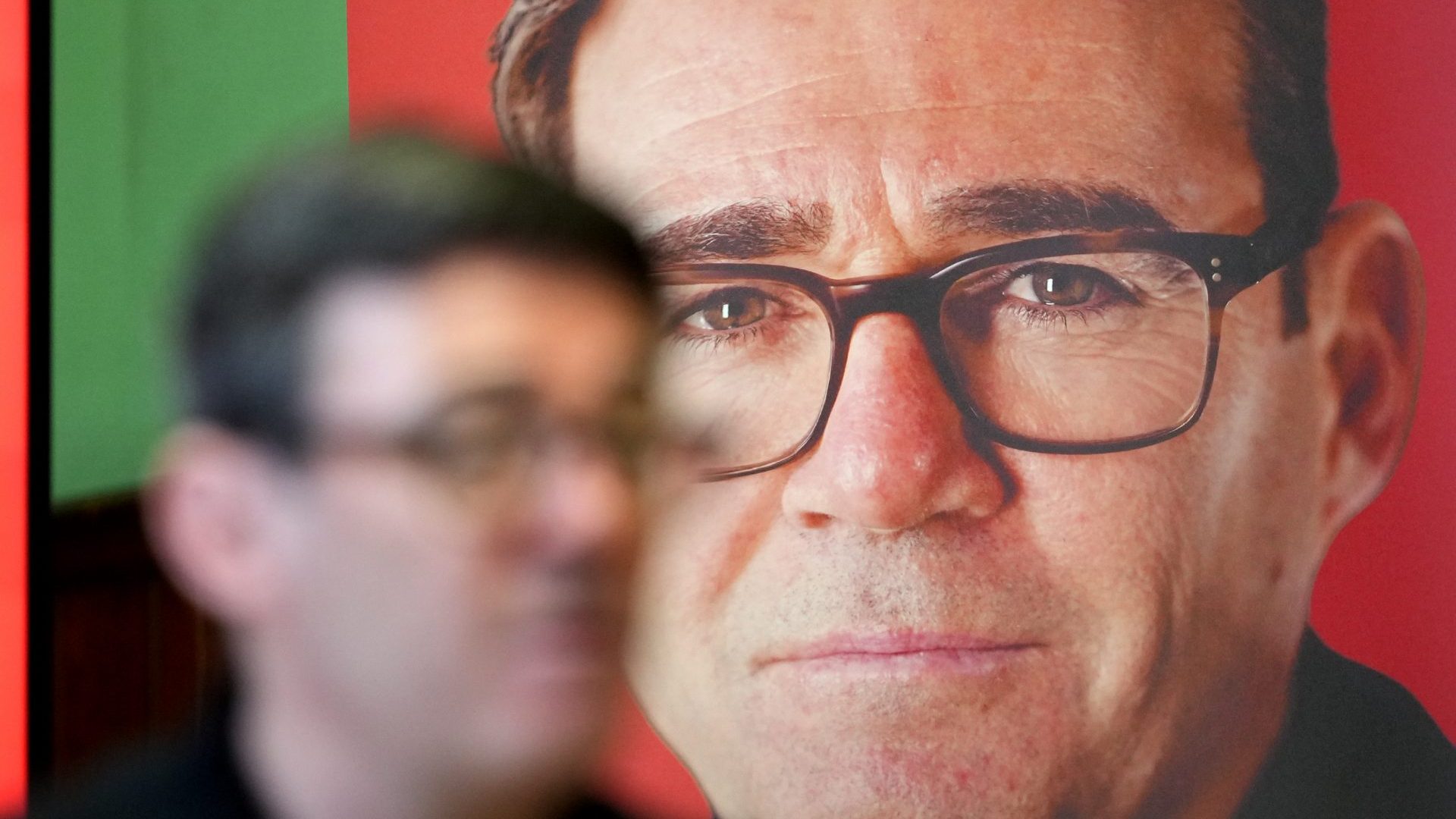
Andy Burnham has spent most of 2026 being simultaneously the strongest potential challenger to Keir Starmer, and also a non-entity in the race. His popularity with the public is better than anyone else’s in Labour, he is popular in the party, and as Manchester mayor he is a clean pair of hands who hasn’t been part of Keir Starmer’s government.
But that last strength has also been his fatal weakness: by law, metro mayors cannot also be members of parliament, but the Labour Party rulebook requires the party’s leader to be an MP.
To challenge for the leadership, then, Burnham needed to quit the mayoralty and return to parliament – and to do that, he needed both a vacant parliamentary seat, and special permission from Labour’s governing National Executive Committee to stand in it. Burnham had tried to secure this to stand in Gorton and Denton, but was blocked by the Starmer-controlled committee.
Without a seat and special permission, Burnham had no viable path to challenge Keir Starmer, and despite relentless efforts, neither had materialised – until Thursday evening.
Suggested Reading

How PM Andy Burnham could change British politics forever
In a dramatic twist worthy of Shakespeare, Josh Simons – a one-time ultra-loyalist to the Starmer project, and Morgan McSweeney’s successor at the Labour Together think tank – announced at 6pm that he would be willing to quit his Makerfield seat to allow Burnham to run for parliament. Just minutes later, Burnham confirmed he would try to do just that.
Makerfield is a much more difficult seat for any Labour candidate to win than Gorton and Denton. Labour had a majority of 13,400 in Gorton and Denton, with Reform in second place. In 2026, the seat was a three-way challenge with the Greens.
Labour’s majority in Makerfield is just 5,500, with Reform in second again, and the seat would be much more likely to be a two-way contest. Makerfield voted strongly to leave in the 2016 referendum, and has a smaller existing vote to Labour’s left.
Burnham, who has positioned himself to Starmer’s left on economic and social issues, is not a natural fit for the seat. To win the by-election, Burnham would usually wish to shift to the right, but doing so might alienate Labour members whose votes he would need soon afterwards to win a leadership contest. More immediately, doing so might alienate Green or Lib Dem voters who Burnham would be hoping might lend him their vote so as to see off Reform.
By making a play for Makerfield, Andy Burnham is taking a substantial gamble. The seat is neither an easy win nor a natural fit for him – but it is a major Labour-Reform battleground. If Andy Burnham ran in Makerfield and won, he would enter parliament substantially strengthened.
Suggested Reading

How to beat Farage
He would have shown that not only could he win back some votes from the Greens, but that he could beat Reform in the red wall. If he loses, his leadership ambitions are over, this time forever. Burnham has decided to take that bet. The question now is whether Keir Starmer will do the same.
The last time Andy Burnham tried to stand as an MP, Starmer blocked him. Officially, this was to avoid an expensive and risky by-election for the Manchester mayoralty. In reality, Starmer had little reason to allow Burnham to run for parliament just so that he could try to take Starmer’s own job.
This time, the calculus was different. If Starmer tried to block Burnham a second time, he might fail – his grip on the NEC has weakened in the wake of the election results. Even if he succeeded, Starmer would surely then face a challenge from an alternative candidate.
The game has changed, and No 10 knows it – journalists have been briefed that there will be no attempt to block Burnham’s candidacy this time. The prime minister might have decided that his best option is to let Burnham stand for parliament, and hope that he fails.
Politics is in a strange place when the prime minister would rather lose a by-election than win it. But the oddities don’t stop there: the Greens have a series of tough choices facing them, too.
Would they rather compete with a Starmer-led Labour, or a Burnham-led one? Is Burnham getting elected as an MP an opportunity for them to take the Manchester mayoralty themselves? Could they secure a price for not competing in Makerfield: might Burnham, already publicly in favour of PR, promise to introduce voting reform in exchange for a clear run at the seat?
Suggested Reading

It’s not about a new leader. It’s about a new story
Backbenchers have spent much of the last two years infuriated by Keir Starmer’s timidity and his apparent unwillingness to make big swings or bold decisions. For much of the last week, Starmer’s would-be rivals have seemed to be afflicted by the same condition – sitting on the fence, waiting for others to act.
That accusation can no longer be levelled at Burnham. Running for selection in Makerfield is a bold move: it is not an easy seat to win, nor is it perfectly suited for him. Starmer is not even attempting to block Burnham this time: he will win or lose it on his own terms. If he loses, he has no one else to blame – this plan was his. Winning the seat, though, would return Burnham to parliament as the conquering hero, set to take the leadership.
A week of paralysis has followed one of Labour’s worst-ever election results. Now, finally, something is happening.
 Most popular

Churchill, the Beatles, St George: All the English heroes who aren’t actually English

The New World at 500: Independence isn’t our marketing slogan. It’s our business model

The problem is they just don’t care about us any more
Sorry Nigel, but the polls show you’ve had it