On one level, Reform is telling the truth when its leading figures say that the bombshell undercover footage aired by Channel 4 News on the eve of its party conference changed nothing – just probably not in the way that they intended.
The footage, apparently showing Nigel Farage and two of his closest aides discussing unlawful donations with a prospective overseas donor, meant that Reform faced an uphill struggle to regain the narrative with their conference.
But the reality is that they faced a struggle already: when Reform assembled for their party conference in 2025, they were ten points ahead in the polls, facing off against a historically unpopular prime minister, and were dominating the national news agenda.
This year, they had already sunk to second place in the polls, while Farage himself has faced months of interlinked scandals relating to his acceptance of a £5m gift from one major Reform donor, and tens of thousands of pounds’ worth of freebies and benefits-in-kind from a convicted criminal.
His attempts to change the narrative with a by-election had failed spectacularly, and Reform was even facing a new challenge from its right flank, in the form of Restore Britain. After the departure of Keir Starmer and Rachel Reeves from frontline politics, Nigel Farage is now the least popular politician in the UK. So, on that level, Channel 4 News’s footage didn’t change the fundamentals – because they already needed this conference to deliver for them in a big way.
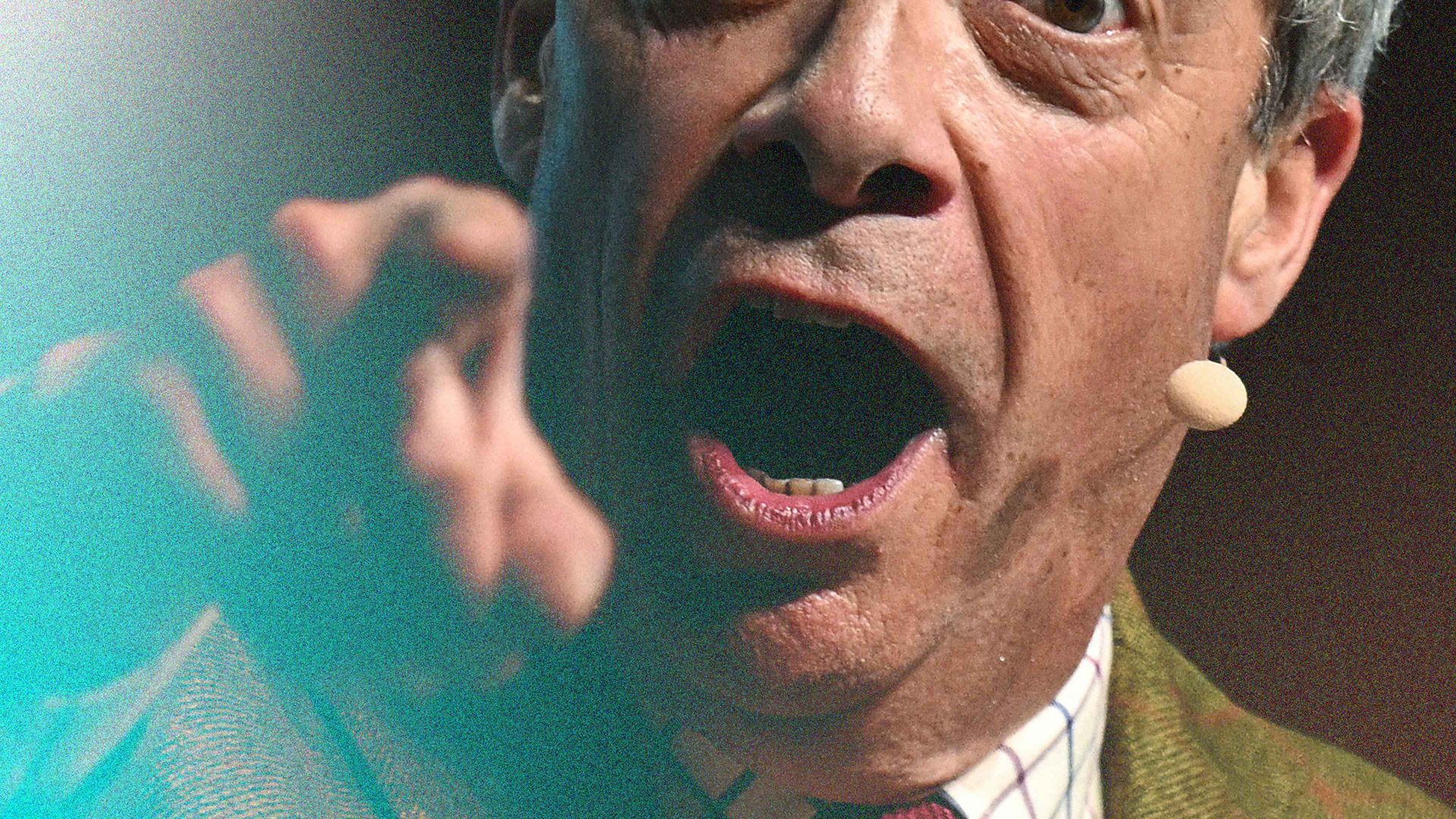
All of this contributed to a somewhat manic energy to the two days of proceedings, as Farage and those around him tried simultaneously to project that they were happy, upbeat, and unruffled by the relentless scandals of their own making. But this could only go so far in hiding their obvious irritation.
Often, as a Reform politician gave his speech, or a cosy fireside chat with Jeremy Kyle – who hosted sessions in the breaks – it felt like a dinner party performance from someone who had temporarily paused a furious row with their spouse, for just so long as they were in public.
This seeped into fury at the media, at the state of the nation, and inevitably at the very idea of immigrants – with Matt Goodwin in particular relying on the worst kind of race-baiting tropes that just a few years ago would have been relegated to the extreme far-right. For the crowd, it even spilled over into what footage suggested was a mass assault against a peaceful protestor who had shouted out during Farage’s speech.
As the young woman was hit, had her hair pulled, and was otherwise molested by the crowd, Farage – who claims his is the party of law, order, and good old British decency – laughed and joked along. Later in the weekend, Jenrick shrugged off the potential crimes with a withering “oh, boo hoo”, on Sky News. West Midlands Police, meanwhile, have asked the woman in the footage to identify herself so they can assess if any offences were committed against her.
Reform’s attempt to win back the agenda relied upon a gimmick that was supposed to make them look prepared for government. The theme of the conference was “the first 100 days”, and each of the party’s so-called shadow ministers was required to come up with an eye-catching pledge that they promised to deliver in the first 100 days, or else they would resign or be sacked.
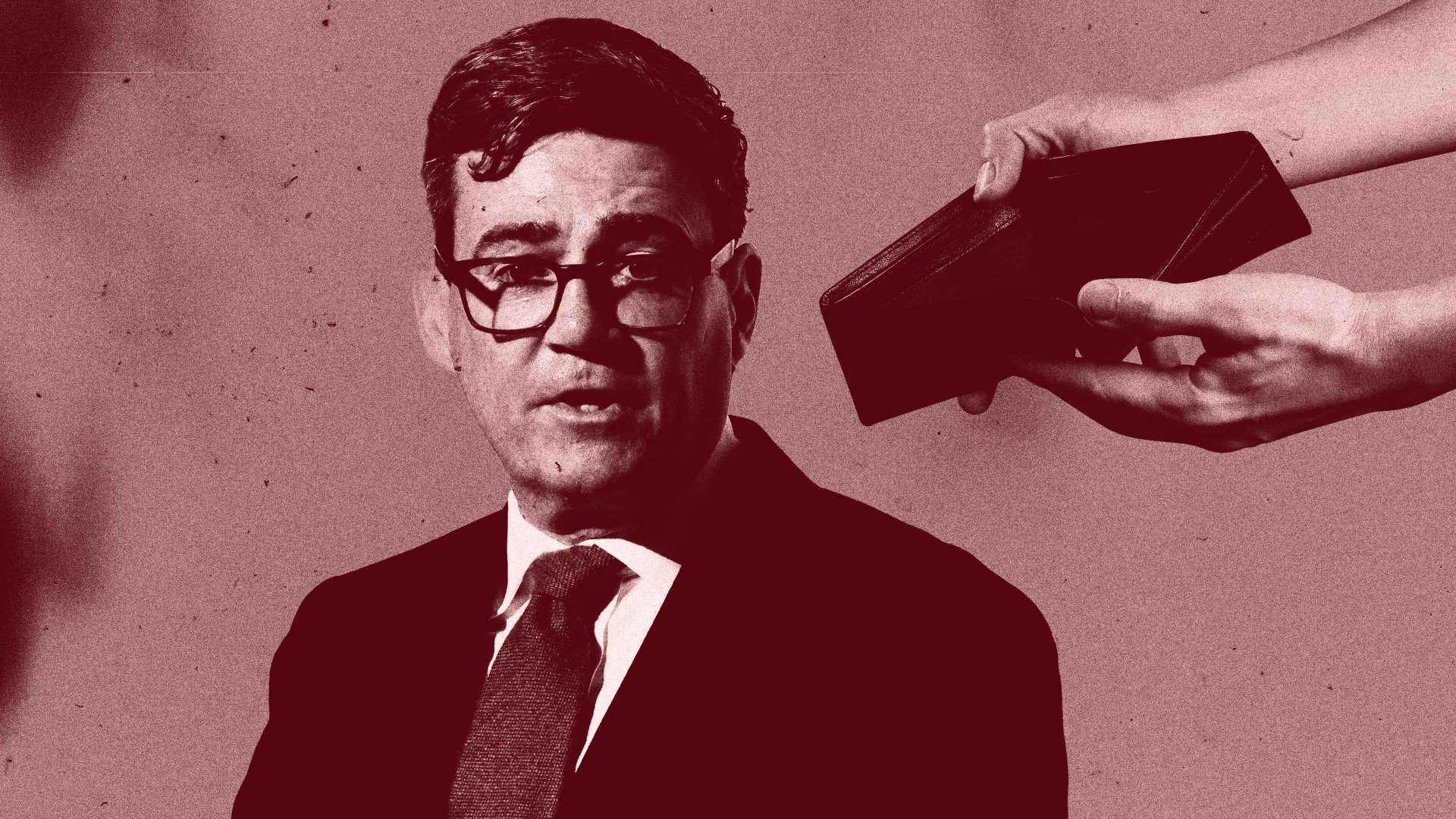
Farage was setting this up as a deliberate contrast to Andy Burnham’s claim that he would need a decade in power to tackle the serious challenges facing Britain – which is what you say when you are in government, and need to manage the public’s expectations. Real change is difficult, and takes time to be noticed in a country of 70 million people.
Last year, Reform UK seemed to be aware of that, as if it was taking the possibility of government seriously. Its 2024 manifesto had included numerous costly promises, such as raising the tax-free personal allowance to £20,000 per person – which would cost £41bn in the first year alone. Ditching grand claims of huge results overnight was Reform’s way of saying it was serious.
This year, the grand claims were back. Robert Jenrick promised that within his first 100 days, he would raise the personal allowance to… £15,000, with an “aspiration” of hitting £20,000 over the course of the parliament. Just raising the allowance to £15,000 would cost almost £100bn over the course of a parliament – which Jenrick promised would be paid for by cutting £80 billion of “waste”.
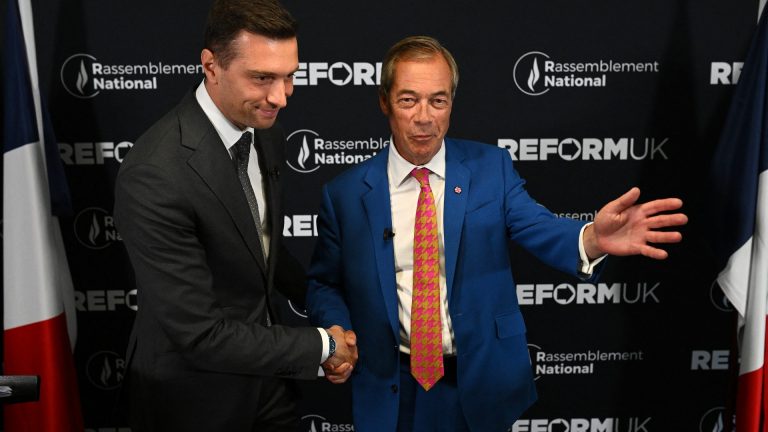
Zia Yusuf’s big reveal was a new “Entente Cordiale” signed with Jordan Bardella, National Rally’s candidate for prime minister of France, should Marine Le Pen win the presidency. Farage and Bardella wielded a huge agreement – like a novelty cheque – on stage.
Farage claimed the agreement would guarantee France would accept any refugees stopped by the Royal Navy while crossing the Channel. In reality, the agreement has no legal force, and even then only states that France would “ordinarily” accept such returns. Using the Royal Navy in such a way would require significant legal overhauls, which would normally take far longer than 100 days. And Bardella’s agreement had already drawn blowback in France among National Rally’s supporters, who don’t want to see France suddenly accepting refugees.
It is almost as if these plans were not fully worked out or thought through. Suella Braverman offered three separate pledges – that she would remove the cap on university places for doctors, would fully fund the training of more nurses, and she would identify and scrap the worst “Mickey Mouse” degrees, all within 100 days.
Suggested Reading

Farage and the dodgy donations – is this the final straw?
Reform’s promises might look flashy to its true believers – but to the floating voters it needs to win over, they risk looking impossible, a return to the days of Farage leading fringe parties making promises they know they will never need to keep. Is Reform a protest vote, or a serious party of government?
That confusion abounded. Matt Goodwin used his keynote to attack Diversity, Equity and Inclusion programmes, to call Afghans in the UK – many of whom were granted asylum because of their support for British soldiers – “drug dealing goat herders”. But he also used it to attack “globalists” for being obsessed with GDP growth, instead of viewing “these islands” as their “homeland”. Less than half an hour later, deputy leader Richard Tice attacked the Conservatives and Labour for failing to deliver enough GDP growth.
Speaker after speaker railed against the uniparty, and the last Conservative government for “utterly failing the British people”. But almost all of the speakers had played some role in that government. Robert Jenrick was its immigration minister (and then communities secretary), and Suella Braverman the home secretary, in the Conservative government that delivered the “Boriswave” Reform now denounced.
Lee Anderson, now Reform chair, was the Conservative Party’s deputy chairman. Reform Scotland leader Malcolm Offord was a junior Lords minister under Boris Johnson and Rishi Sunak. Even Leila Cunningham, Reform’s candidate for London mayor, first stood as a Conservative candidate. The Conservatives ruined the country, says Reform’s pitch, so please vote for them in a slightly paler shade of blue.
Nowhere was the confusion more evident, though, than in Reform’s response to the undercover sting, carried out by the not-for-profit newsroom Verbatim. The whole thing was “entrapment”, Reform insisted, but the footage didn’t show anything wrong – no rules were broken, and no donations were received. Farage, Jenrick, and any other Reform official put in front of a camera said they were confident Reform had broken no rules.
Instead, some “contractors” – actually Farage’s closest longtime aide Dan Jukes, and its head of policy, the Cambridge don James Orr – had engaged in “loose pub talk”. Because of that “pub talk”, they had agreed to “step aside”, pending an internal investigation. Lee Anderson quickly said that this was “permanent”, even though he also said they deserved “due process”. Later, it was suggested that they would “not be coming back”.
So, depending on which version of the narrative you believe, the free speech, anti-woke party has either suspended or sacked two of its most senior staff for some “loose pub talk”, with no breaches of party finance laws.
Nigel Farage himself initially tried to claim he had thought the undercover reporters were eligible donors – until, perhaps after rewatching the footage that directly contradicted this – settling on the new line that he simply hadn’t been listening when he was clearly told otherwise. Vote for me, says Nigel Farage, because I can’t follow a simple conversation about what is or isn’t legal.
Reform’s flailing PR lines are unlikely to matter for long. While the £500,000 donation floated by the undercover journalists was never going to materialise, they did fund £32,500 of polling, which appeared in the Times and Telegraph without proper attribution.
The British Polling Council has already said this is a breach of their rules, and police and electoral authorities will inevitably investigate further – as donations-in-kind are still treated as donations. Reform has yet another funding scandal to add to its pile, and Farage is once again right in the middle of it.
It is, then, no wonder that simmering anger was so obviously just below the surface throughout the Reform conference. They are no longer on top, they are not winning as they feel they should be, they aren’t getting what they evidently feel entitled to.
Suggested Reading

Nigel Farage’s French stunt double turns up at Reform conference
Matt Goodwin railed against the voting system, which must surely be to blame for his coming a distant second in Gorton and Denton, claiming Nigel Farage had told him: “Matt, we will not save our country unless we first fix our democracy.”
Farage himself said Reform needed to restore “trust in the entirety of the voting system”, and to respond to “a highly coordinated campaign of attacks”. More than that, though, Farage had big promises of his own to make about Reform’s first 100 days – perhaps tacitly acknowledging that getting any of his promises done would rely upon breaking treaty obligations, forcing through new laws faster than parliament can manage it, and leaving the European Convention on Human Rights.
“We will declare a national emergency,” he promised. “All recess of Parliament will be cancelled. Parliament will sit, if necessary, for 24 hours a day.”
This should be alarming. It is alarming. A party promising “the largest mass deportation operation in modern history” is threatening to declare some form of national emergency – and potentially scrap half of parliament – to force through its agenda.
But even as Reform demands to be taken seriously, it shows up how ridiculous it is. The party that supposedly loves Britain is promising to demolish almost every pillar of its unwritten constitution within its first 100 days.
Nigel Farage, who barely bothers to show up to parliament, is claiming he’ll make it sit “24 hours a day”. A party that cannot work out how to follow electoral law is claiming it could change the course of a nation. Perhaps Reform’s conference was a success, after all – Farage wanted to show the country who he really is. Mission accomplished.