

When Lucy Smith’s daughter Owen stopped going to school, it was an inevitable point that had taken years to reach. The family had tried every tactic to try to keep her in the classroom, but it had become untenable.
Owen suffered from depression from a young age. She was diagnosed with autism when she was 11, while still in primary school. The transition to secondary proved a crisis point.
“It was difficult as a family. She was suicidal most days and getting into school was incredibly distressing,” says Lucy. “There were days when she could be curled up in the footwell of the car outside the school and we’d end up just turning around.”
With both parents working full-time, Lucy called on her mother and stepfather to help support her at home, but she was eventually forced to give up her job and take on other forms of work, to focus on looking after her struggling child. At home, Owen became increasingly isolated. She became selectively mute and agoraphobic, refusing to leave the house. She began spending more and more time in her bedroom.
Her parents were desperately worried, but also powerless. All Owen’s personal milestones and her progress towards independence were put on hold.
“It’s frustrating and demoralising and incredibly stressful trying to maintain any form of normality,” Lucy says. “You don’t talk to people about it because you feel shame and sadness. You throw all your values out of the window, and you have to reevaluate everything about your life. Frankly, I just wanted my daughter to survive.”
Now aged 19, studying and working in a part-time job with a university place awaiting her in the autumn, Owen’s experience is happily in her past. But her story is not an outlier. In the UK there are now more 1.5 million children who are “persistently absent” from school and around 150,000 missing out on a formal education altogether.
Children in England registered as electively home educated numbered 126,000 last year, up from just 81,000 in 2021. Another 34,700 are “missing education” altogether. They are neither in school nor in some form of alternative provision.
Research suggests that school refusal due to psychological distress is on the rise. A study carried out by the youth charity Stem4 in 2023 found that more than a quarter (28%) of 12-18 year‑olds in the UK missed school due to anxiety in the past year. A larger survey of those specifically with long-term school attendance difficulties revealed that 94.3% of cases were underpinned by emotional distress and 92% were neurodivergent.
It’s easier than ever for parents to become a good educator, if required. Most home-educated children are involved in group study, meet-ups, online tutoring and a range of other resources. However, a growing proportion of children at home are becoming “shut-in” children, who have become so anxious they are rarely leaving home.
This is a global phenomenon. In Japan, where an estimated one million young people now live out their entire lives in a single room, it even has a name: hikikomori, meaning “pulling inward”. A 2026 review of research taking in 19 international studies found a global prevalence of this behaviour in up to 8% of young people.
Suggested Reading


Gen Z, the scared generation
In the UK, even for those who are still engaging in life outside the home, half still spend the majority of their free time alone and primarily in their bedroom. Those figures do not account for young adults who are over the age of 18, but who are still living a closed-in life in their parental home.
Yasmin Shaheen-Zaffar, a trauma counsellor who works with young people living a shut-in existence, calls this demographic “emerging adults”. Holed up in a single room, these youngsters – many of them neurodivergent – have failed to take the expected steps towards independence and are now stuck.
Despite assumptions, she says they are not living online lives but are often disengaged entirely. “They’re not doing anything at all. They won’t go out. Sometimes they’re not even on social media. This is new. It’s some sort of trend.”
Many of these children entered their teens during the Covid lockdown years, which no doubt played a part in the interruption of friendships, and weighed heavily on people’s sense of self. But experts stress that is not the only cause.
Shaheen-Zaffar is careful not to blame the parents of vulnerable children. However, most families now have two adults in paid work to meet costs, and schools place ever-increasing pressures on children. This is leading to levels of burnout in family homes, leaving parents too exhausted to deal with a child who’s becoming increasingly isolated.
Clare Ford, who runs a coaching and tutoring company for teens at home, says working with the families of shut-in children is becoming a growing part of her practice.
“I am being asked to support more young people who are out of school for longer periods and whose worlds have become very small, often home and one room. I’m also seeing that once a child has been out of school for a while – a matter of years – it can be harder to restart, because routines have perhaps become a bit loose and confidence takes a hit,” she says.
Although every case is different, she sees patterns in the way these children become isolated. Panic and anxiety, with a fear response to school, is common. This goes alongside bullying or social exclusion, as well as special educational needs not being met by schools.
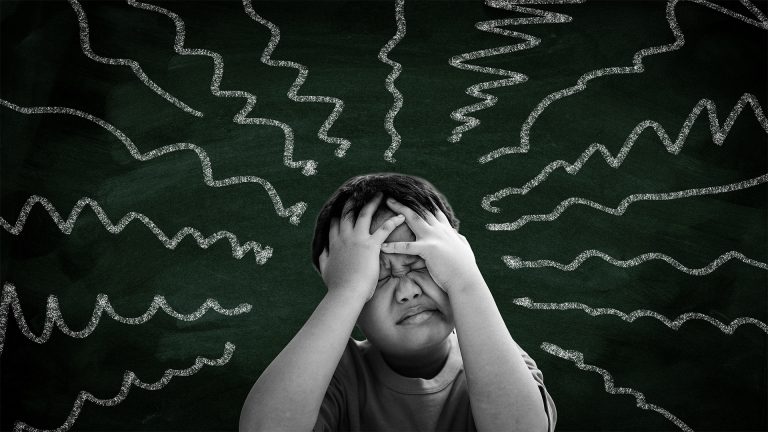
Later comes the cascade of effects that can embed the isolation, for example sleep disruption. Once bedtime gets pushed ever later, mornings become harder, routine slips and everything can escalate.
There is a loss of confidence and shame, and the heavier use of screens. “The longer children are out of school the more they worry about being judged, being bullied or being seen as the one who can’t cope,” says Ford.
There is a deep impact on family life, but the effect of long periods away from school runs much deeper. Research has already confirmed that the thousands of children educated outside school are at very high risk of ending up out of work or training after the age of 16.
This has a huge impact on their life chances, and also a wider socioeconomic effect on our economy. Local authorities have teams in place to work with these children to prevent them adding to the rising tide of NEETs (not in employment, education or training), but with the numbers rising and council resources strained, there is too little investment to guarantee success.
A recent report by the advice and support service Career Connect, published at the same time as the Milburn report, revealed that young people with a SEND care plan are five times more likely to experience time spent outside education, work or training during Year 12 (or lower sixth).
Karen Parry, chief operating officer at Career Connect, says it’s clear that an overhaul of education and training is needed, including very focused support on those most at risk, and accurate tracking of young people’s journeys, which, surprisingly, is not yet in place. “It’s a whole system reform and that’s mirrored in the research we’ve undertaken. We need face-to-face intervention, and for some of our really vulnerable people it can take time,” she says. “Public funding is stretched but there is a real focus on what needs to change.”
For Lucy Alexandra Spencer, a tutor whose business focuses on the needs of “shut in” pupils, the situation highlights how damaging the school system has become for pupils with extra needs. The primary cause of self-isolation is feeling at odds with the education they are offered.
“For so long the young person has felt that they have been misunderstood by the world, that they have had to shrink or to change how they have to be… pushing through that feeling of not being safe, so that home is the one place they feel safe,” she says.
With the controversial overhaul of the SEND support system, there is government interest. But right now, before change comes, breaking this pattern is left up to families, and sadly often depends on the resources parents can find to spend on seeking help.
Rebecca Varrell, a clinical psychologist who supports neurodivergent children, says she is seeing “shut-in” children’s world becoming smaller but works with parents to help them slowly open up again. “Their experiences and opportunities to interact and enjoy themselves are reduced. We think about ways to connect with their child and consider patterns of windows of opportunity during a day and over a week,” she says.
Suggested Reading


Don’t ban kids from social media – the real problem are the over-60s
This might include watching TV together, texting rather than talking, or going outside for a short walk. Where teens are awake during the night, while the rest of the household sleeps, a parent may communicate by notes left out.
“This might have tick boxes on to make it easier for the young person to respond,” she says. “Once there are opportunities for connection it is possible to develop these and reduce the threat which a young person might be feeling. It also helps to build a sense of validation and trust which may have been chipped away during their school experiences.”
Varrell says parents can often find it helpful to have a goal to work towards which can then provide a sense of change. “Often our work is on supporting parents to understand what that change may look like and accepting how this may be different to their previous expectations,” she says. Spencer also works with parents to achieve a specific goal for their child, focusing on what both the desired and likely destination for their child might be.
The slower, realistic approach does work. With lots of intervention through SEND support services, art and speech therapy, Owen achieved five GCSEs and four A Levels studying from home and began socialisation through an animal care course.
She now has part-time work in a cafe and is intending to move out when she begins university. As she puts it herself: “When you’re in the depths of sadness, it can feel like nothing’s ever going to change. But it can.”
 Most popular

Churchill, the Beatles, St George: All the English heroes who aren’t actually English

The New World at 500: Independence isn’t our marketing slogan. It’s our business model

The problem is they just don’t care about us any more

Sorry Nigel, but the polls show you’ve had it