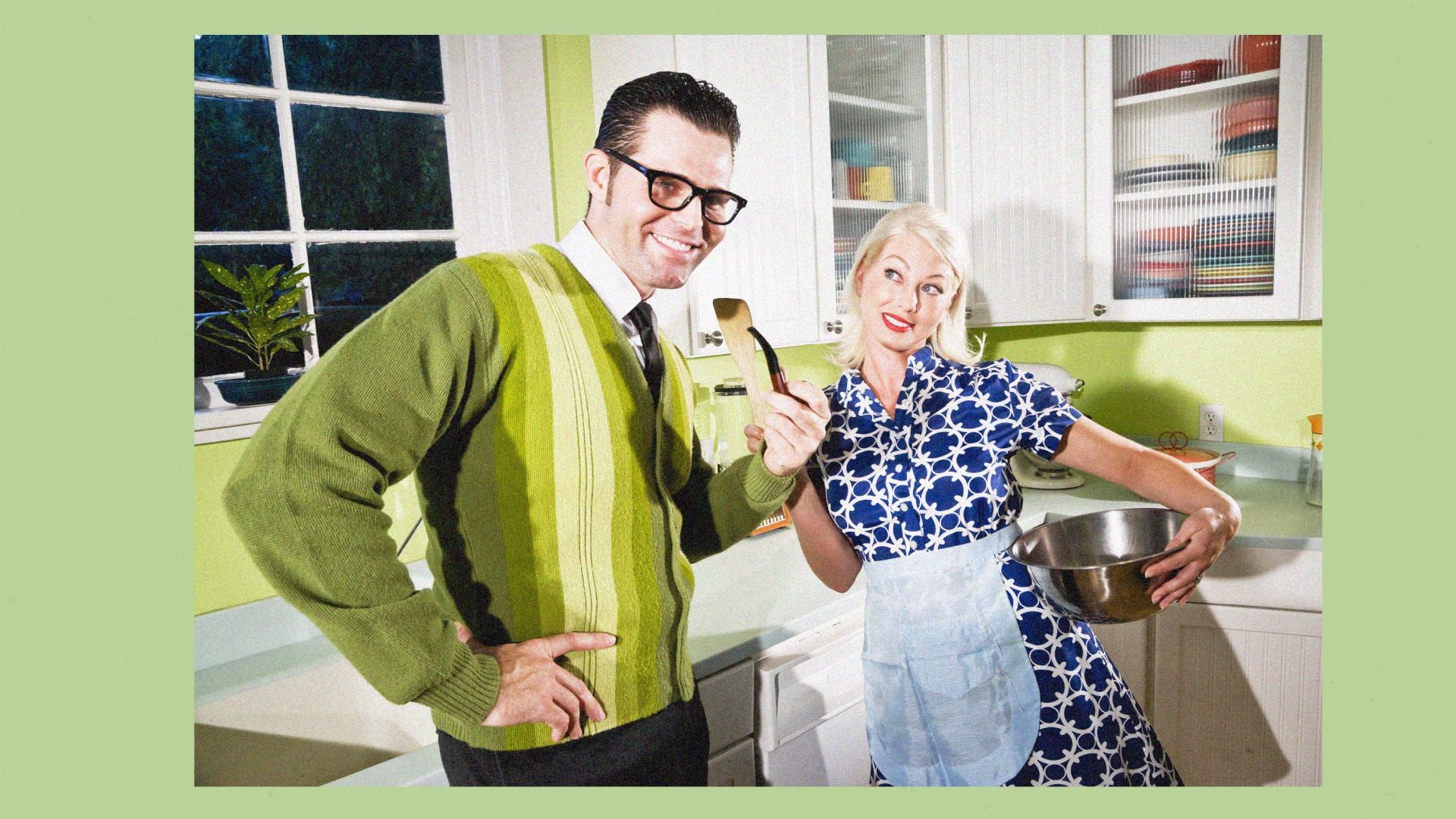
Ragged and burned-out at the culmination of a long summer holiday, no wonder many of today’s mothers look longingly at the pastel-toned, nature-soaked slow lives of tradwife influencers. When your living room appears to have been nail-bombed by the Lego factory, there’s a certain allure to the possibility of a life that includes total focus on your family’s health and wellbeing.
By 2024, more than 113 million social media posts had been tagged with the “tradwife” label online, garnering more than 800 million views. In the two years since, the movement has continued to gain traction and prominence.
With that prominence has come criticism too. This summer’s ‘it’ novel and huge bestseller is Yesteryear, the debut of American author Caro Claire Burke, which takes a harsh, satirical look at the trend. Without spoilers, she sends her tradwife protagonist back to the 1800s, transforming her polished home life into the bleak grind of appliance-free domesticity and servitude.
It prompts readers to question themselves about the source of their interest in these influencers, whose whimsical and seemingly homespun imagery often disguises multimillion-dollar business empires while promoting the financial exclusion of other women. Burke asks: How could you believe this nonsense?
Researchers at King’s College London analysed data from the British Social Attitudes survey to understand why tradwife content – beautifully captured film and imagery shared on social media that glamourises a patriarchal family set-up, with a stay-at-home mother and a father in complete financial control of the household – has become so popular among women of all beliefs and social backgrounds.
They found its popularity did not reflect a full embrace of outdated traditions, but a “plea from younger generations” finding the juggle of modern work and family life stressful and damaging to their health. In fact, consumers of tradwife channels actually held more progressive attitudes than previous generations, expecting care work and domestic chores to be shared equally. The researchers saw an attraction to “the aesthetic of simplicity, leisure and escape from the pressures of increasingly demanding yet insecure work”.
Suggested Reading
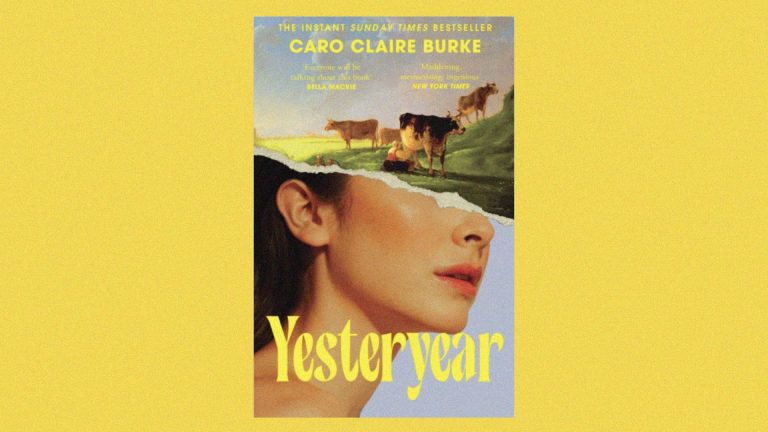

Yesteryear is the smash-hit book of the summer – and it’s abysmal
This goes some way to explaining the light-hearted treatment of tradwife culture elsewhere in our media. Recent months have seen widespread lifestyle coverage of the movement, usually featuring middle class and entirely financially independent women fetishising these ‘traditional’ ideas, claiming to live like a tradwife for a week (though they do nothing of the sort; they retain their own bank accounts) and sharing their experiences in an upbeat, flippant manner.
Women’s lives and experiences are regularly treated with a lack of solemnity and gravity in the press, yes – but the way much mainstream journalism deals with the tradwife movement speaks to a huge naivety (whether genuine or willful) over the origin story of its ideas, and the funding streams they are attached to.
Siddharth Venkataramakrishnan, an analyst at the Institute for Strategic Dialogue at Oxford University, says that while there is a hyper-fixation on incel culture as a genuine wider social problem linked to far right ideas, there is still too little scrutiny of the influence tradwife culture exerts, and the depth of its links to far right ideology. “Tradwives are taken at face value because it’s a highly aesthetic movement, linked to ‘cottagecore’ and the more harmless side of things online,” he explains.
Of course, there is a spectrum of ideas being shared online; many of the women showing off beautiful images of their homegrown vegetables and oven-fresh bakes are simply producing very shareable lifestyle content. But the roots of the movement are not benign, and many of today’s creators are also using palatable imagery to slip in far less acceptable ideas.
“There are obvious tradwives who are more towards the explicit, some implicit and some are primarily a money-making exercise, but it all fits a worldview that is very heteronormative,” Venkataramakrishnan says. “It is linked to the Christian nationalism that has become so endemic in the way the British far right is operating.”
The Pink Protest advocates who campaigned outside migrant hotels here in the UK are the visible manifestation of the spread of these ideas online through otherwise palpable content.
The tradwife movement, birthed in the US but now spread globally, is rooted in far right ideology and the supremacy of the white male. Most concerningly, its ideas are those funded directly by far right ideologists linked to American and Russian fundamentalism, whose object is to destabilise the progressive values that underpin Western democracy.
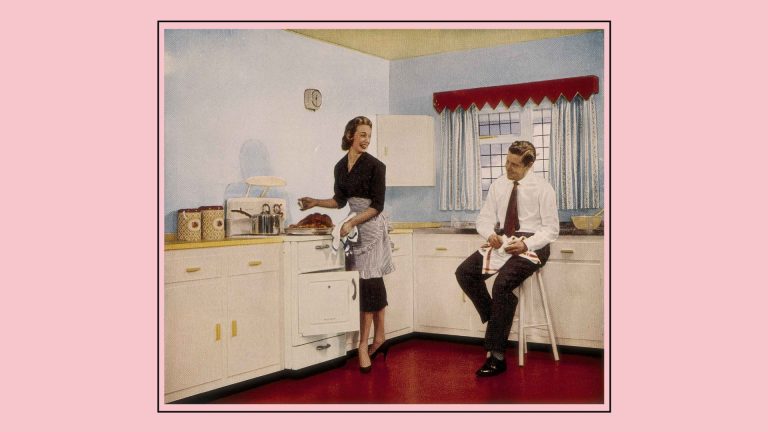
Academics, including Dr Eviane Leidig of the Washington DC-based Center for the Study of Organized Hate, have highlighted how Islamophobia and white supremacist messaging is regularly hidden inside otherwise asinine content such as make-up tutorials and parenting advice. Here in the UK, experts inside the Foreign Office are already monitoring anti-gender movements as a meaningful threat to national security.
In Brussels, policy leads like Neil Datta at the European Parliamentary Forum for Sexual and Reproductive Rights, are tracking anti-gender and anti-rights financing networks across Europe. His 2025 report on extremism, The Next Wave, highlights how Russian oligarchs sit “at the core of sprawling influence networks dubbed ‘factories of influence’ by scholars – closely aligned with Kremlin foreign policy and rooted in religious extremism. Their goal is to destabilise liberal democracies abroad while positioning Russia as the guardian of an ‘authentic’ Christian European civilisation.”
There has also been concerted investigative work by journalists into this area. Sian Norris, author of Bodies Under Siege, covering the aggressive attack on women’s bodily autonomy and access to healthcare, has been following this cultural trend. She first took an interest in tradwives when she discovered Ayla Stewart, the far right tradwife influencer who set up the ‘white baby challenge’: after having six white children of her own, she prompted other right-leaning women to beat her number.
“She was put on a pedestal as a white goddess. It was ‘back to the land, back to nature, blood and soil’-coded language; this idea that it’s a women’s responsibility to reproduce white babies to the white nation,” Norris says.
“What you see is this tradwife influencer who is out there using similar aesthetics that we recognise – long floral dresses and walking meadows with her kids – also pushing this far right fascist great replacement and migration theory.”
Suggested Reading
Welcome to Hollywood’s new age of feminine nostalgia
When the far right talks about women and motherhood, it focuses on a woman’s purpose as to be reproductive. “Women’s bodies are the property of the far right,” says Norris. “That’s what tradwife ideology is really rooted in.”
These are all ideas on which billions of pounds are spent by American ultra-right Christian groups, and increasingly similar campaigners inside Russia, including as the Forum of Large Families, a platform run by Vladimir Yakunin.
“One of the big funders of anti-gender movements across Europe is obviously Russia. Most of that money is spent within Russia, but some of it is creeping out again, and between 2008 and 2019 there was a huge amount spent globally,” Norris says. “We know that Russia is spending money on digital influence promoting gender complementarianism. They all focus on what a woman’s role is: the good woman is a mother, and she is submissive to her husband.”
Researchers and monitors have not yet been able to identify whether these money channels are leading directly to specific influencers, but they are certainly supporting the movements that promote and encourage the viewpoints they sanitise with pastel tones and beautiful imagery. The origin story of a renewed regressive women’s movement is not in question.
Of course, most tradwife content produced by individual creators for social media is evidence of copycat behaviour, rather than an expression of political extremism, either in search of popularity or monetisation or both. That doesn’t mean it isn’t exerting a worrying power.
“I think it’s really frustrating, because even if you didn’t know what I know – which is that it’s inextricably linked to fascist ideology and far right money – even if you just scroll through it at a surface level, it’s really dangerous,” Norris says.
We do not see any of this tension reflected in the lightweight coverage of the tradwife movement in the British media. Venkataramakrishnan says this speaks to its inherently manipulative nature: it is the type of thing that can be recreated in your own home without you sensing any whisper of moral hazard.
“People aren’t going to write an article saying ‘I’m going to be an incel for the day’,” he points out. “This is content that you can just understand as a regular person.”
Another difficulty in highlighting the rise of regressive values online is the fear of women appearing to judge others’ legitimate choices. Two academics based in New Zealand, who were leading experts globally on the subject of the digital tradwife movement and among the first to describe the phenomenon, have recently written a paper in which they walk away from that line of inquiry. After following the development of the trend, the academics, feminist in identity and inquiry, now see the subculture in terms of personal choice.
I asked to speak to them for this piece, but the offer was declined. “We have made a decision not to get involved in media stories which pathologise tradwives,” Dr Victoria Hopner, senior lecturer in psychology at Massey University, wrote in reply. “There are complexities to the movement/sub culture and we have tried to understand it from a space which tolerates the inherent ambiguities.”
It is wrong to describe every, or almost any, woman who shares or perhaps makes tradwife content as “dangerous” or an ally to the far right, the Kremlin or any US neo-fascist insurgency. But that does not negate the responsibility of the media to highlight the relationship between easy-to-swallow pictures of cakes and curtains to the rising global threat to liberal democracy; that social media content like this has a clear link to the regressive ideas of those spending huge sums to spread an appetite for social change.
Without this information, there are many women today who are casually playing their part in normalising the destruction of the very ideas that they hold dear: progress, bodily autonomy and the right to choose.