The vast majority of biographies and autobiographies of musicians aren’t very good. I think I’m qualified to say that – once you start writing music books, it’s inevitable that you’ll end up reading a fair few – primarily in the name of research, but often just to check that your work-in-progress isn’t as lousy as you think it is. On top of that, being something of a nerd, I’ve been reading music books since I was about 14.
For every well-thought-out and considered reflection of the artistic life, there are at least a hundred that are nothing more than a lazy string of dubious anecdotes, usually revolving around individuals or groups repeatedly getting off their heads and/or mistakenly eating Keith Richards’ shepherd’s pie.
Because they require a bit more thought, the books which go beyond mere biography and attempt to deal with what makes an artist’s music so much more than a means of keeping him or her in the devil’s dandruff, have a slightly higher success rate, but only just. Clearly there’s a lot of rubbish out there. But as interesting as a list of the worst books ever written about music might be, in these troubled times I feel it more appropriate that we strive for what is sublime, so here, in best Fluff Freeman style, are my all-time top 10 music books of all time.
10 Yeah Yeah Yeah – The Story of Modern Pop by Bob Stanley (2023)
An exhaustive and fact-filled hymn to the glories of pop music. What really elevates this book above more “worthy”, and let’s face it, more boring, treatises is Stanley’s enthusiasm for his subject, which he tackles with nary a hint of snobbishness or condescension, but thankfully plenty of snark, when called for.
The Bay City Rollers get taken as seriously as the Band, and Neil Sedaka stands shoulder to shoulder with Neil Young. In short, the orthodoxy that rock is somehow more genuine and authentic than pop is given vanishingly short shrift.
It’s nice to see Led Zeppelin get treated like just another group, for instance. I mean, they’re not bad, but in most rock books they’re treated like the second coming, and that’s not even a good Stone Roses album. A word of caution: you’ll come away from this book realising you’ve listened to less music than you thought you had.
9 Diary of a Rock’n’Roll Star by Ian Hunter (1974)
This book is at least partly responsible for the glut of woeful memoirs described in the introduction, as many of them are blatant attempts to recreate the magic found within the pages of this slim volume. Of course, we can no more blame Ian Hunter for that than we can blame Alice Cooper for Kiss.
Besides, Hunter assiduously avoids tales of groupies and bacchanalian excess, choosing to concentrate on the ceaseless grind and petty frustrations of life on the road, and above all the loneliness of the long-distance rocker. That he still managed to convince an entire generation that this was the life for them is testament to his skill as a writer.

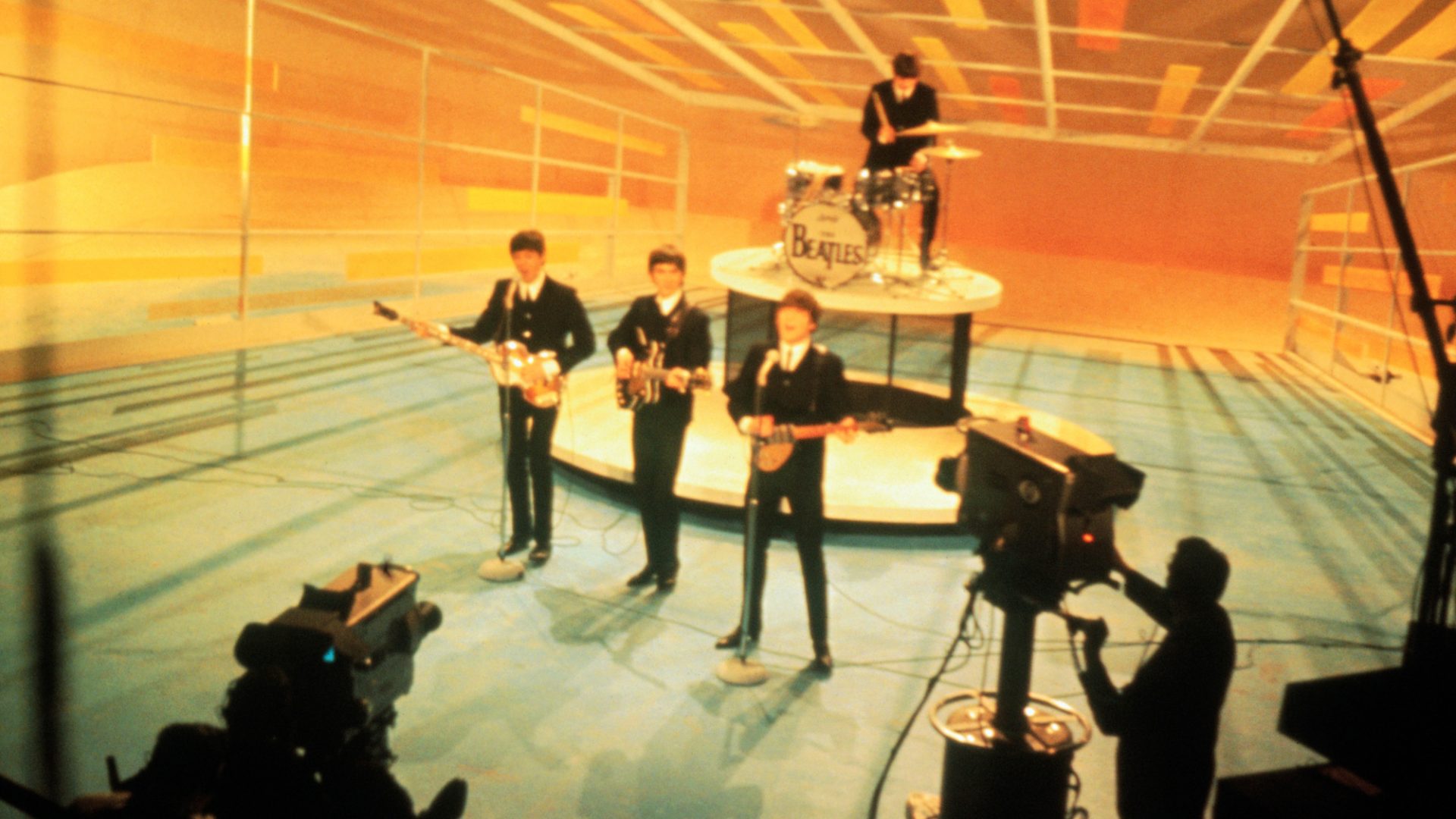
8 The Beatles: All These Years by Mark Lewisohn (2013)
All These Years is part one of a trilogy that aims to tell the definitive tale of the definitive group. It runs to a stately 932 pages (the special edition clocks in at 1,728) and ends as the Beatles enter Abbey Road for the first time, so clearly no one’s picking it up to find out if Paul McCartney is left-handed.
Though the detail can be sometimes overwhelming, the joy that permeated everything the Beatles touched leaps off every page. Moreover, as a piece of social history, it’s utterly invaluable. Given the amount of time it must have taken to research and assemble, fans of the book share a morbid, but all-too-realistic concern with aficionados of George RR Martin’s A Song of Ice and Fire: an overriding fear that the author will pop his clogs before the series is complete.
7 Sick On You: The Disastrous Story of Britain’s Great Lost Punk Band by Andrew Matheson (2015)
Though ostensibly another Diary of a Rock’n’Roll Star, unlike Mr Hunter’s book, this picaresque memoir will have you asking why anyone would ever entertain the idea of forming a band at all. Andrew Matheson was the lead singer and only constant member of the Hollywood Brats, England’s unprompted answer to the New York Dolls. His memoir breathlessly recounts several years of unrelenting squalor, poverty, disappointment, and violence, followed by an ignominious end that makes the previous events seem like A Hard Day’s Night.
By rights, this should make for a grim read, but Matheson’s infectious (and let’s face it, utterly deluded) self-belief carries all before it, till you find yourself cheering for the group while simultaneously acknowledging that they haven’t a hope in hell.
6 Me by Elton John (2019)
As much as anything, this book is a brilliant example of the arcane skill of the ghost writer, in this case Guardian head rock and pop critic Alexis Petridis, who pulled off a similarly accomplished sleight-of-hand on Rick Astley’s Never. At times, it’s like Elton is in the room with you, and if it’s on one of his bad days, of which there are many, that’s not a pleasant feeling at all.
Effortlessly switching between self-aggrandisement and self-abasement (sometimes in the same sentence), the book captures Elton’s persona perfectly. Not least in the passage where he organises a sex show in his snooker room while trying to avoid getting any difficult-to-shift stains on the table itself.
5 Lonely Boy by Steve Jones (2017)
Another expertly ghost-written memoir, this time by Ben Thompson. And just like Me, the sheer honesty of this account is what continues to astonish long after you’ve put the book down.
Utterly incapable of artifice, Sex Pistols guitarist Steve Jones never makes any claim to be either a victim or a hero. There are plenty of occasions in the book where he’s the former, and more than a few when he’s the latter, but his shocking tales of childhood abuse are dispatched with the same dry eye as his stories of fame and success.
His willingness to embrace his failings is gratifyingly refreshing, especially when compared to either of his erstwhile bandmate John Lydon’s autobiographies. Where Lydon never misses an opportunity to imbue his younger self with the gifts of hindsight and the wisdom of years, Jones tells it like it was, however questionable his behaviour at the time. Consequently, he comes across as a far more attractive character than Lydon, which isn’t saying much, to be honest.
4 England’s Dreaming by Jon Savage (1991)
England’s Dreaming obviously has a lot of crossover with Lonely Boy – both involve casting an eye back to the events of 1977 and beyond, but what’s interesting (and what makes both books so good) is that neither Jones nor Savage allows nostalgia to frame the narrative.
Just as biographies full of childish japes get very boring very quickly, histories told with a smug air of “this is why we were great” seldom satisfy on an intellectual level. England’s Dreaming, on the other hand, gives the story of the Sex Pistols a proper context and still manages to rattle along. I even found myself forming a grudging respect for Malcolm McLaren at one point. Thankfully, it didn’t last.
3 The Manual: How to Have a Number One the Easy Way by Jimmy Cauty and Bill Drummond (1988)
This purports to be a guide to getting a number one hit single, using the questionable methods the authors had utilised to do just that: Doctorin’ the Tardis by the Timelords, a track that was equal parts Dr Who and Gary Glitter, reached the top of the charts in 1988. But the book is so much more than a dry list of instructions.
Drummond and Cauty, who at various times have been known as the KLF, the Justified Ancients of Mu Mu, but mostly as the two lunatics who burnt a million quid, make the process of achieving a profitless number one sound so much fun it’s surprising more people didn’t have a go. The book contains a hefty dose of post-fluke hit rationalisation of course, but it’s no less entertaining for that.
It also contains one of the most perceptive lines from any music book ever: “You will find engineers everywhere trying to impress you with the fact that Sgt Pepper was recorded on a four-track. This is of much relevance as the fact that no JCBs were used in the construction of the Great Pyramid.”

2 Last Train to Memphis: The Rise of Elvis Presley/Careless Love: The Unmaking of Elvis Presley by Peter Guralnick (1995/2000)
Quite simply, the definitive biography of Elvis, published in two parts. They’re particularly satisfying if you read them after Elvis by Albert Goldman, a venal and grubby volume that frequently substitutes breathtaking unkindness for journalistic vigour (and his Lennon book is even worse).
That’s not to say the King gets off scot-free here – the events leading to his death in part two make for sobering reading after the joyous rollercoaster of part one. Guralnick conveys the sadness and tragic waste of Elvis’s last days so viscerally that I’m almost sorry I read it. Put that quote on the dust jacket, I dare ya.
1 Revolution in the Head by Ian MacDonald (1994)
Clearly, the best group of all time deserves the best music book ever written, and among some stiff competition (The Beatles: The Authorised Biography by Hunter Davies, as well as the entry above), this is it. MacDonald is perfectly placed to write about his subject, in that he’s an exemplary musicologist, journalist, theorist and historian. He’s also got a great way with words, and he never lets his love of the group get in the way when he thinks criticism is called for, which it often is.
Personally I think he’s a bit harsh on some of George’s output, especially in 1967-68. He’s right about Savoy Truffle, though, a song which is even more silly and pointless than Maxwell’s Silver Hammer, if such a thing is possible. Throughout the book MacDonald remains aware that magic and realism aren’t mutually exclusive, and he walks the line between them almost as deftly as the Beatles themselves. Astonishing.