The road to St Nicholas Church in Kahuho branches off the Gilgil-Ol Kalou highway and soon turns into a rough murram track, rutted deep, before it climbs a small hill. Kahuho means “the windy place” in Kikuyu, and whoever named it got that right. The wind comes in hard off the Rift Valley escarpment.
The church at Kahuho sits in an expansive compound of grass and scattered trees. It is also ringed by barbed wire, with a makeshift wire and wood gate, inside which stand two structures, side by side. The older of the two is a timber shack raised on a few brick courses, with a rusted tin roof and a wooden door. Chalked on the door, faded but still legible, are the words “St Nicholas” and “Orthodox”.
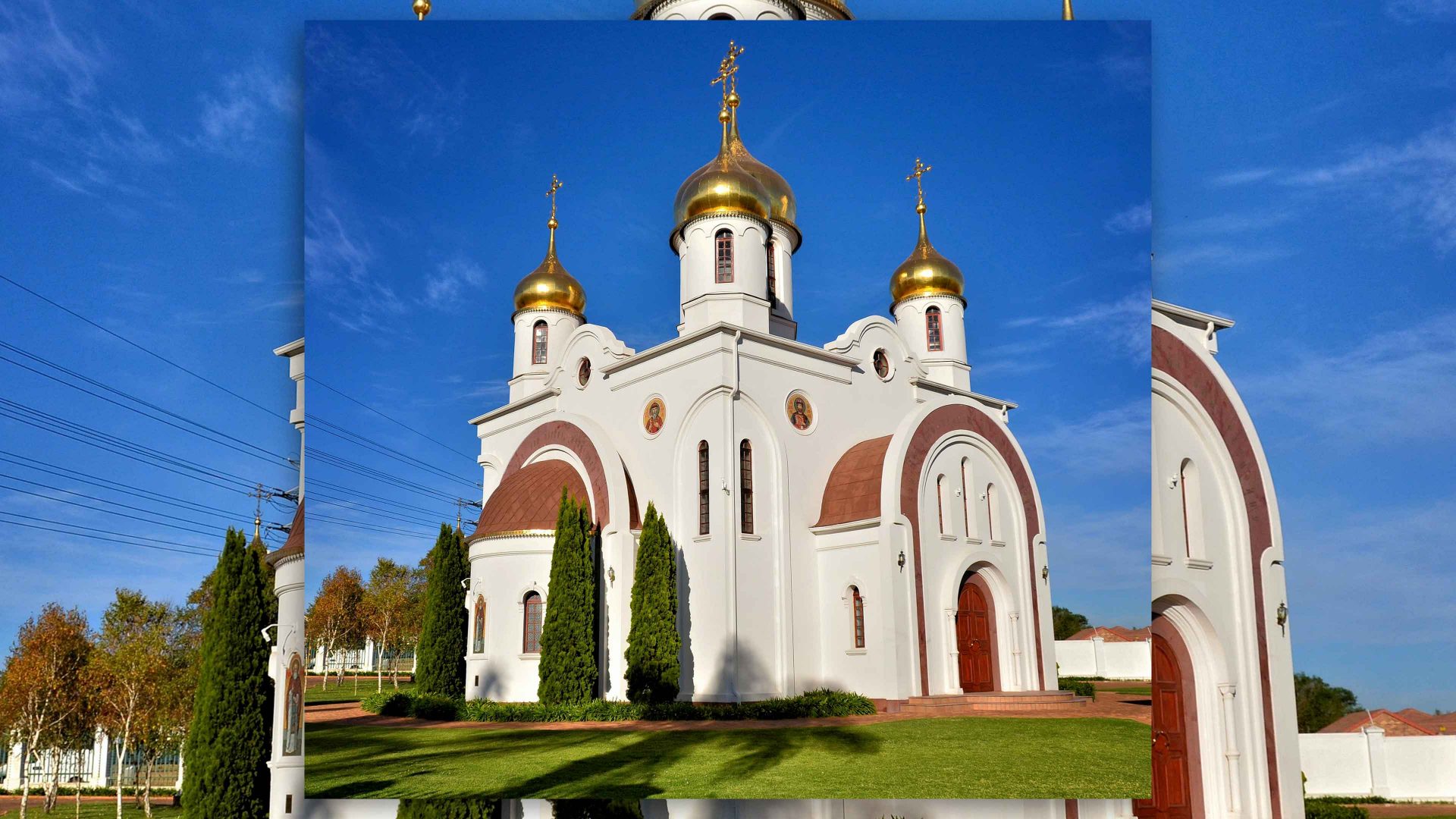
The new church stands a few metres away. It is an imposing building reached by a broad staircase leading to a large metallic door. It is built of brick in complementary colours with stained-glass windows and an orange iron sheet roof, and is a considerable step up from its neighbour. The land beneath both structures was donated by the local community.
It is, Father Symeon Mburu Kinyanjui told me, one of the oldest churches in Gilgil. It now belongs to the Russian Orthodox Church.
Suggested Reading
Burnham’s biggest problem – UK leftists parroting Putin’s lies
Father Symeon knows the story of St Nicholas from the inside. He served with the Russian Orthodox Church for between three and five years before returning to the Greek Orthodox Patriarchate. He explained to me how his congregation had struggled to build the church themselves, stone by stone, pooling what they had.
The money ran out when they reached the lintel. So they appealed to their bishop – but he had too many commitments across too many churches and a long waiting list. As the years passed, the faithful began leaving for other congregations. Then the Russian Orthodox Church arrived and finished the roof.
“They came and took over the construction, went up to roof it and completed the building because the community had struggled to complete it and the Greek church had not availed the needed funds,” he said.
In January 2025, Metropolitan Konstantin of Zaraisk, the patriarchal exarch of Africa and the most senior Russian Orthodox official on the continent, came to Kenya. He celebrated the divine liturgy at an Orthodox educational centre in Njabini, in the Nyeri Deanery, where the school’s director, Priest Methodius Kariuki, had recently joined the Russian church.
He visited a church of St Nektarios and another church and clinic under construction nearby. Then he travelled to Gilgil and inspected progress on the new St Nicholas church in Kahuho, distributing icons to the faithful.
The congregation in Kahuho had built the church for the Greek Orthodox Patriarchate, and now the Exarch of Moscow had come to inspect it.
This is how the Russian Orthodox Church has built its presence. Instead of planting fresh churches in empty fields, the church has been moving into places that the Greek Orthodox Church, which has held authority over the continent since the first century, has been too stretched to hold.
“Almost all of their serving priests are from the Greek Orthodox Church,” Father Symeon said. “They mostly preyed on the disgruntled elements within the clergy.”
The Russian way of enticement was straightforward. “They give good stipends to priests. Resource-wise, they are better off, more than the Greek Orthodox Church.”
However, the terms were not always what they appeared. His own eldest son was among the children sent to Russia on what were described as full scholarships. “When the children went over, we ended up sending them money for upkeep, including for food. Such a child is forced to work for survival, just to eat.” Those studying in seminaries fared better, he said, as their stay was fully sponsored.
In 2021 the Russian Orthodox Church had no real presence in sub-Saharan Africa. By February 2025 it had more than 350 parishes across 34 countries, served by 250 clergy. The trigger was a schism that occurred when Greek Patriarch Theodoros of Alexandria recognised the Ukrainian Orthodox Church in 2019, and a faction of African clergy objected.
On May 16, 2026, RT, Russia’s state broadcaster, released a film about African students at the Moscow Theological Academy. In August 2025, 30 senior African priests flew to Moscow on a state-backed pilgrimage and attended a social media masterclass hosted by RT.
The theology being sold has a ready market. Patriarch Kirill, the head of the Russian church, with Vladimir Putin seated next to him, addressed the African mission at the Russia-Africa Summit in 2023. “We are united by adherence to traditional values,” he said, and by a “conservative view of human nature, rejection of the ideology of permissiveness and overconsumption.”
Suggested Reading
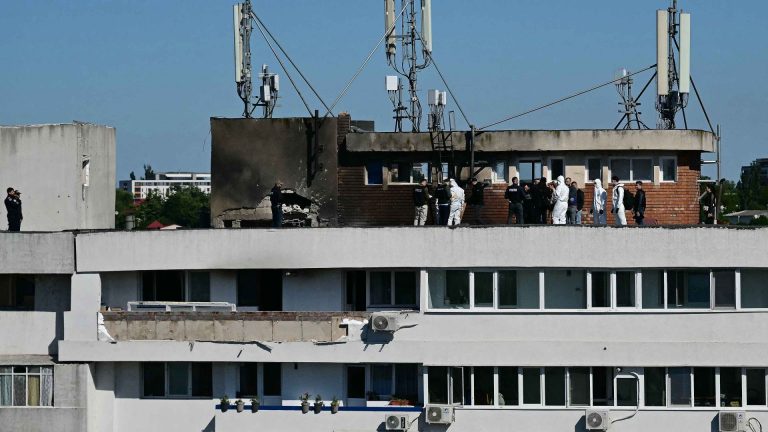
Putin’s dirty war comes to Romania
In Johannesburg, a mechanic named Vin Prinsloo left the Anglican Church after it approved prayers for same-sex couples. He tried the Catholics, Methodists and Calvinists, and eventually found the Russian Orthodox Church in 2022. “They’re the only one still standing steadfast on faith, family and God,” he said. Five of his Christian friends followed.
In Uganda, a golden-domed church for 400 worshippers with a hospital, school and hotel attached is going up opposite the presidential palace, on land that was reportedly gifted by the Ugandan president. Uganda signed a $53m arms deal with Moscow in October 2025. The two developments are, officially, unrelated.
There have been allegations that the church’s networks have not been confined to the spiritual. Kenyan authorities say at least 252 citizens ended up in the Russian military through channels that, according to the human rights organisation Vocal Africa, ran in part through Russian Orthodox Church circles.
Charles Waithaka Wangari, a 31-year-old footballer from Nyeri, left for Russia in October 2025 through church-linked contacts on promises of work. By Christmas Day he was dead on a Ukrainian frontline. His remains are unrecoverable.
On March 3, 2026, the Exarchate’s website published a formal statement on the matter: “Metropolitan Konstantin: the Russian Orthodox Church does not recruit Africans for military service.” The article called the allegations untrue and blamed opponents of the church.
Meanwhile, Father Symeon has returned to the Greek Orthodox Church. “I am back to my father Archbishop Makarios,” he said. But the Russian Orthodox Church still has the building in Kahuho.