Looking out of a FlixBus window on the Moldova-Ukraine checkpoint, I see a blonde-haired girl dancing in front of her bemused mother. She is doing figure-eights, a move ballroom enthusiasts can recognise from miles away. “She literally never stops practising,” her mother tells me.
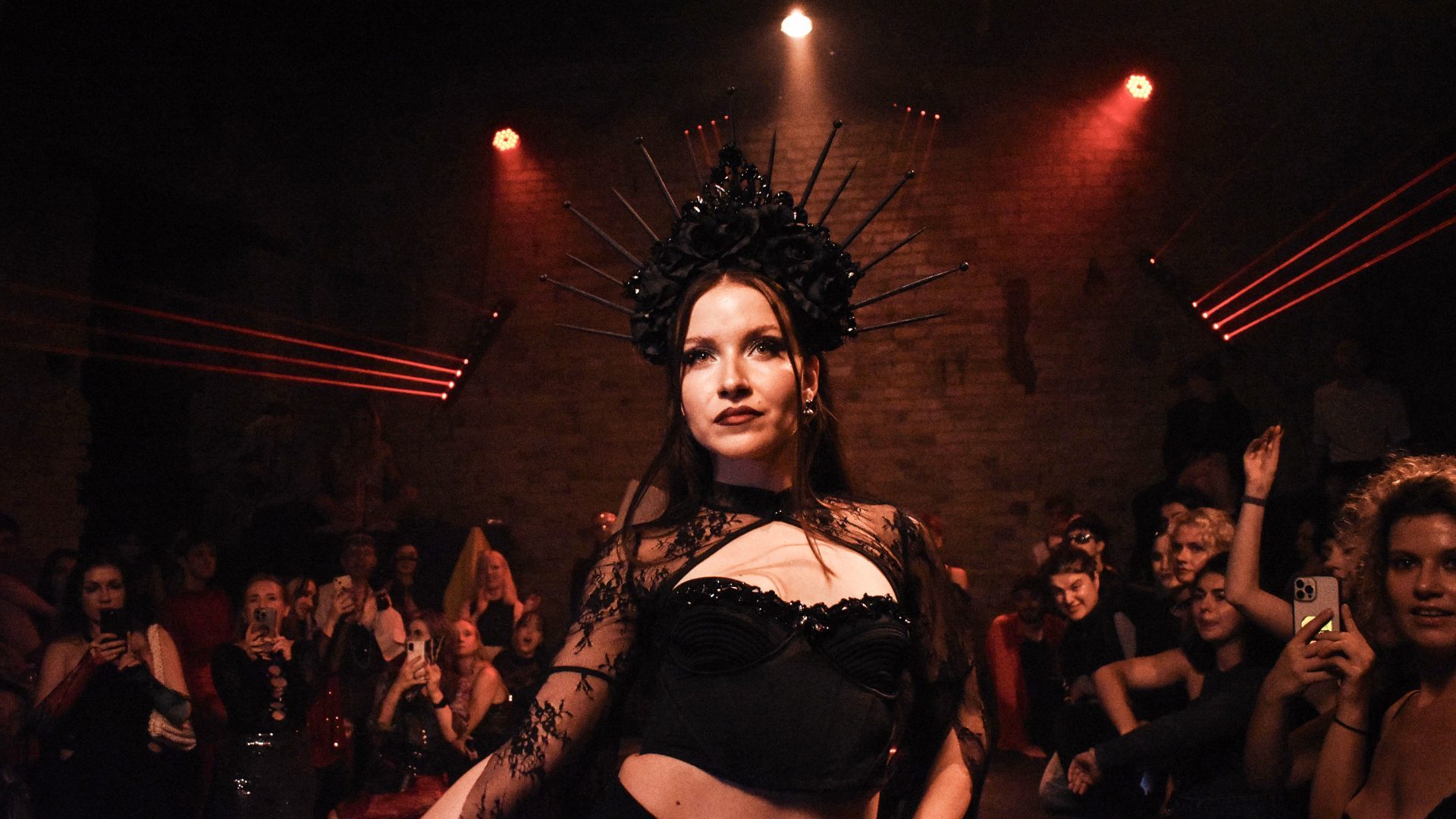
It is a timely encounter at the start of a journey into a world few know about. Inspired by an African-American and Latin subculture that emerged in Harlem, New York in the 1970s, a queer vogue ballroom scene is now thriving in Ukraine – despite Vladimir Putin’s best efforts.
A few days after spotting the woman, I find myself at a ballroom community gathering on Kyiv’s riverbank. There, I meet Mariia Strykal, also known as Mashhh 007, who is from the frontline city of Kharkiv, where the Ukrainian scene was founded in 2011. As with the original version, this centres on balls – where participants dance and pose in competition – and communities called houses, each led by a mother.
Our conversation is interrupted by air-raid sirens, but humour overtakes fear as a group starts lip-syncing to the sound. We laugh it off, but Strykal urges everyone into the underground.
Later, inside a neon-lit studio in Pecherska, Dimon Krupnyk is leading a dance class. Krupnyk, who is non-binary with an affinity for drag, tells me ballroom was the one dance style that really felt like theirs: “I can connect my soul and brain when vogueing. The ballroom scene in Ukraine is very unique. Not as big as in Paris or New York, but it’s where I feel the most free.”
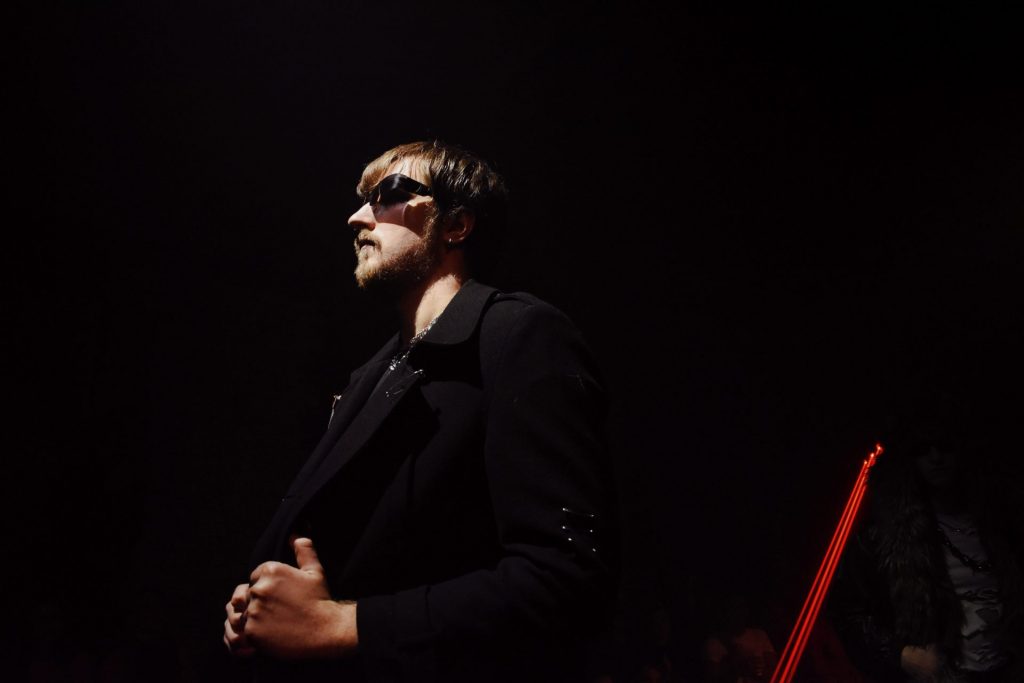
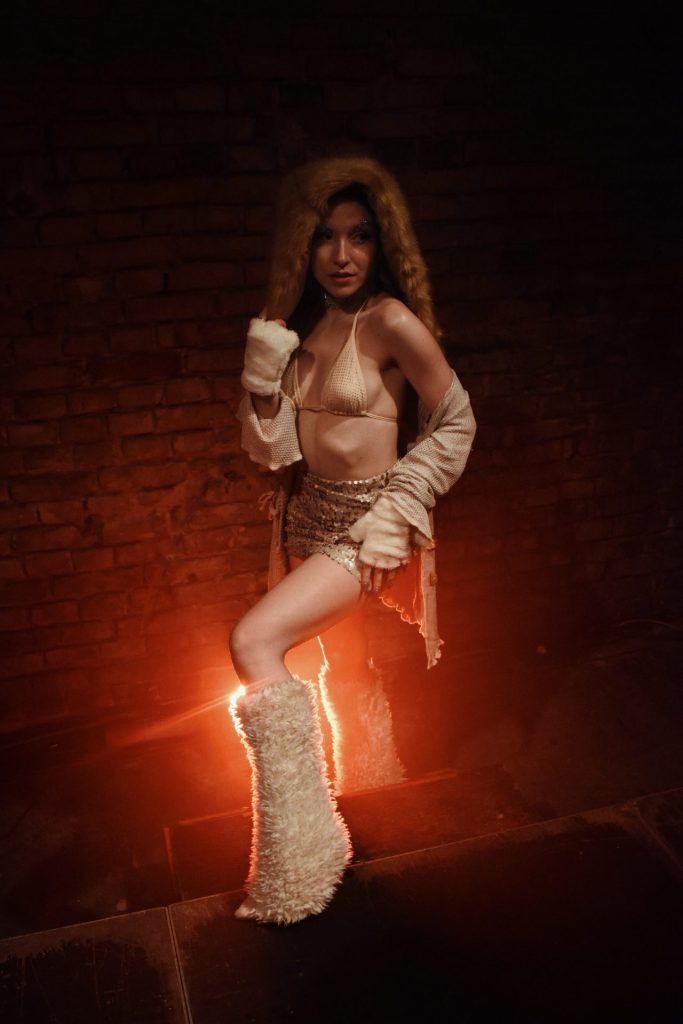
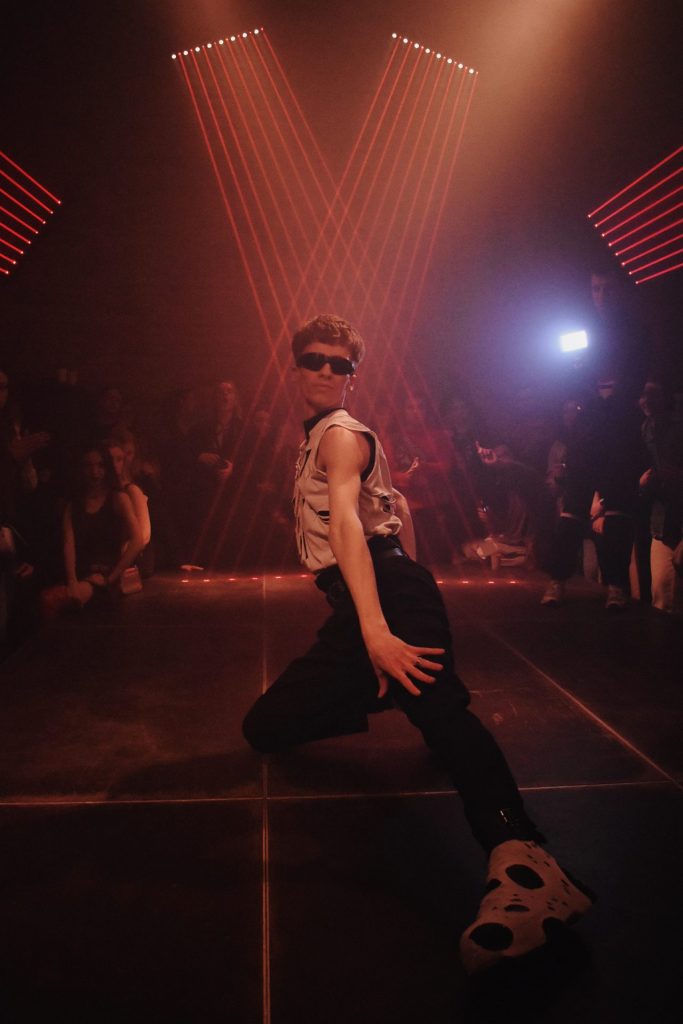
Nowadays, most of the Ukrainian scene’s activity takes place in Kyiv, organised by a community called House of Extaz. But there is also House of Wikiki in Odesa, Stage Exit in Kharkiv and House of Transformers in Kremenchuk, and Krupnyk tells me that everyone does their best to keep the movement alive across Ukraine, travelling across a country under siege to deliver workshops, educational lectures or to judge at balls.
Strykal’s class takes place in an underground studio, where practice can continue uninterrupted by air strikes. Other venues aren’t so lucky; Russia targets energy infrastructure, often leaving civilians without electricity and heating. That hasn’t deterred these people, who gather in cold studios, under flashlights.
But the sleeplessness of war takes its toll. “Imagine, after a night of bombings, you need to perform as if nothing happened. Scared or tired, we still show up,” says Krupnyk.
The scene in Kharkiv has been badly hit. Artem Pogorelov, known as POGART, was reluctant at first to talk about the war, but finally said: “We can’t really complain, because every day we stay alive, it’s good enough.”
Here, Pogorelov says, “It’s almost like we are starting from scratch.” Many LGBT-friendly spaces have closed down, and security concerns have made organising large-scale events impossible. “We want our community reunited,” he says. “To be able to do this again in the city where it all started would be the dream.”
The military draft looms over everything, and no one represents this reality better than Maksym Potapovych, a scene member who joined the army in 2023. Potapovych tells me that the contributions of LGBT soldiers have been central to shifting societal attitudes in Ukraine, where public support for LGBT rights stands at 70%.
Suggested Reading


Ukraine is 3D-printing its way to victory
Potapovych, who grew up watching Madonna videos and Ukrainian queer icons like boyband Kazaky, fell in love with the scene when he learned about it in 2019 at a Pride event. As a soldier, he has remained an active community member. He helped to set up a shelter in Kyiv for LGBT people escaping occupied territories, fundraised for LGBT soldiers’ units and is involved with a military and veterans equal rights group.
Stationed in Kharkiv, Potapovych visits ballroom events whenever he gets the chance. “It’s a small time of relief. I can just enjoy the moment because living in Ukraine and witnessing the horrors of war, this is the place where we can briefly stop being in survival mode,” he tells me.
The war has separated the scene into a “before” and “after”, which many view positively. Strykal says that before the war, the Ukrainian communities were influenced by the hypercommercialised Russian scene. “By stopping treating them as the blueprint, Ukrainian ballroom has come closer to what it is meant to be: resistance against oppression, especially for trans people who already lead very closeted lives. It is actually my biggest aspiration to make the scene a safe space for them.”
The community has welcomed new faces, bringing it closer to its roots. Krupnyk says: “When I was starting, we barely had any drag and femme queens. Now we have several. We are all very proud of them for bringing ballroom’s message to life.”
Yet despite the defiant joy of ballroom’s growing acceptance among the public, there is still discrimination. “You need to make sure you know who is watching you. It can be hard to be queer in Ukraine,” Krupnyk says.
Far right, anti-LGBT demonstrators never fail to appear during Pride. “This is a stark reminder that we are still fighting for the community’s rights,” says Strykal.
Suggested Reading

Ukraine is showing Europe what it needs to become
For Pogorelov, many of these struggles are exacerbated by the lack of laws to formalise LGBT relationships, making it especially hard for soldiers when their partners do not have the same rights as those of straight couples in case of injury or death. “This is very painful for us, especially now that we need this protection the most.”
It is this reality that has led participants in the culture to form a special bond with it. “We need ballroom because if I can’t be a fabulous bitch in the street, at least I can be one in the scene. It’s not just about dance, it’s about community,” explains Krupnyk.
The scene has also become a sanctuary for 21-year-old Nika, a trans woman. Her infatuation with the culture began when she watched the American TV series Pose. “Ballroom is a place where you can be a trans woman and not be afraid of it, but rather celebrate it,” she says.
In 2022, Nika became displaced when Russia occupied her home town, Siverskodonetsk. Resettling in Kyiv, she was able to attend balls by herself and connect with other queer people. “The performers’ confidence and uniqueness shook me. My first balls were incredible. My ballroom mother gave me clothes and makeup.”
The community has been a major source of support in Nika’s transition journey. In April 2025, Strykal gave her one of her cash prizes to kick-start hormone therapy. Around that time, Nika also found out she had a thyroid tumour, and once again, ballroom was there for her. “The community actively supported me and raised funds for treatment. They were there for me to soften the ‘fall’.”
For Nika, her hopes remain high that the scene will grow faster to embrace the diversity it was meant to. “This culture in our country emerged differently. We are now adapting to the canons of the original ballroom scene, and we will succeed.”
 Most popular

‘The deep state stole my mini-budget’: An exclusive extract from Liz Truss’s new book


Nigel Farage’s attack on the RNLI and co is a new low even for this bottom-feeder

18 things that will absolutely, definitely happen if Trump gets whopped in the midterms

I went looking for Trump’s America – this is what I found