On July 8, the day that Britain finally pardoned the last woman it hanged, the Daily Telegraph published a piece penned by the conservative critic Theodore Dalrymple under the headline: “Ruth Ellis was a murderer. She doesn’t deserve a pardon”.
When she read it, the author Louisa Treger was consumed by anger. “I was absolutely outraged. I was thinking of writing a rebuttal piece or a letter to the newspaper,” she tells me; but she decided that doing so would steer the narrative away from Ellis’s story.
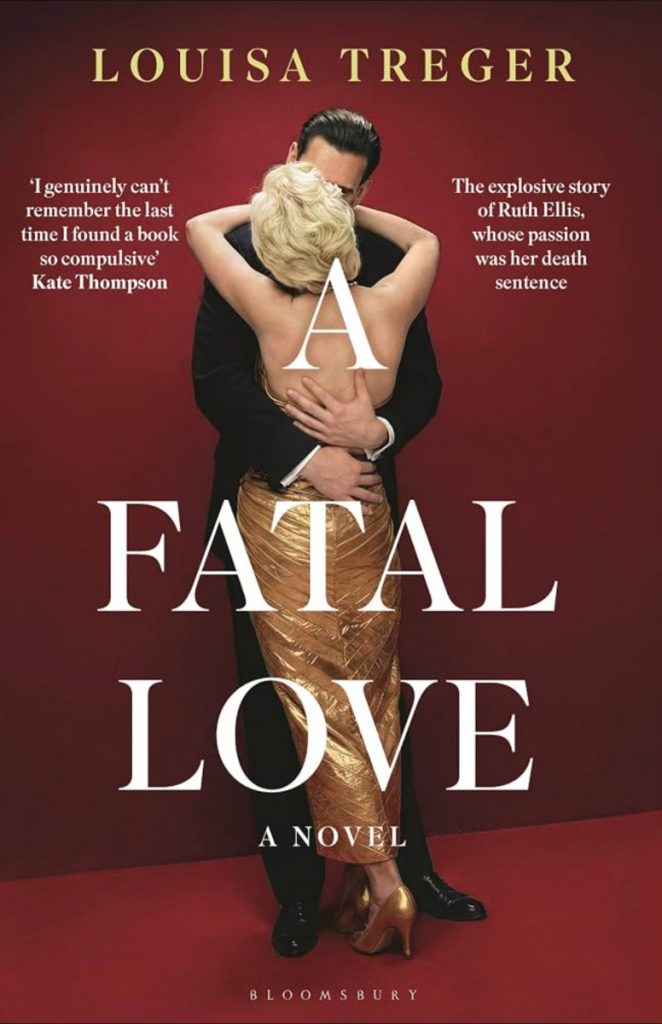
It is a story with which Treger has become acutely familiar while writing her latest novel, A Fatal Love, a reimagining of Ellis’s life, trial and execution on July 13, 1955. It focuses on her interactions with real-life figures and creates one of its own, Kitty, the determined assistant lawyer fighting misogyny from the other side of the witness box. Like its protagonist, the narrative is emotional, complex and passionate.
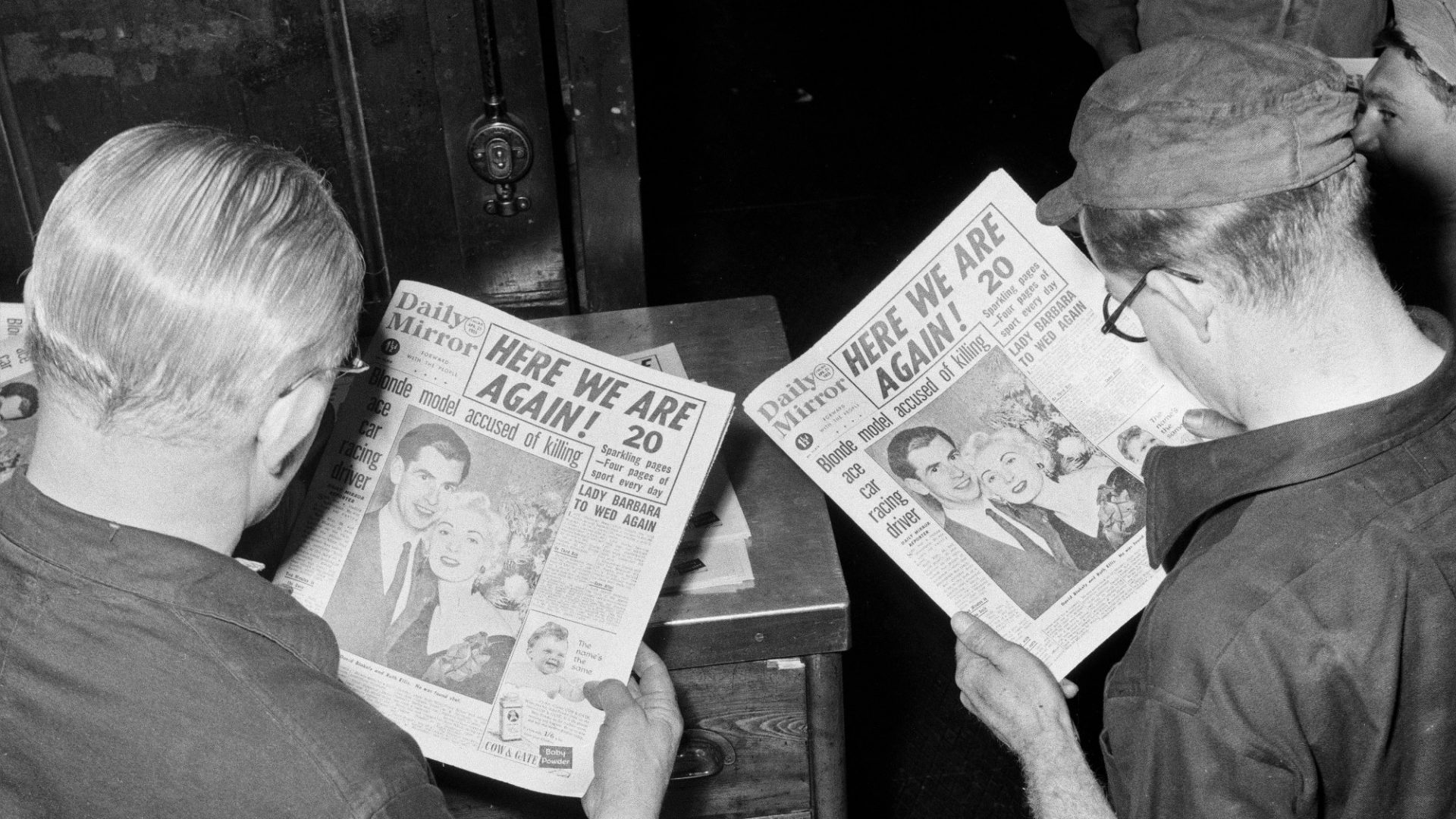
On April 10, 1955, Ellis shot her lover, racing driver David Blakely, outside the Magdala pub in north London. The pair had met just two years earlier at The Little Club, where Ellis worked as the manager. Blakely was a frequent customer, drinking with his colleagues. It was there that their affair began, but it soon turned toxic.
Blakely abused Ellis emotionally, financially and physically, once kicking her so violently that it caused her to have a miscarriage – details she was reluctant to air in court. In the end, the trial was brief, with the jury taking 20 minutes to reach a guilty verdict. But Ruth Ellis’s story has had a far longer lifespan.
After her execution, Treger says, there was a “wave of revulsion”. More than 500 protesters had blocked the entrance to Holloway prison on the day of her hanging and, two years later, the concept of diminished responsibility – which would probably have saved her – was introduced into British law. In 1965, capital punishment was suspended and Holloway’s death row, where Ellis spent her last weeks, was demolished. For Treger, Ruth Ellis was a pioneer in both her life and death.
Suggested Reading


Sorry, but Ted Lasso is no feminist
Treger’s protagonists tend to be trailblazers, forced to suffer. In the fearless Madwoman, she delves into the mind of Nellie Bly, America’s first female investigative reporter, who had herself committed to a mental institution so she could write about the maltreatment its patients received. In the beautiful The Paris Muse, she takes on the heartbreak of Dora Maar and the untold story of Picasso’s romantic inspiration.
But this time, she concedes, she nearly broke with her literary convention and wrote the novel from Ellis’s solicitor’s point of view, John Bickford. “I needed a legal perspective to provide moral justification for Ruth’s behaviour,” Treger explains. Using Bickford as her narrator would also become a vehicle for portraying how entrenched misogyny and class were in the British legal system.
Yet, she couldn’t get Ellis out of her mind. “She looked like Marilyn Monroe. She had this blonde hair and sultry eyes. And she emptied six bullets; four into David, one ricocheted, and another hit a passer-by.”
In 1955, the case gripped the British public, providing weeks of front-page headlines. It’s a fixation that has yet to cease, with adaptations of the story including Mike Newell’s 1985 Dance with a Stranger (starring Rupert Everett and Miranda Richardson) and more recently, the exceptional A Cruel Love, with Lucy Boynton, Toby Jones, Nigel Havers and Laurie Davidson. Now, A Fatal Love is here, proof that Ruth Ellis and her fate still haunt us.
Today, Dalrymple’s words scratch at Treger. She says they prove that the societal beliefs Ellis fought against remain “alive and well”. Men continue to operate under the same assumed code of silence that existed in the postwar era. “It’s still very much there. Sadly, we still live in a patriarchy and misogynistic attitudes prevail.”
She continues: “Society still struggles to place strong women. Look at the language used; a strong woman in the workplace is called bossy, strident or shrill, whereas a man displaying those qualities would be called a leader. I don’t think that’s changed.”
According to Cliff Davis, a driving colleague of Blakely, the pair should never have met, as they reacted to each other like “dynamite”. I ask Treger what would have happened if they hadn’t?
She muses over the financial security and rose-tinted world Ellis might have found, but is quick to acknowledge that she may only have met “another David Blakely”. As Treger exquisitely writes, their “desire bloomed like a stain”.
“One of the reasons I write the books I do is to highlight how, in some ways, things have changed for women. But in others, they haven’t changed at all,” Treger says, explaining how the UK criminal justice system continues to fail women who commit crimes in self-defence after prolonged periods of domestic abuse.
“They still get punitive sentences. Sally Challen is one well-known example. She was convicted of the murder of her abusive husband, Richard, and jailed for a minimum of 22 years. In 2019, after her son, David, campaigned for her, the sentence was quashed, and she was retried and given a sentence of manslaughter,” Treger explains. In 2020, a judge ruled that Challen could also inherit his estate.
“This is why [Ruth] Ellis’s case is so important. It highlights these serious shortcomings in the law that are still going on.”
“Please forgive the dog-ears,” I say to Treger as she reaches across the table for my proof copy of A Fatal Love. Treger laughs off my apology (“You should see the copy that’s been passed around my children!”) and begins hunting through the novel. Treger knows exactly what she is searching for: some of Ellis’s final words: “Perhaps after I die, the truth will be known.”
“Ruth was satisfied with the verdict, but not with the way the story was told. I think that the pardon rights that, to some extent,” Treger says. The posthumous pardon does not overturn the guilty verdict, but reduces the death sentence to one of life imprisonment, acknowledging that death should never have been the punishment for a woman in her severely traumatised state. None of it can bring Ruth Ellis back, or undo the generational trauma inflicted on her children.
Ellis’s son, Andre, never recovered from his mother’s execution. He lived in a bedsit for most of his life, telling others that his mother visited him in visions at night, and he took his own life at the age of 37.
Suggested Reading

How Trump warped the minds of the world’s young men
Her daughter Georgina, Treger says, was “beautiful, blonde, charismatic and had a lot of Ruth’s attributes”. Georgina was adopted at the age of three, one year before her mother was hanged – a fact she only discovered years later at her adoptive parents’ house. “She led a chaotic life as a result. She was an alcoholic, and she died of cancer aged 50,” Treger adds. Then there are Ellis’s grandchildren, Laura Enston and Stephen Beard, whom Treger has met and who led the fight for their grandmother’s pardon.
When we began the interview, Treger told me that, during her research, Ruth Ellis took up constant space in her mind. Perhaps for the novel to be written, Ellis always needed to inhabit this spot, but even with the publication date looming, it’s clear that the author has yet to bid her farewell.
“You’re right – she’s still in my head,” says Treger. “She is almost part of me, and if my book, in any way, highlights the injustice that was done to her, then I will be happy.”
A Fatal Love by Louisa Treger is published by Bloomsbury on August 27