I am the worst person to watch football with. This is for two reasons; firstly, I know very little about the sport, but, secondly, that does not stop me from shouting the few phrases I do know at the screen. It’s all heart, very little knowledge. This brings me to Ted Lasso.
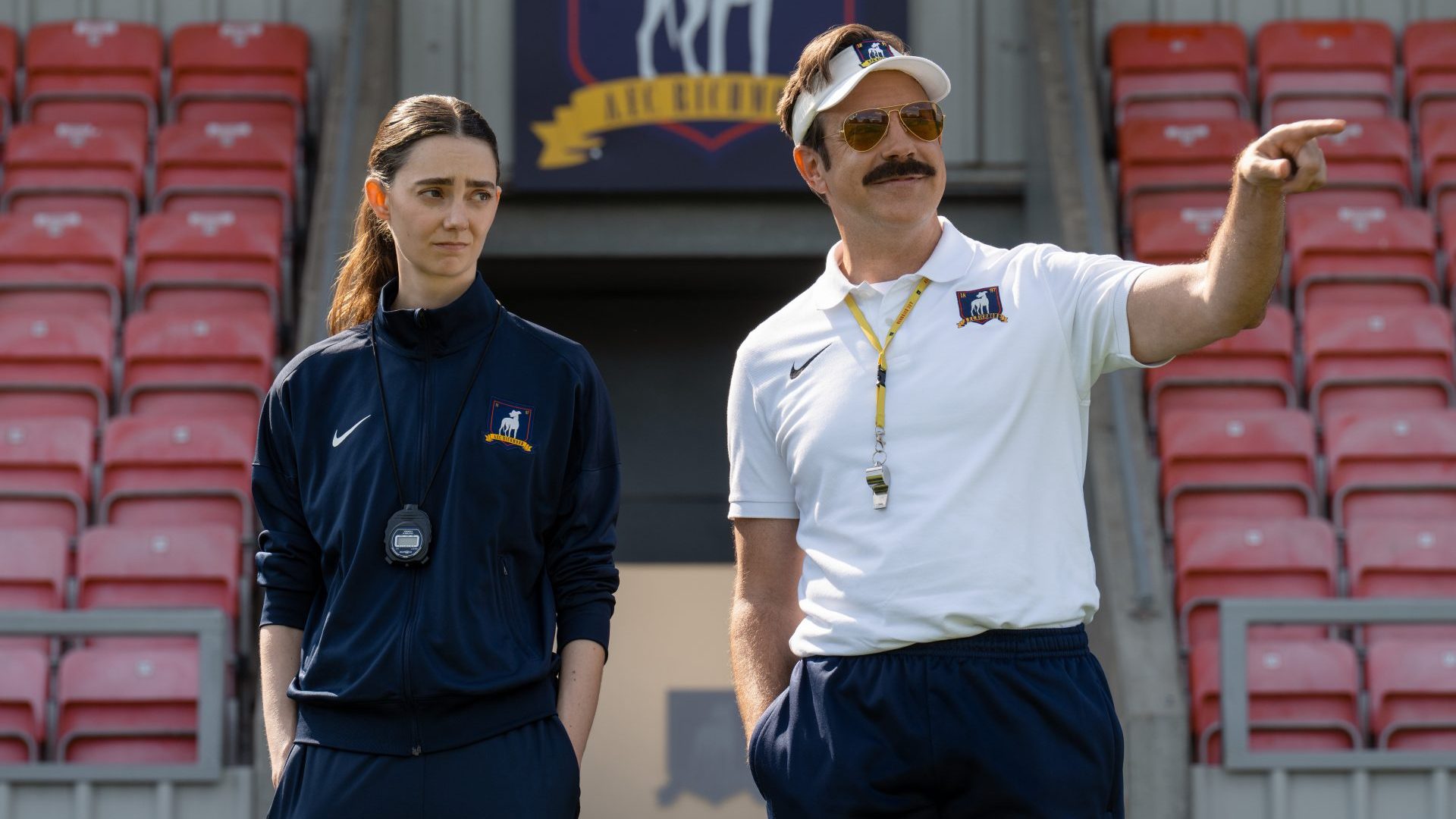
Over three years after the third series aired, Jason Sudeikis’s show about an NFL coach hired to save the flailing AFC Richmond football team has returned. When the previous, and at first thought final, season ended in 2023, plot lines had been neatly tied together.
After being the most-watched original series of the year and securing 11 Emmys, sometimes it’s good to know when to step away. After all, it made watching Ted (played by Sudeikis, the show’s co-creator) board a plane back to the US in the series finale ever more apt. But now the team’s back together, only this time, the focus is the soon-to-launch women’s team.
And with that, we’re certainly not in Kansas anymore – only as the series starts, we are (or Kansas City, Missouri, as the joke continuously plays out through the opening episode). Playing on The Wizard of Oz, Rebecca (played by the exceptional Hannah Waddingham), Keeley, complete with red sparkly Dorothy-esque high heels (portrayed by Juno Temple) and Higgins (the ever-endearing Jeremy Swift) journey Stateside to bring their beloved coach home with an offer they’re hoping he’ll jump at: to come and coach the Lady Greyhounds (yes, really). As metaphors go, it’s about as glaringly obvious as it gets.
I have never wanted to love a show’s series more. I devoured the first three once I realised that, in reality, they had very little to do with the actual sport Sudeikis’s character has been hired to coach. For me, the enduring appeal was that, much like myself, the show’s protagonist knew nothing about football. Ted and I were on a level playing field – or pitch.
Its writing was a delicious mix of wholesome and razor-sharp and I quote many of the quips regularly. Like when Rebecca asked Ted if he believed in ghosts: “Yes I do. But more importantly, I think they need to believe in themselves.” and my personal favourite, during a different exchange between the pair after Rebecca revealed she pulled some media strings to prevent a compromising photo being printed: “I spoke to the owner of The Sun” she says to which Ted shoots back, “You spoke to God?!”
But try as I might, I couldn’t get on board with this. The writing has abandoned Ted’s ordinary tactic of creating his team through moulding each of his players into the best versions of themselves. Instead, the narrative is not really about the individual footballers at all, but the gender imbalances women face in football. There was a real chance to score here but instead, the writers knock it into the back of their own net.
Suggested Reading

Ricky Gervais’s Alley Cats is even worse than you thought
Suddenly, Ted’s folksy charm now feels accidentally patronising towards the female players and his attempts to be a good ally come across as somewhat forced. Even when poking fun at the logistical issues he faces with his team, such as not being able to walk freely into the locker room, arriving instead with a clang (especially when he takes to entering with a bin on his head to shield his eyes).
Rebecca, for some reason, seems to have gone from the fiercely independent club owner, the lone wolf in a man’s world, to questioning her own feminism every other second, a bell hooks book on stand-by so she can justify each argument she makes.
Still, some home truths are enjoyably delivered. Ted’s new assistant coach (played by the brilliant Tanya Reynolds) is passed over for the top job and poses the question that she lets awkwardly hang in the air: if the point was to improve women’s visibility in football, why wasn’t a female coach hired?
The women’s team brings with it a new set of characters. But, of the five episodes available for review, it feels like we’re yet to truly know any of them (save for two Irish twins who can’t stop fighting long enough to kick the ball and a tough-as-old-boots goalie). We’re missing the grumpy schtick of series 1 Roy Kent, who now forms a somewhat background presence, only really serving as the will-they-won’t-they love interest of Keeley. We feel the absence of the shameless obnoxiousness of Jamie Tart, the unfaltering enthusiasm of Dani Rojas and even the endearing quirks of Isaac McAdoo. In fact, so far, there’s really very little football involved at all.
Suggested Reading

Here’s a show you’ll love, Donald – it’s all about you
But this was the great premise of Ted Lasso. It was about the men – the team.
As Ted scribbled on the first draft of the show’s sports reporter Trent Crimm’s manuscript entitled The Lasso Way, after following the team in the last series, it was never about him.
It is this element that feels lost; you cannot take on the sexism, pay gaps and corruption in football in a whimsical, light-hearted way. Or, if you can, this isn’t it. Women’s football is no joke, so was a comedy spelling this already-made point ever going to work? The entire plot suddenly feels five years too late.
Ted Lasso’s fourth series is fine. That’s it; not outstanding nor catastrophically bad, simply okay. I would be content to accept this, but then I hear Roy Kent’s words ringing in my head: “Don’t you dare settle for fine.”
 Most popular

Churchill, the Beatles, St George: All the English heroes who aren’t actually English


The New World at 500: Independence isn’t our marketing slogan. It’s our business model

The problem is they just don’t care about us any more

Sorry Nigel, but the polls show you’ve had it