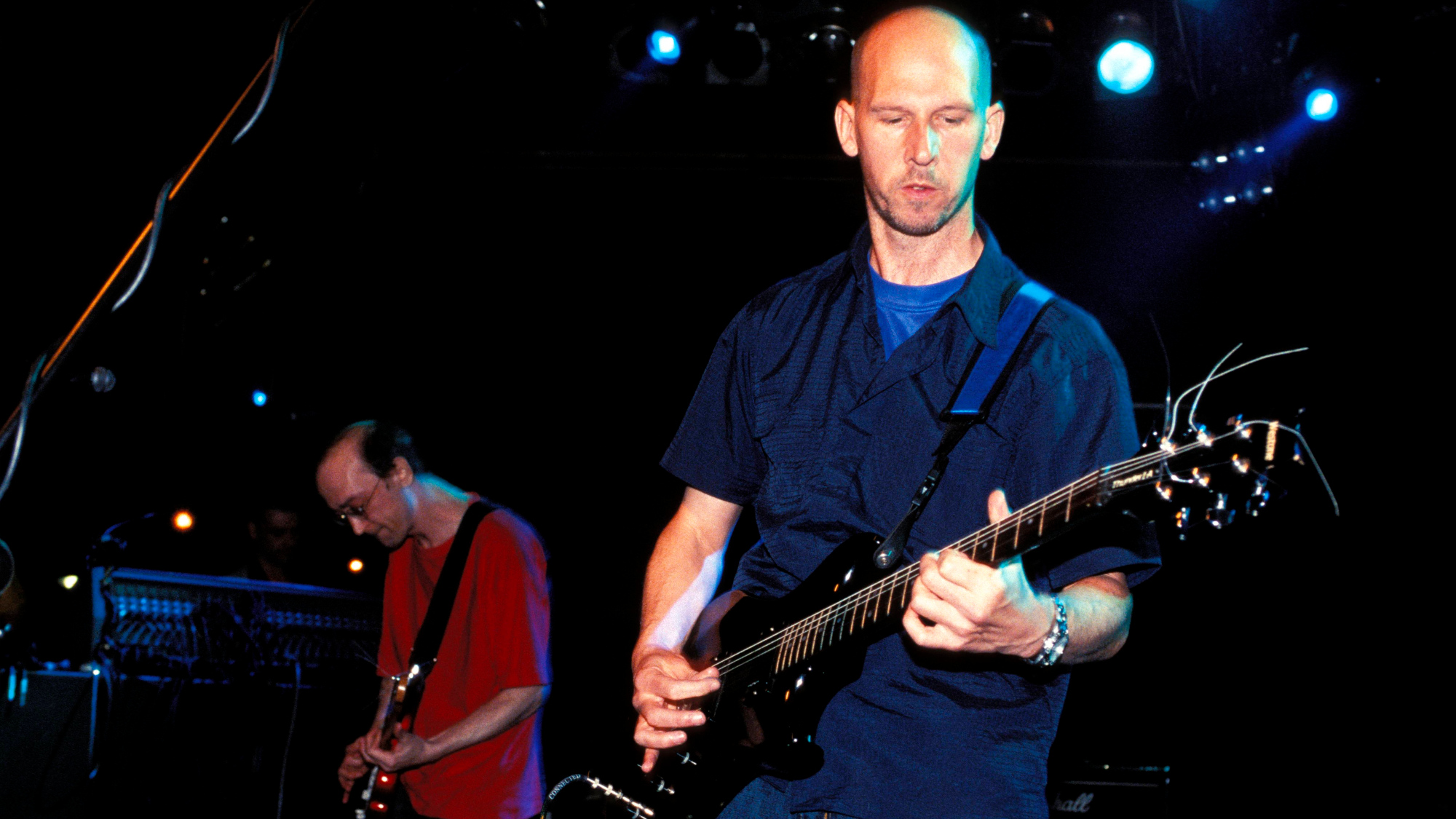
Forty years ago, four ne’er-do-wells from the Wirral were included in the highly influential C86 compilation released by the NME. Now associated with a certain type of twee indieness, the collection also contained a surprising number of noisy, left-field choices. None more so than a man screaming about his hatred of Welsh actress Nerys Hughes for around three minutes and 43 seconds. This was my, and many other people’s, first encounter with Half Man Half Biscuit.
And the band are still, on occasion, letting their feelings about Nerys Hughes be known, as well as such figures as snooker referee Len Ganley, the late Ground Force regular Tommy Walsh and goalkeeper-turned-pundit Bob Wilson. Sixteen albums and roughly 213 songs later, they occupy an entirely unique niche in the musical landscape.
HMHB have evolved from what was perceived as a novelty/comedy band (describing themselves as “The Grumbleweeds without the fun”) into the poet laureates of mundane British life, channelling the distinct frustrations, pettiness, shoddiness, unfairness, contradictions and pathos of life in this nation today.
They’re now in the odd position of being national treasures, albeit in the National League of national treasures. And they have a fanbase that can be politely described as “fervent”.
Suggested Reading

The Manhattan art couple who should have been huge – but weren’t
Steve Hill, author of Friday Night Fever, the first book about the band, describes this devotion to the band as a cult. This seems apt.
As his book reveals, there is an obsessiveness among Biscuit fans that reaches an almost religious intensity, coupled with a certain level of protection. They glory in the acts of their heroes while not wishing for too many people to join them at the party.
It’s a stance that many musical outfits trying to make a living in straightened times would balk at. But Half Man Half Biscuit are a band who are happy in their rut.
Friday Night Fever contains a few meagre emails from the mysterious head Biscuit Nigel Blackwell, the odd interaction in a pre-gig pizza place, plus the odd quote gleaned from decades-old interviews. But little else.
This is because the band have absolutely no interest in anything connected to the conventional music business. They release their own records, refuse to do any publicity, play around 10 shows a year and appear to do just about enough to keep their heads above water financially.
This disconnect has led to the band acquiring a certain mystique. Or as much mystique as you can acquire while singing about Argos and knobheads on quiz shows.
This isn’t some sort of carefully constructed marketing ploy. It’s just the way they prefer to do things. And whether by accident or design it works for them, beautifully.
Into this void, Biscuit devotees drop their theories, titbits of gossip and resolute adulation. Hill’s book chronicles three years when he travelled to every far-flung Biscuit gig. As he does, he meets and befriends a legion of fellow fans including King of High-Vis, Postman Tony, Wizard Tony, Crispy Ambulance Man and anti-Chemtrail Graham.
They often arrive at gigs in outfits denoting the band’s more obscure numbers. Hill customarily dons a Dukla Prague away kit, elsewhere attendees wear Styx T-shirts, tour jackets with detachable sleeves and, obviously, Joy Division oven gloves.
It’s a sweet devotion. Though you do worry for the author’s internal organs as he appears to survive on a diet of fizzy lager, chips and post-gig kebabs as he follows the band to Holmfirth, Stowmarket and Llangollen. But this toxic stew only seems to fuel his passion, listening to the band’s entire back catalogue on shuffle as he speeds up and down various A and B roads.
As the gigs proceed, you catch glimpses of the lives of these Biscuiteers. They’re mostly men of a certain age (some women do attend, but they are heavily outnumbered), some retired, some divorced, some struggling, all revelling in the camaraderie that the band provides.
Suggested Reading

Meet the monster who created Donald Trump
There’s a real poignancy to the bond they display and feel. They rarely speak of their emotions but accept that the fellowship they’ve developed by watching the band play Sealclubbing for possibly the 100th time seasons their lives with something special and provides a certain type of support.
So am I saying Half Man Half Biscuit may be the solution to the male masculinity crisis? Yes, absolutely. They should be prescribed on the NHS.
Ideally, albums should be doled out with every annual prostate check. Which is, I feel, a marketing scheme the band would wholeheartedly get behind.
Friday Night Fever: Inside the Cult of Half Man Half Biscuit by Steve Hill is published by Route Publishing