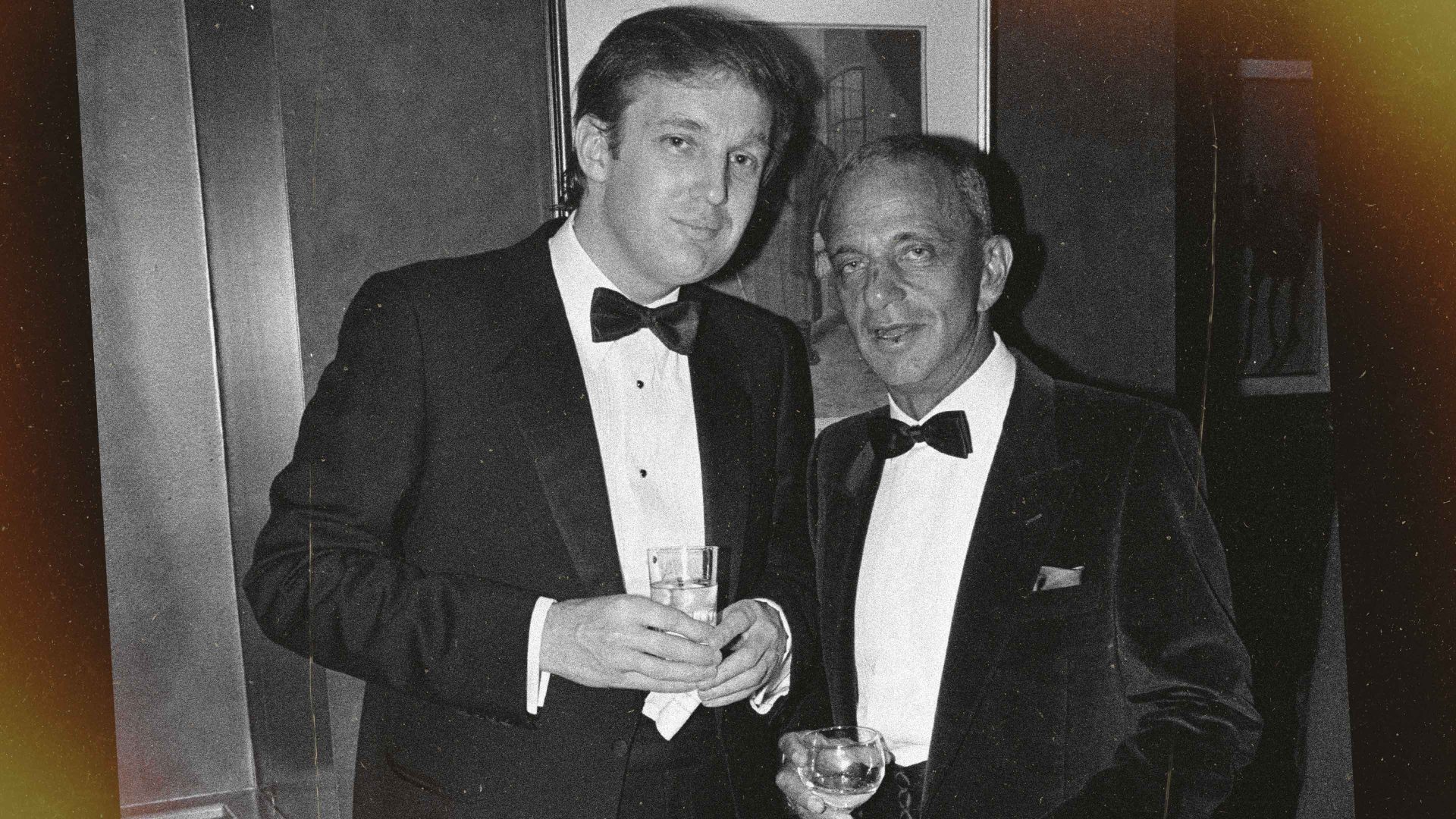
A lawyer at Roy Cohn’s law firm had a problem. Cohn had asked him to mitigate a case in a certain way, and this particular employee could not fathom a way to do it. Cohn was furious.
“What time is it?” Cohn barked at the frightened lawyer.
“It’s nighttime. It’s dark,” he stammered in reply.
“No,” Cohn said. “I tell you it’s daytime. And I’ll prove to you it’s daytime.”
This was a vital tenet of Roy Cohn’s life. If inconvenient facts sit in your way, just circumvent them with lies. If someone says it’s night, just argue that it’s day until they relent. And, eventually, they’ll always relent.
If this kind of incoherent, infuriating rhetoric sounds familiar, it’s because Cohn’s methods of misinformation and obfuscation have been adopted wholesale in recent years. Donald Trump was a Roy Cohn protegee. Trump took on the Cohn playbook and took over the world.
Many of the planet’s ills can be laid squarely at the feet of Roy Cohn. And I’m sure he would be delighted.
Pulitzer Prize-winning authors Kai Bird and Susan Goldmark have dredged the life of Cohn, a prosecutor turned celebrity lawyer and right wing fixer, in American Scoundrel. The title is apt.
Cohn avoided jail, assassination and thorough repudiation through a mixture of charm, flattery and favours made and repaid. Even virulently liberal figures, such as writer Norman Mailer, were won over by his charisma while being completely disgusted by his politics.
He had the innate ability to convince anyone that he’d been misrepresented or misunderstood. Nothing was ever his fault. Everything was deflectable.
The question arises: how do you make such a man? Cohn was despicable, hypocritical, distasteful and corrupt. Unsurprisingly, he was the result of a loveless marriage.
His father Al, a lowly lawyer, had dreams of becoming a judge. To accommodate this, he married Dora Joseph.
By all accounts, Dora was a monster; snobbish, cruel and critical of all. But her family were powerful bankers and after entering this marriage of convenience, Al’s new family pulled strings and he became a judge. String-pulling would be another important Cohn technique.
From a young age, Cohn used and abused his father’s position to establish his own legal career. With his father’s help, he became an assistant US attorney at the age of 21. This was in the early 1950s, just as the ‘red scare’ was establishing itself.
Cohn knew the Rosenberg trial could make him a star and angled to work on the case. Julius and Ethel Rosenberg were accused of passing information to the Soviets. Julius was almost certainly guilty. Ethel probably knew very little.
Suggested Reading
Documentary Now!, the fake doc series that’s really good
But Cohn drove to have them both executed, despite them having young children, offering to “pull the lever myself”. Despite massive opposition, both Rosenbergs were sent to the electric chair, and Cohn used the notoriety to join Senator Joseph McCarthy’s crusade against communism.
Often sitting beside McCarthy as televised witch hunts ruined numerous lives, Cohn delighted in smoking out reds and homosexuals (despite being a closeted gay man). But he soon made a misstep.
Cohn became infatuated with his assistant David Schine. When Schine was drafted into the army, a furious Cohn battled to have him stationed close to home. This request was ignored and Cohn went to war against the US Army. Soon Cohn, the master of insinuation, was rumoured to have had more than professional feelings for his handsome assistant. He was removed from the McCarthy project, a rare defeat in his life.
He moved back to New York and into private legal practice, often defending mobsters and the ultra-rich during their divorce proceedings. He developed a reputation for being terrifying and well-connected.
“Don’t tell me the law, tell me the judge,” became his mantra. Despite overwhelming evidence, he seemed to have an innate ability to bend the bench to his will. He was often in the dock himself, charged with perjury, corruption and financial misdeeds. He always seemed to survive by the skin of his teeth.
The elite of New York, including Trump, liked a survivor. Cohn flourished. And after the death of his beloved mother Dora, he tentatively emerged from the closet, at least in private.
Cohn’s relationship with his own sexuality makes for fascinating, disturbing reading. He genuinely seemed to think he wasn’t gay, but simply a man who liked to sleep with other men. And not always men.
Suggested Reading
When Fred Trump lost his mind
One of the most upsetting chapters in American Scoundrel deals with Cohn’s liaisons with a boy trafficked from a Northern Ireland care home. The 15-year-old was taken all the way to Venice, where Cohn abused him.
The queer community, buoyed by Stonewall and the burgeoning gay liberation movement, despised Roy Cohn (as illustrated in Tony Kushner’s incredible play Angels in America, which features Cohn). He was known to hire young gay hustlers, while defending the mafiosos who corruptly ran many of New York’s gay bars and campaigning against any form of gay rights.
Many of Cohn’s powerful friends refused to accept or believe the rumours about his sexuality, others knew and didn’t care. But soon, this seemingly indestructible man was faltering
As Cohn grew increasingly frail during the 1980s, he claimed to have liver cancer. But many identified the sarcomas associated with AIDS. His death was slow, painful and degrading, like many inflicted with the disease at the time.
Despite his wealth, despite his power, despite his ability to survive, he couldn’t escape this time. He died in 1986.
But Roy Cohn’s legacy lives on. Lies are spread, facts denied, lives destroyed and rights eroded using many of the techniques he established.
Despite their skill and level-headedness, anger permeates Bird and Goldmark’s book. Cohn coasted on charm, just as Trump does today, but as we are all increasingly aware, this is not enough.
One vital trait that Cohn lacked was substance. He was a man without conviction, happy to argue night was day to get what he wanted, happy to switch sides, spread falsehoods or openly deceive to serve himself. The world’s a substantially better place without him.
American Scoundrel: Roy Cohn’s Dark Journey from Joe McCarthy to Donald Trump by Kai Bird and Susan Goldmark is published by Simon & Schuster
 Most popular

Emily Maitlis’s diary: Trump doesn’t fear the AI apocalypse – but he’s terrified about the midterms
The decline of the Daily Mail
If Shabana Mahmood is tough, why is she so slow to crack down on Danny Tommo and the far right?

What the rich and powerful are really saying about AI