I’ve always been fascinated by those who don’t quite make the cut.
There are plenty of artists who are revered and venerated, the subject of documentaries and box sets and limited series on Disney+. And then there are the ones who drift away, loved by heads but rejected by the masses.
There’s a million of those stories. Nobody bought Big Star’s Third. Gram Parsons got torched in the desert. There’s no one better than Judee Sill, but where are all the statues of Judee Sill?
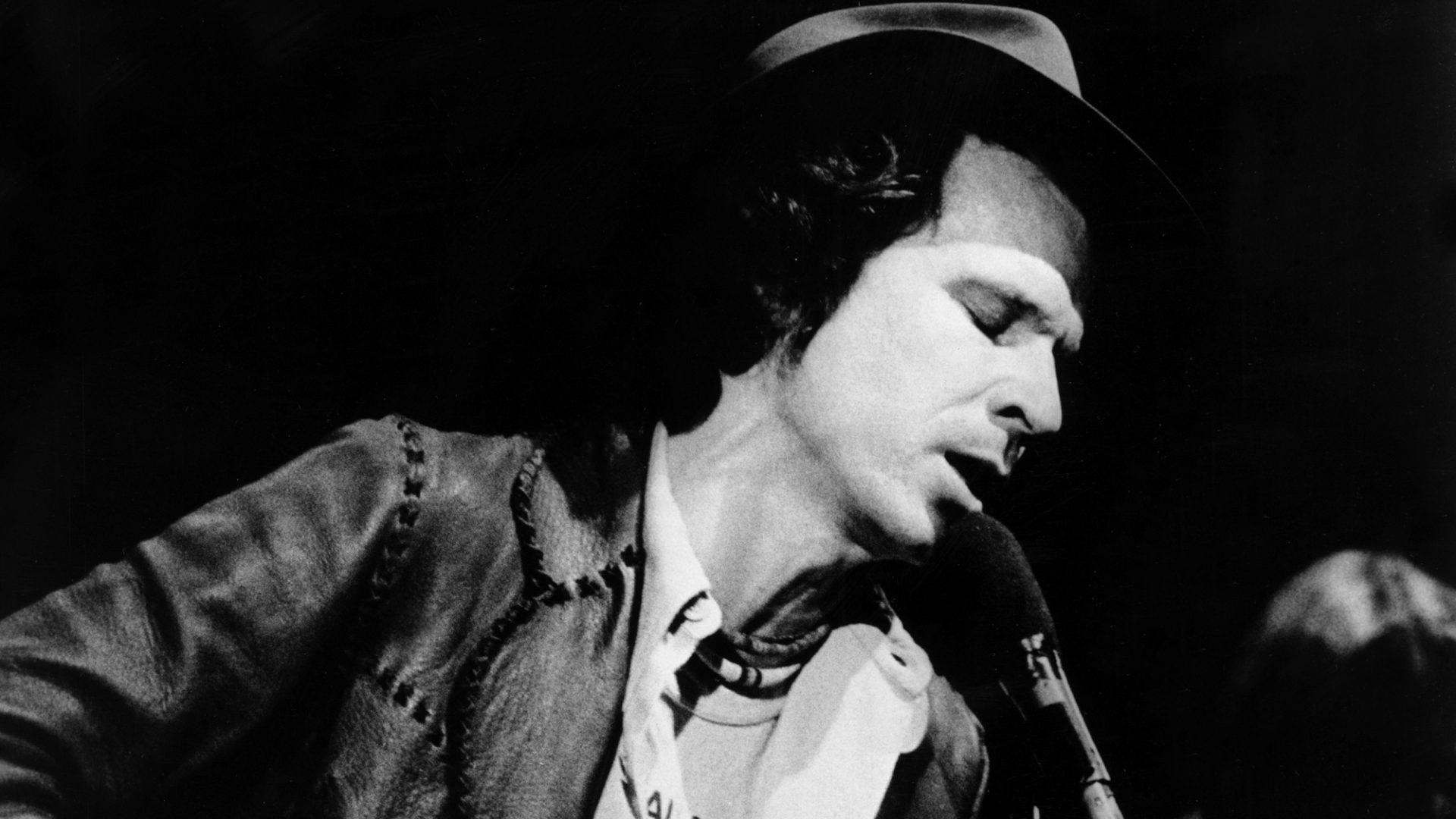
Gary Stewart slips easily into this list, a prime candidate for cult status. As troubled as he was talented, his background was truly demented. His drug intake was staggering, he was loved by Bob Dylan, he resembled the bastard son of Hank Williams and 1970s Elliott Gould, he had hits with astonishing titles like She’s Actin’ Single (I’m Drinkin’ Doubles) and he sang like an angel.
On the Outlaw Country Mount Rushmore, you can picture him nestled alongside the granite edifices of Johnny Cash, Merle Haggard, Waylon Jennings and Willie Nelson. Despite playing the country music game for much of his career, Nashville constantly rejected him. Stewart was just a little too outlaw.
But one man is determined to resurrect him. Legendary music writer Jimmy McDonough’s first big piece was a 1988 profile of Stewart for the Village Voice newspaper. It briefly gave Stewart a glimpse of hipster veneration. But like so much of his career, he couldn’t quite exploit the recognition.
But McDonough didn’t give up, extolling the virtues of Stewart wherever he could. But the complexities of Stewart’s life eventually caught up with him. Stewart died, by his own hand, in 2003, shortly after the death of his beloved wife, Mary Lou. But McDonough kept the faith, determined to honour Stewart’s legacy, resulting in the epic telling of his breakneck life:
I am From the Honky-Tonks.
“There are moments,” McDonough tells me, “where you discover a subject matter and you think, instinctually, ‘I gotta know about this. There’s something here that’s calling me’. And that was so with Gary. And the more I heard his music, and then saw him live, I just couldn’t believe that the world didn’t know more about this guy. And it just became a cause.”
You can understand what drew him to the story of Stewart, one of nine kids born to George (miner and cockfighter) and Georgia (Avon lady and drug dealer). Each of the Stewart siblings deserve a book of their own. Their adventures are jaw-dropping, a sort of OxyContin-riddled, X-rated, Dukes of Hazzard episode.
“They’re a unique bunch,” McDonough says with understatement. “They came from nothing in Kentucky and got dropped into some heavy action in Florida. And this is their story. And I’m still learning it. There are dark corners, like there are in many families. And there certainly are to the Stewarts.”
A music obsessive, Stewart tried making it in Nashville as a songwriter before becoming a recording artist in his own right. A smattering of country music chart hits in the mid-70s led to diminishing returns, some dubious artistic choices, blistering live shows (when he showed up) and a slow descent into drug abuse. It’s a music tale, but it’s also the story of growing up poor in the American South. The Florida town the Stewarts landed in, Fort Pierce, became a drug hub; first cocaine, later Oxy.
“I didn’t want to come off like I understood all this stuff or that I was casting judgment,” McDonough explains. “I just wanted to present them in all their ragged glory and let the reader decide.”
At the heart of the book is the love affair between Stewart and his devoted wife, Mary Lou. Meeting as kids, they were both free spirits who, as evidenced in the book, couldn’t care less what anyone thought of them. This often led to friction – in the family, in the marriage and in the wider world.
“I wish Mary Lou was here,” McDonough tells me. “She would have cackled and cried with every page. And Gary probably would have thrown it at my head and then said he liked it.”
Suggested Reading

If bookshops die, then part of us dies with them
It’s a tragic love story that was never going to have a happy ending. Drug dependency blighted the couple’s later life, and question marks still hang over Mary Lou’s death. Their daughter, Shannon, who still lives in the house her parents shared, was a major motivator for the book.
“She’s fully committed to getting her father his just due in the world of music. And she’s a Stewart. I can tell you, Dale, there isn’t a phony bone in her body.”
Stewart became McDonough’s passion project, simmering away on the backburner while he wrote critically acclaimed, bestselling biographies of Russ Meyer, Tammy Wynette, Al Green and, most controversially, Neil Young.
Ever the control freak, Young fully co-operated with McDonough on the biography Shakey, then pulled the plug at the last second, for no particular reason. Many years of litigation followed until it was finally released in 2002. It made McDonough’s name as a biographer, but also took its toll.
“Actually, I felt for Neil,” Jimmy tells me. “He’s thinking this guy has talked to everybody on the face of the earth. And I can’t imagine that it was easy for him. But he agreed to do it. But when it came time to unveil this to the world, he changed his mind. What a surprise. Neil Young changes his mind.
“It was torture. But it gave me a career, it enabled me to do all the rest of the shit I’ve done.”
This career has culminated in the scurrilous, occasionally distressing, always entertaining story of Stewart and the rest of his family. It feels like one of those epic music biographies, like Shakey, that demands to be read whether you’re a honky-tonk devotee or not. But the effect on McDonough, who has vowed this will be his last biography, can’t be underestimated.
“You know, this book really haunted me,” he says. “I thought the haunting would be over once it was done, but it just has its grip on me still. It just feels like it will never be finished, I guess.”
We will wait and see where McDonough goes from here.
Gary Stewart: I Am From the Honky-Tonks by Jimmy McDonough is published by Wolf+Salmon.
Dale Shaw is producer of the You’re Booked podcast