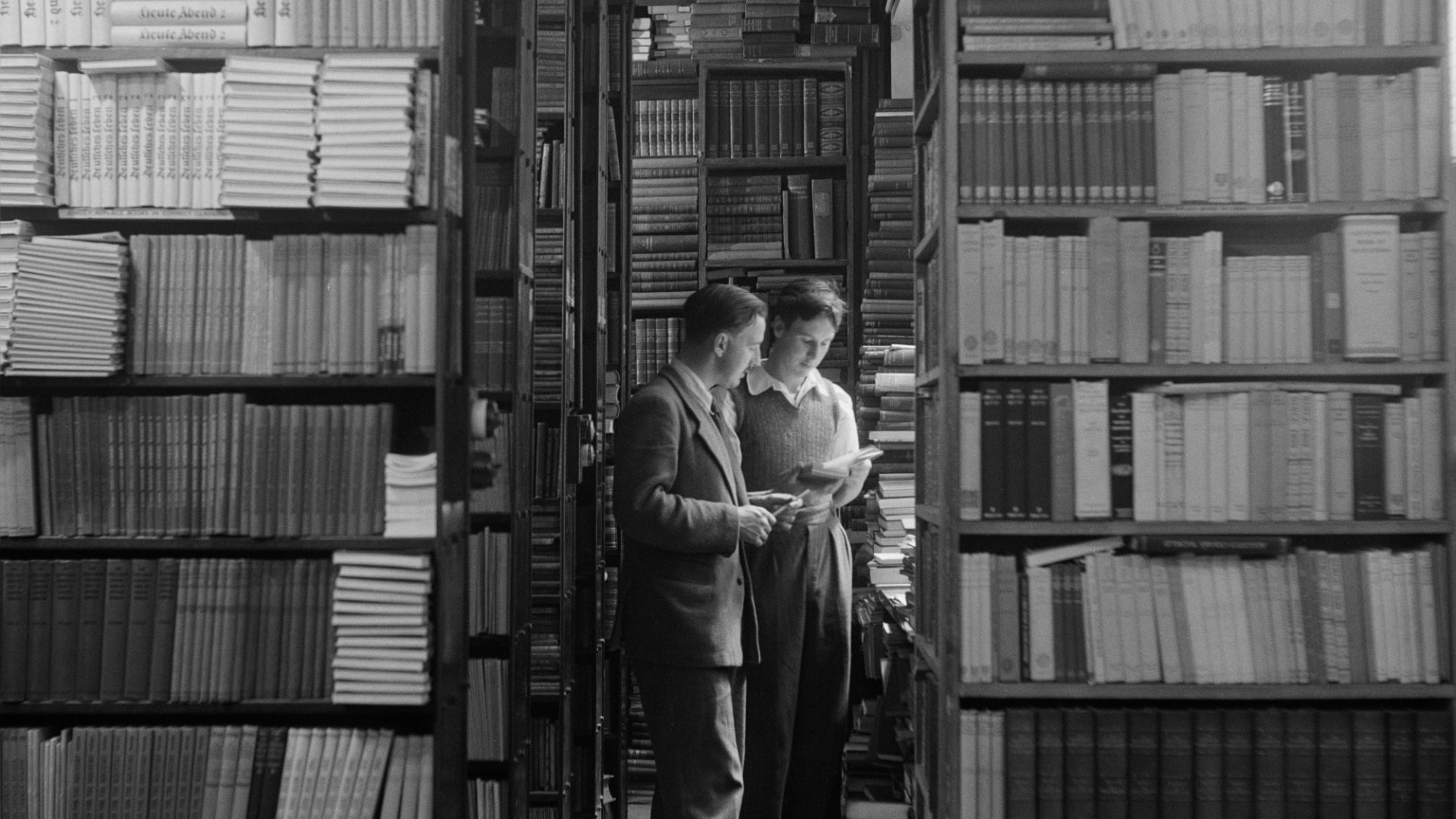
“A bookseller has to tell lies about books, and that gives him a distaste for them,” George Orwell wrote in 1936. “The sweet smell of decaying paper appeals to me no longer. It is too closely associated in my mind with paranoiac customers and dead bluebottles.”
In the same essay, Orwell, quite snobbishly, bemoans the clientele he encountered while working at Booklovers’ Corner in Hampstead (now a Gail’s). Old ladies who had read something in 1897 but couldn’t remember the title or author, only that it had a red cover. The anti-literati who wouldn’t know a “good” book if it ran up and kicked them. Dusty old men who hung about, offered opinions, killed time and never parted with their money.
And the beautiful thing is, almost 100 years on, very little has changed. Booksellers still make the same complaints about vague customers, pretentious opinion-sharers and time-wasters. Bookshops remain places of freedom and refuge for malcontents, eccentrics and the generally obtuse, to probe, prevaricate and pander.
I’ve worked in many bookshops over the years. Chain ones, used-book stores, independent ones. During Washington DC’s infamous blizzard of 1996, I trudged through 3ft snowdrifts to feed the bookstore cats at Second Story Books in Bethesda, Maryland. I worked in another, Olsson’s, that seemed to survive purely on sales of John Kennedy Toole’s A Confederacy of Dunces, which one fevered staff member managed to sell to almost everyone who walked through the door.
I met Umberto Eco at this same bookshop. He wasn’t doing an event, just signing stock. As I handed him books, he told me a very good story that I have since completely forgotten.
It goes without saying that bookshops are magical spaces. Children discovering an author who alters the way they see the world. The thrill of stumbling across something that might change your life. Trying to impress someone you’re trying to impress with a favourite title or author. No shade on Aldi, but you just don’t get that in Aldi.
But because we live in what will surely be remembered as the “We Can Never Have Nice Things” age, bookshops are under pressure. A recent Booksellers Association survey has highlighted an increase in staff being sworn at or even attacked over stock, perceived political stances, or beliefs they are thought to represent. Of 347 individuals across 227 bookshops, 24% experienced harassment, 19% abuse, 8% bullying and 4% violence – roughly a third facing some form of hostility.
Those reporting abuse described harassment linked to identity or shop values, including racist, homophobic and transphobic abuse, and hostility towards inclusive, Pride-related or Palestine/Israel-related displays. There was also inappropriate conduct towards female staff, especially when working alone, and persistent abuse from self-published authors or promoters.
Earlier this year, the queer indie bookshop The Bookish Type in Leeds spoke publicly about escalating threats, including repeated homophobic and transphobic abuse. One member of staff reported a man who was about to punch her before customers intervened.
Novel, a bookshop in Sheffield, recently closed indefinitely due to repeated harassment, often directed at female staff. Browsers Bookshop in Porthmadog received abuse online and in store after unveiling a window display celebrating LGBTQ+ Pride month.
Bookshops are essential spaces designed to propagate escape, change and imagination. They are gateways to ideas and inspiration. And that, of course, poses a threat to those who fear any opinion other than their own.
This narrow-minded, baffling social media rhetoric now bubbles into real life – a Facebook post growing arms and legs and marching to the nearest point of conflict, shouting itself hoarse in the hope of forcing submission. We can’t let bookshops be treated this way.
Suggested Reading
Mike Pickering, the Haçienda’s secret weapon
So how do we respond? Flood your local bookshop with love. Go there. Buy things. Dwell. Give them oxygen, fuel. Talk to staff. Ask for recommendations.
Pre-order things. Special order things. Infuriate Jeff Bezos. Then repeat as necessary. Keep bookshops embedded in the community. Don’t let them die.
Orwell may not have been born to be a bookseller. Struggling writers selling the work of more successful rivals is rarely a good fit. But he also understood censorship, repression and bullying.
Every bookshop should carry a copy of 1984. And everyone should read it – not as a manual, but as a warning from history.
Dale Shaw is producer of the You’re Booked podcast