“Really awfully good – second time esp,” notes the painter Helen Frankenthaler in her Louvre guidebook, against the entry for Palma Vecchio’s The Adoration of the Shepherds. Not so Susanna and the Elders, by another 16th-century Venetian, Tintoretto, which she likes “less and less”; “perspect[ive] cockeyed”; there’s “something so off”.
Made during a solo trip to Europe in 1956, Frankenthaler’s fastidious Louvre notes are just a fraction of those she made over the course of her six-decade career. The many hours she spent among the great art collections of her native New York and of Europe – which she visited many times – are recorded on the pages of her catalogues and guidebooks in a system of ticks, supplemented with to-the-point observations.
These periods of unbroken concentration and serious looking bear fruit in her own paintings, in which she strikes up dialogues with fellow artists, from the neolithic cave painters of Altamira, to the abstract expressionists of her own circle, especially the sculptor David Smith, and Jackson Pollock.
Not all artists are candid about their influences, but Frankenthaler was remarkably so, famously saying of Pollock: “He opened the way for me and freed me to make my own mark. I mean, I wanted to live in this land, and I had to live there, but I just didn’t know the language.”
Kunstmuseum Basel’s new exhibition is the biggest and most comprehensive survey of Frankenthaler (1928-2011) ever staged in Europe. Its focus is the artist’s relationship with the art of the past, but so in tune is she with the art of her own time, and so intent on finding a language of painting that is truly her own, that despite her copious references, debts and homages to artists from Rembrandt to Whistler, you walk away more convinced than ever of Frankenthaler’s sparking originality.
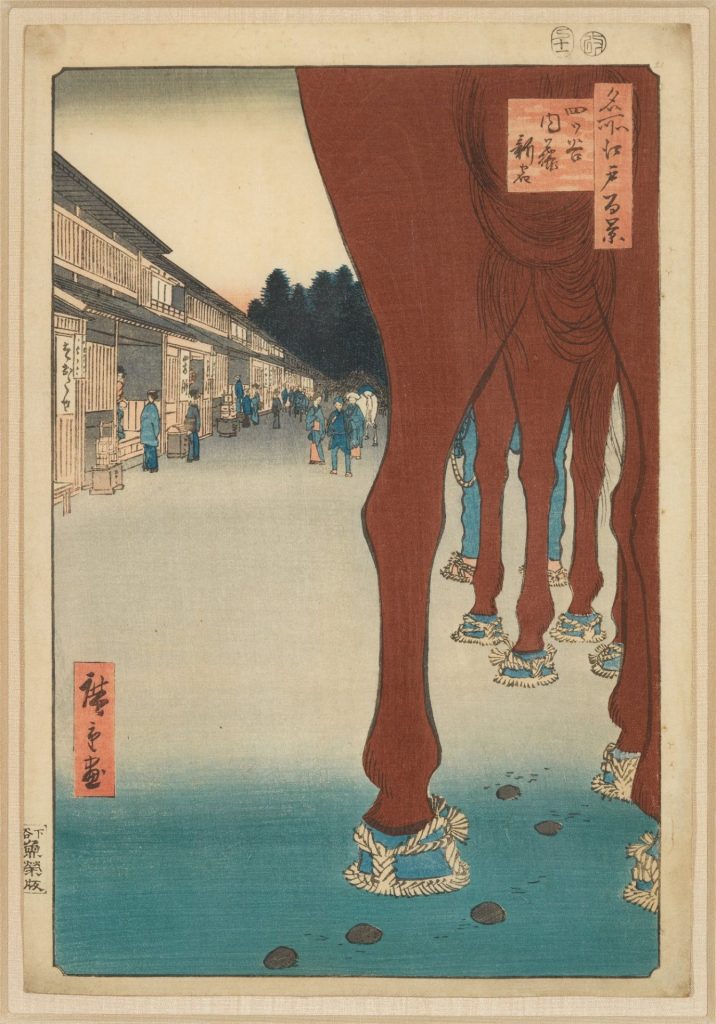
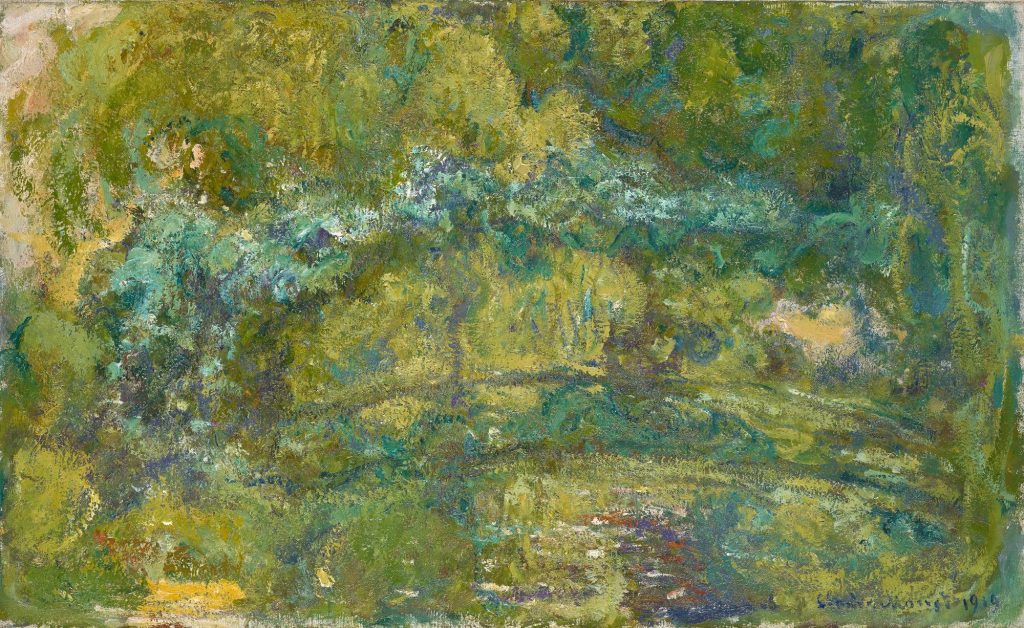
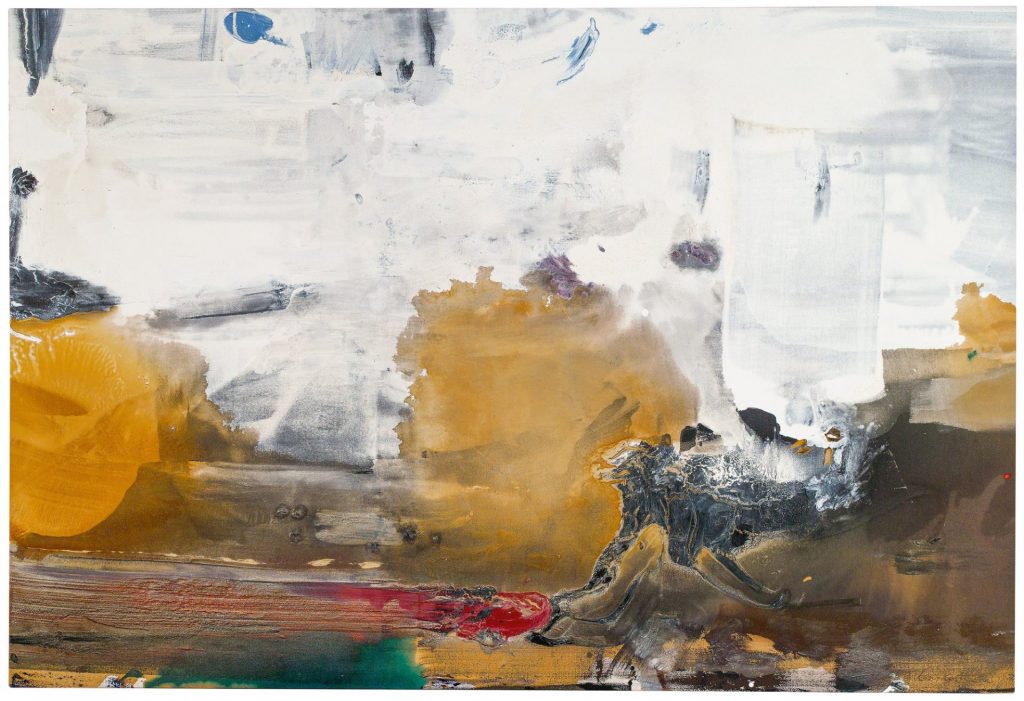
Lavishly furnished with loans from the Helen Frankenthaler Foundation (HFF), European and American museums, and private collections, at various points Kunstmuseum Basel’s chronological survey places Frankenthaler’s paintings next to their source works – sometimes originals, sometimes reproductions.
A room of early examples is heavy with the atmosphere of old Europe. At the Mauritshuis in The Hague, she saw Fabritius’s The Goldfinch, 1654, the memory of which she secures, like a pin through a butterfly, in her own Fabritius Bird, 1960. It’s a curious painting, concerned with evoking the effect on the viewer of Fabritius’s enigmatic work, rather than analysing his technique, its character that of a shadowy afterimage more than a detailed study.
The same thing, perhaps more so, happens in her tribute to Marie Laurencin’s Jeune fille couronnée, c.1925/26, apparently her only work after a female painter, and a lesser-known one at that. In her Hommage à ML, 1962, Frankenthaler retains the fleetest impressions of the girl’s crown, rendered in the dreamy pinks and blues that make Laurencin’s portrait so memorable.
The numinous quality of Frankenthaler’s homage owes much to her soak-stain method, an innovation now recognised as a key moment in the development of colour field painting, which for decades has been characterised as the province of big male beasts, among them Mark Rothko, Clyfford Still and Barnett Newman.
Soak-stain was inspired to some extent by a visit to Pollock’s studio, where – hunting for her language – she saw the possibilities that might be presented by removing the canvas from the easel and placing it on the floor: “I think if one leans over a large canvas on the floor and moves in and around it, it’s bound to have qualities of the shoulder and the wrist and the arm and the back”, she said in an interview in 1966.
Working on an unprimed, and therefore absorbent canvas, she would pour over thinned paint, allowing it to collect or spread, sometimes moving it across the canvas with various implements. The paint – in the first instance, oil – was absorbed into the canvas, the pigment separating from its carrier, which formed a translucent, colourless stain around it.
Oddly enough, despite Frankenthaler’s emphasis on the involvement of the whole body, the effect is not what you might imagine – the vigorous movement so typical of Pollock is completely absent from Frankenthaler’s deep pools of static colour. She quite quickly began using acrylic paint instead of oil, which, when thinned with water, could be moved about the canvas in great washes, but without the halo effect produced by the separated oil.
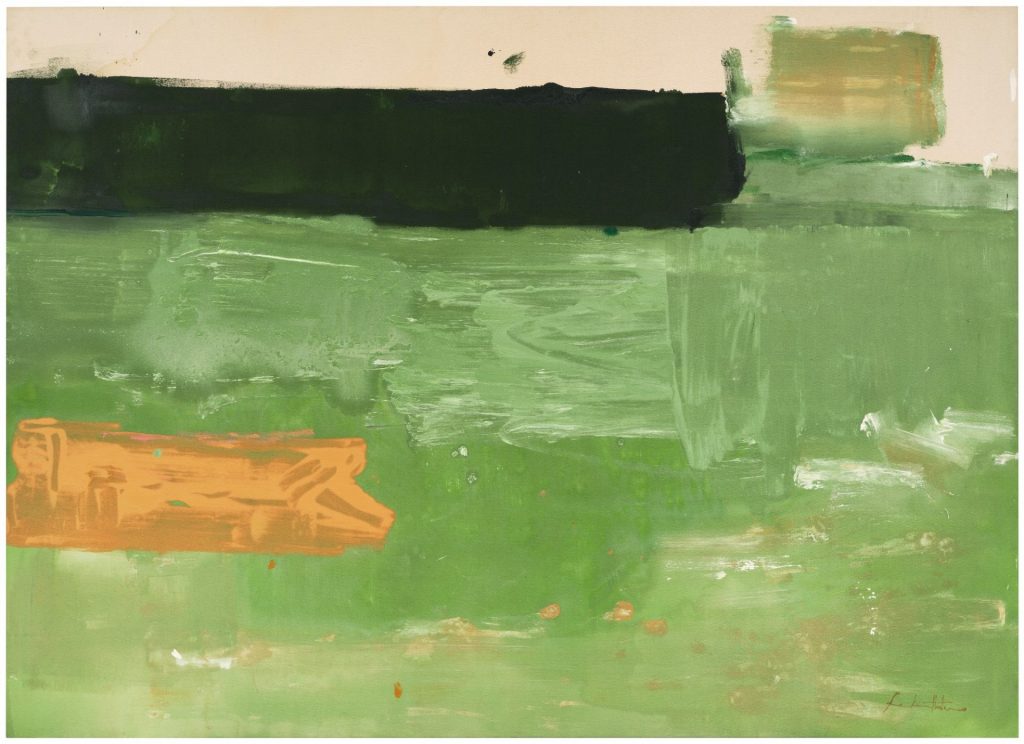
In paintings like Blue Moon, and Yolk, both 1963, islands of colour merge and overlap, but seem to sit across the painting’s surface. At times, however, a break in the pooling, thinned paint as in Riverhead, 1963, suggests spatial depth, heightened by her discovery at around this time, that the studio floorboards were leaving a ghostly imprint on her paint-saturated canvases.
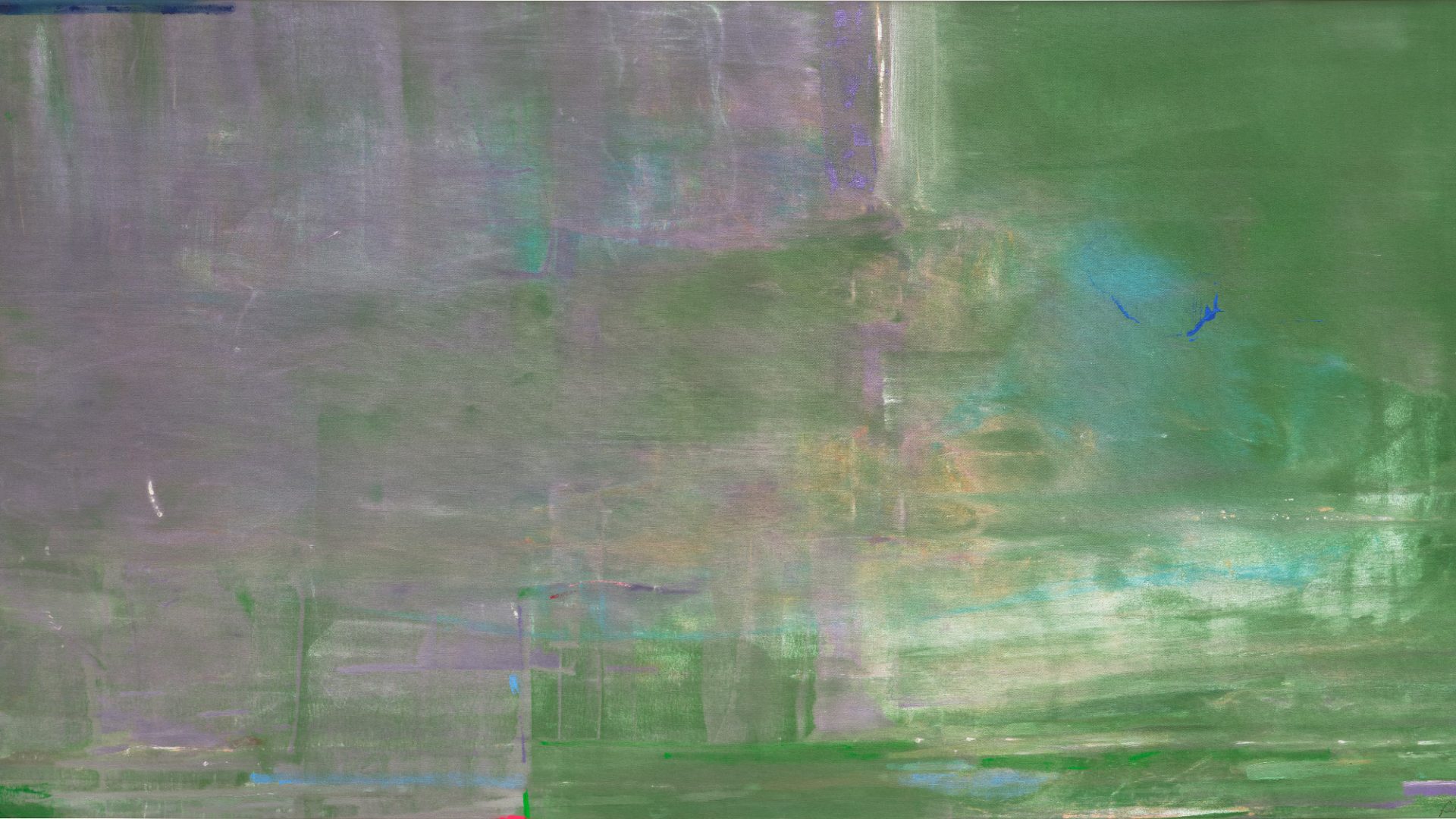
In Claude’s Message, 1976, the subtle but still distinct lines of the floorboards bring a distinctly postwar flavour to this tribute to Monet, whose waterlilies are evoked so effectively in washes of greens, mauves, and cerulean blue. The illusions of spatial depth that arise from Frankenthaler’s apparently chaotic applications of paint are simultaneously shattered and made the more remarkable by the imprinted floorboards, which serve as incontrovertible evidence of the painting’s two dimensions.
Some of Frankenthaler’s most virtuosic paintings arise from her manipulation of perception, to create a breathtaking push and pull between flatness and space, as in April Mood, 1974, in which our understanding of the spatial relationships across the entire canvas are anchored by the line of white towards the bottom.
Suggested Reading
Why did the Venice Biennale go soft on Russia?
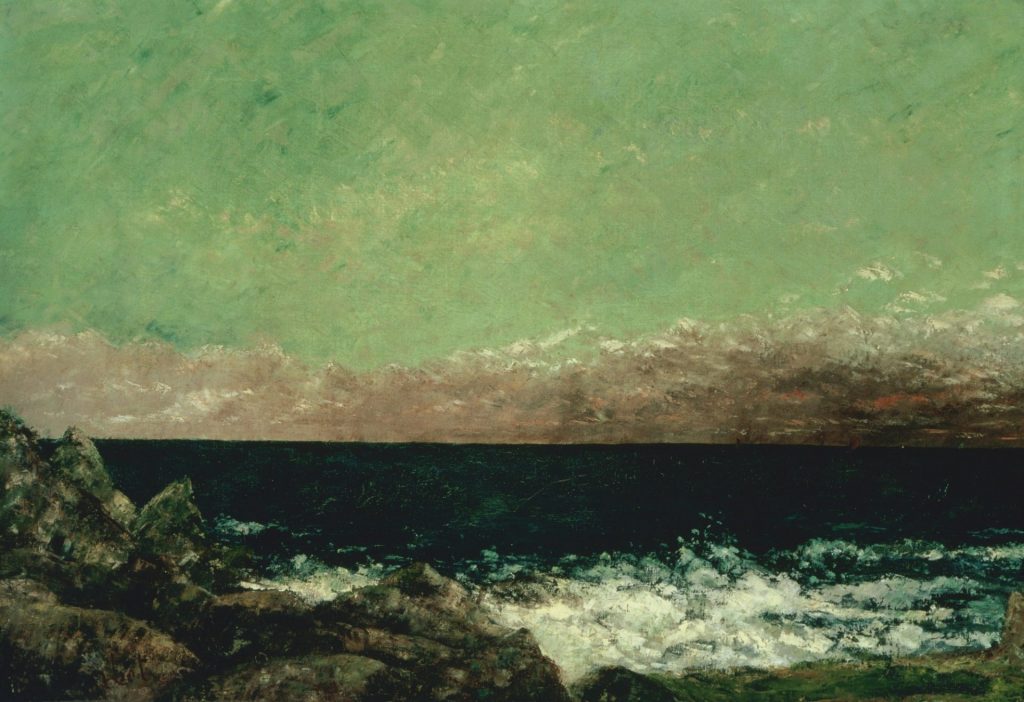
Perhaps inevitably, by the late 1970s this expansive quality shifted again, and she produced a series of works referring to specific paintings from the past. Compared to her early homages, these are more loosely tethered to their sources, and yet in For EM, 1981, her reduction of Manet’s fish to the scant suggestion of colour and form, is exhilarating, highlighting the miracle of representation in paint, and the thrill of perception.
Often, at this point, she works from postcards, gathered on her travels and pinned to her studio walls, and it’s easy to imagine how familiarity might allow her to reduce colours and forms to their essentials.
The exhibition marks a significant moment in Helen Frankenthaler’s posthumous reputation, its celebratory scale a fitting tribute to her legacy.
Helen Frankenthaler is at Kunstmuseum Basel until August 23, 2026