At the tender age of 11, on the streets of Derry, Nik Cohn saw a man dancing with a snake. Born in London and then dropped into this alien city by his itinerant, academic parents, the future writer often found himself wandering alone after dark, hoping something would happen.
It was in a section of the city he was forbidden to enter that he saw them. Teds. Jiving to the sounds of rock’n’roll in a town where that particular musical form was nothing more than a mythic rumour. And as Cohn watched from a distance, something was passed between the dancing teens.
A snake. A snake? A snake.
As exotic and bizarre as the music they were sweating to.
“Tutti Frutti ended, the dancers stilled,” Cohn later wrote. “But the snake remained in view, dangled beneath a streetlamp. I knew what I had seen. The snake was real, and magic was real, and rock’n’roll was the one true religion.”
Transformed by this encounter, Cohn felt the urge to rebel. Snazzy threads, import records and flashy guitars were out of reach. Instead, he decided to focus on the one tangible element he had some control over: his hair.
He lavished it with pounds of Brylcreem. It had the desired effect on his horrified mother.
“You look like one of those corner boys,” she said, “deadbeat.”
Obviously, Nik Cohn was delighted. Now all he had to do was find that snake.
“It was really like a fantasy of mine,” Nik tells me from his home in upstate New York. “I would never really be a corner boy, because other corner boys would see straight through me. And I think the identification that I had with the underdog was a bit of a nerve on my part, because I wasn’t really the underdog myself.”
Cohn may not have had the credentials (or access to reptiles) to be a bona fide Derry Teddy Boy, but he had the drive, curiosity and chops to become one of Britain’s greatest chroniclers of the marginal, the outsider, the perverse. He was able to blend in and seduce, and as a consequence, has been producing astonishing feats of the imagination for over 60 years.
“I’m drawn to people who are out there,” he explains. “People who just go to the edge of the cliff and then take another step. I like people who have a mythic view of themselves. Particularly when it doesn’t come true. Their dreams are on a scale that most of us don’t even dare to think about. That’s very attractive to me. They have courage that I haven’t got.”
Cohn’s latest is called Corner Boy: Loiterings New and Old. It throws together some of his finest non-fiction work, from his earliest bylined Observer column in 1966, to pieces composed purely for this collection often featuring these figures from the outer limits that he can’t escape.
As Corner Boy reveals, Cohn’s writing career began unconventionally. Still in his teens, he was invited to a party where he impressed the publisher of the Observer so much, he was offered a job on the spot.
“I started writing that summer in London,” Nik explains. “Just a journal. I was looking at it the other day. It wasn’t bad. What was unusual was that I was outside myself. I wasn’t a 16-year-old endlessly droning on about the state of my soul. I was already a reporter, really. I was interested in what was going on and noting it quite acutely. I was interested in the world.”
“That’s how I operated in that time. I was quite insecure, deep down. And I would charge at any door or any wall that stood in the way. I didn’t have a clue what I was doing, which turned out to be the right thing. If I had known what I was doing, I would have known all the things I couldn’t do, and I would have been much more inhibited. There was tremendous generosity towards me because I was a pretty obnoxious youth, I think.”
Cohn became the resident teenager for the newspaper, writing about the burgeoning 1960s youth culture that completely baffled the higher-ups. His writing was new, exciting and reflective of the time.
“I always had a very strong sense of rhythm in my head when I was writing, and often the rhythm had nothing to do with the subject matter. I’d be writing, I’d stand up and I’d realise that my whole body would be moving and in tune to something I wasn’t even conscious of.”
One area he began to focus on was fashion. His later book on male fashion trends, Today There Are No Gentlemen, remains one of the finest investigations of the subject (extracts are in Corner Boy, but it remains inexplicably out of print).
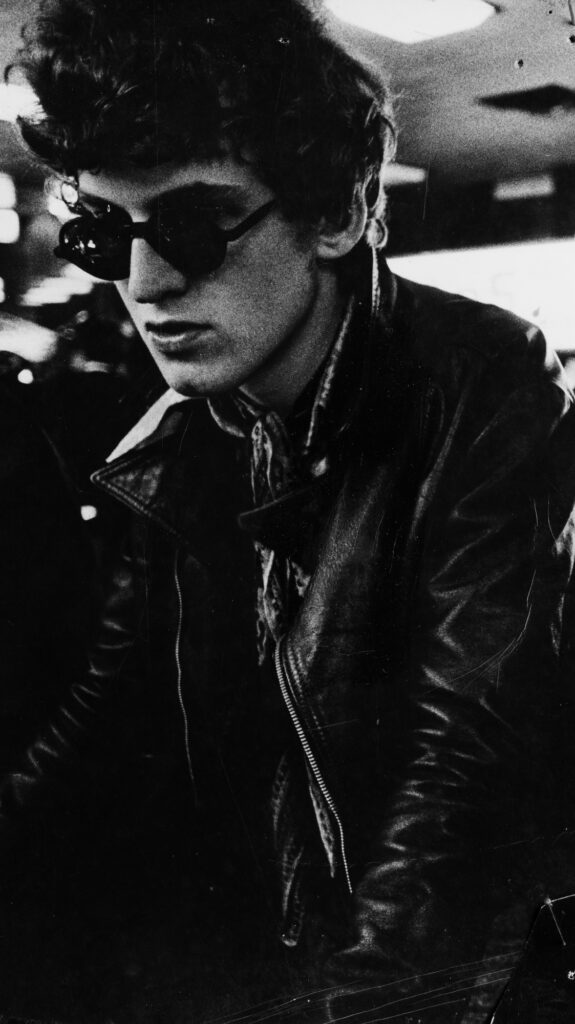
“In ’62, everything started then,” Cohn tells me. “I became aware that it didn’t cost much to dress in a way that would have been unthinkable five years before. And you had these odd figures like Mark Feld [later Marc Bolan], the proto-mods. There was a sense of things beginning to really roll, and I caught on then.”
He wrote about clothes, faces, launderettes, nightclubs and girls. But he became known, primarily, as a music writer, releasing one of the first, and certainly one of the best, books on popular music, 1968’s Awopbopaloobop Alopbamboom.
Corner Boy features selections from this pivotal collection, plus additional pieces on Phil Spector, Grace Jones, Scott Walker, James Brown, the Rolling Stones and many more.
But Cohn found himself falling out of love with music as soon as the grit and novelty of early rock died away. He pretty much sealed his fate with the music business by suggesting, in Awopbopaloobop, that it might be best for everyone if the Rolling Stones all died in a plane crash before they turned 30. Understandably, the Stones were not impressed.
“As rock became what is now called classic rock, white guys torturing guitars, that was all very, very smug and complacent,” Cohn tells me. “You know, ‘we’ve got our money, so fuck you.’ What interested me was kicking back against the bourgeois rock and rollers and the wealthy. I got hooked into Black music and Black culture, totally.”
On the hunt for something new and exciting, in the mid-1970s Cohn’s restlessness drove him to Manhattan.
“When I arrived, New York was sort of collapsing economically, and it was in terrible shape,” he remembers. “And the music of record didn’t reflect that at all. So my first interest in disco was there. It was coming out of the queer clubs in Harlem. It sort of bubbled up from down there.”
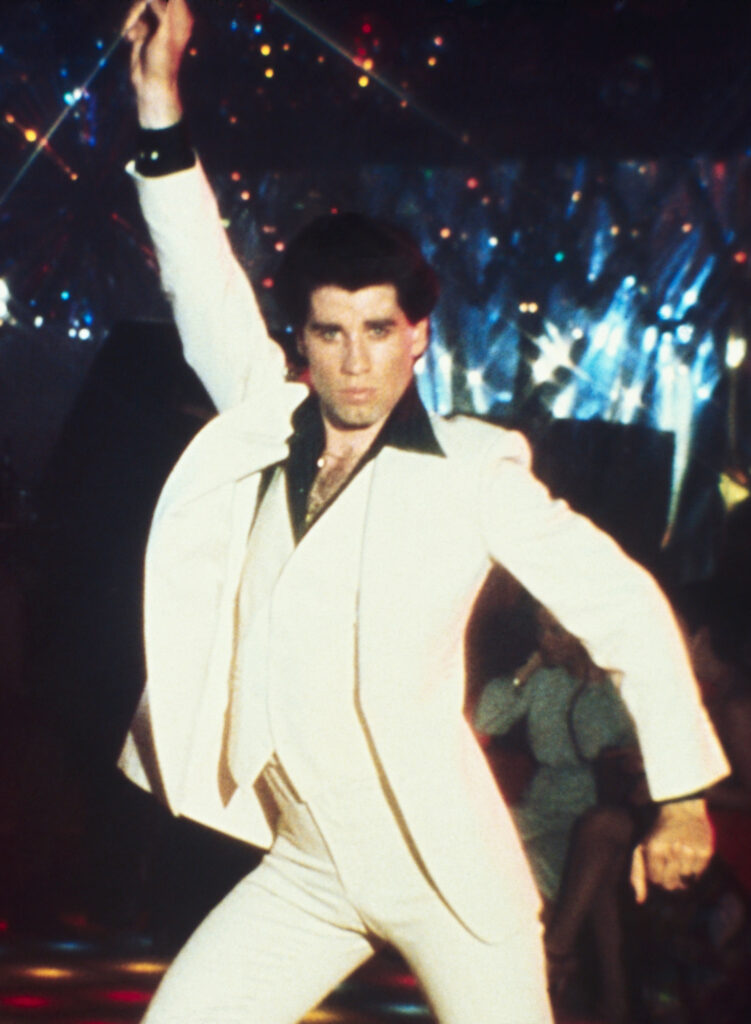
Cohn wrote a piece for New York magazine, “Tribal Rites of the New Saturday Night” (which he later admitted was largely fictional), about the disco scene and a young dancer called Vincent. Robert Stigwood bought the rights and turned it into Saturday Night Fever.
Cohn was suddenly awash with cash and with the money came drugs. He lost a few years. Ironically, he was practically clean when he was busted for trafficking in 1983. He faced many years in prison, but managed to squeak by with probation and a fine. It’s an experience he writes about compellingly in Corner Boy.
“That was just the way I approached things,” he tells me. “A sort of completely irrational belief that all would be well. It’s like someone going out on a football field with his shoelaces tied together, still confident that he’ll score the winning goal.”
It was after his drugs bust that something changed in Cohn and he began to report on the world around him more deeply. The collection is filled with subjects he’s inextricably drawn to, including boxers on the wane, Cornish transvestites, punch-drunk Manhattan lawyers, knife-throwing clairvoyants, New Orleans hitmen, disaffected kids in Bradford and seaside dominatrixes.
“My non-fiction writing does come out of a social awareness of changing mores. This is happening and this is about to happen,” Cohn explains. “Derry is a very, very passionate place, always was. It has this absolute confidence that Derry is the centre of the universe.
“And New Orleans is the same thing. It didn’t occur to the denizens that they might be seen as odd or outliers. They understand things that the rest of the world doesn’t understand. I don’t want to be in the centre of the universe. I want to be in a place that believes it’s the centre of the universe. It’s a very key difference.”
Suggested Reading
Travels with the cult of Half Man Half Biscuit
And Cohn is still out there, prowling the streets, spotting the freaks, trying to find that man with a snake dancing in a shadowy doorway. Corner Boy revels in his triumphs, his lowest ebbs, and is the perfect encapsulation of his maverick energy.
“I’m drawn to two things. I’m drawn to the mythic and the absurd. Someone who imagines something that’s unthinkable and actually pulls it off. The dreamers.”
Corner Boy: Loiterings New and Old by Nik Cohn is published by ZE Books