When in late 1966, LIFE magazine photo-journalist Chuck Rapoport all but imposed himself upon the colliery village of Aberfan as it began the agonising shift from shock to grief in the aftermath of losing a generation of its children to industrial disaster, he encountered a cold and threatening, angry hostility. It was borne out of the insensitivity with which some of his fellow writers and photographers had already conducted themselves towards people who had other, far more pressing priorities.
Rapoport’s persuasive persistence – initially directly with his New York editors, then diplomatically with Aberfan’s people themselves – allowed him to live long enough in amongst this shattered community to witness, record and endure those first days as the process of grieving, of trying to come to terms with this unimaginable distress, was beginning.
And 60 years on, Rapoport’s “photo essay” (in his vernacular) remains so material, so unquestioningly essential to the continued tragedy-telling which itself has catalysed the healthy expression of otherwise buried emotions.
Currently on display in Merthyr Tydfil’s Cyfarthfa Castle Museum and Art Gallery are 40 or so stark, monochrome examples of Rapoport’s finest work, briefly annotated and regularly set, then almost tucked away in a less-than-optimally-lit basic space.
They are scenes of the everyday, with colliery spoil heaps still now, still now, silently, menacingly looming in the background:
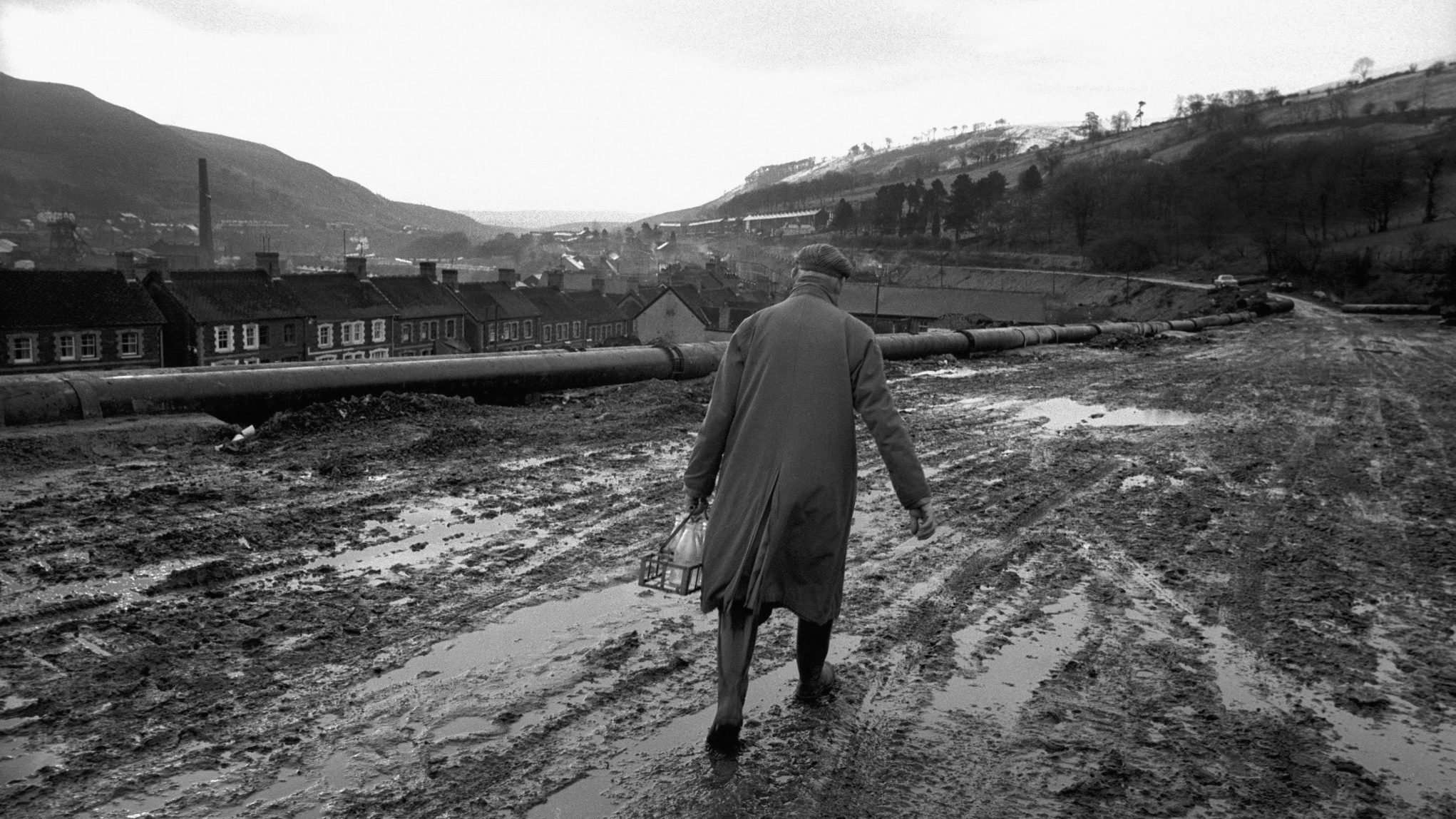
Stoically, the milkman, a bereaved father, goes about his round, traversing broken industrial infrastructure in a scene reminiscent of the Blitz. Seeking normality where none exists.
From a steep hillside vantage point, a child plays alone in an otherwise deserted public playground.
The mother watching her son from her doorstep, every step of his lonely return from school.
The glaring, simmering hostility in the front bar of the Mackintosh Arms.
A surviving boy looking upwards, the spoil heaps still now menacingly looming.
A young boy’s expression brightened by the light of a jukebox display; one face, where would have been four or five.
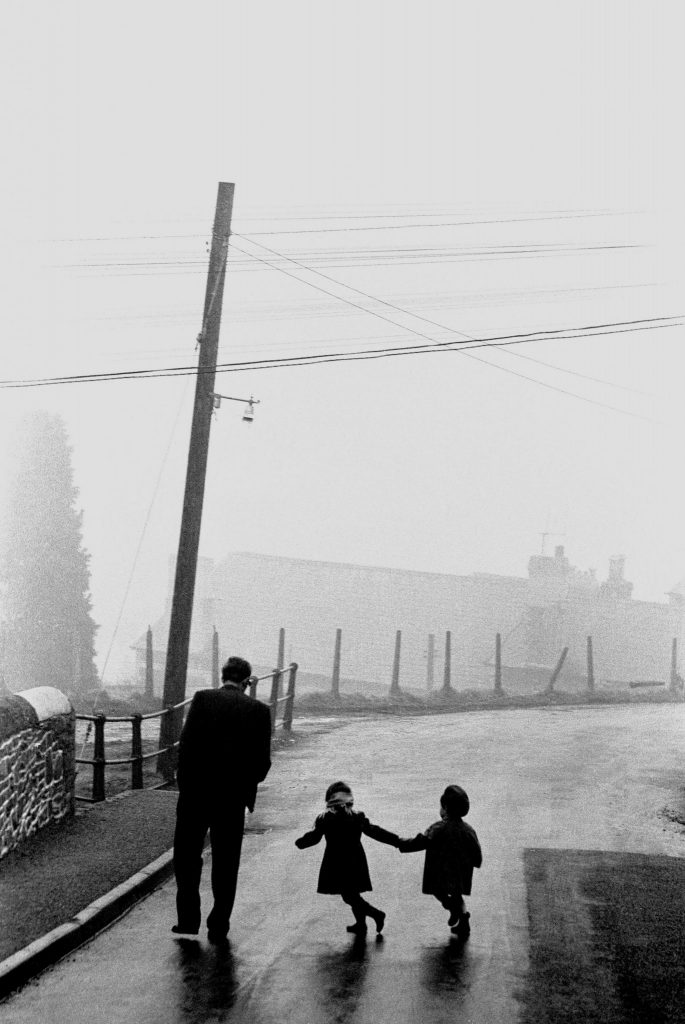
A father walking with his children close by.
A husband and wife slow-dancing late at night, just them, holding each other close.
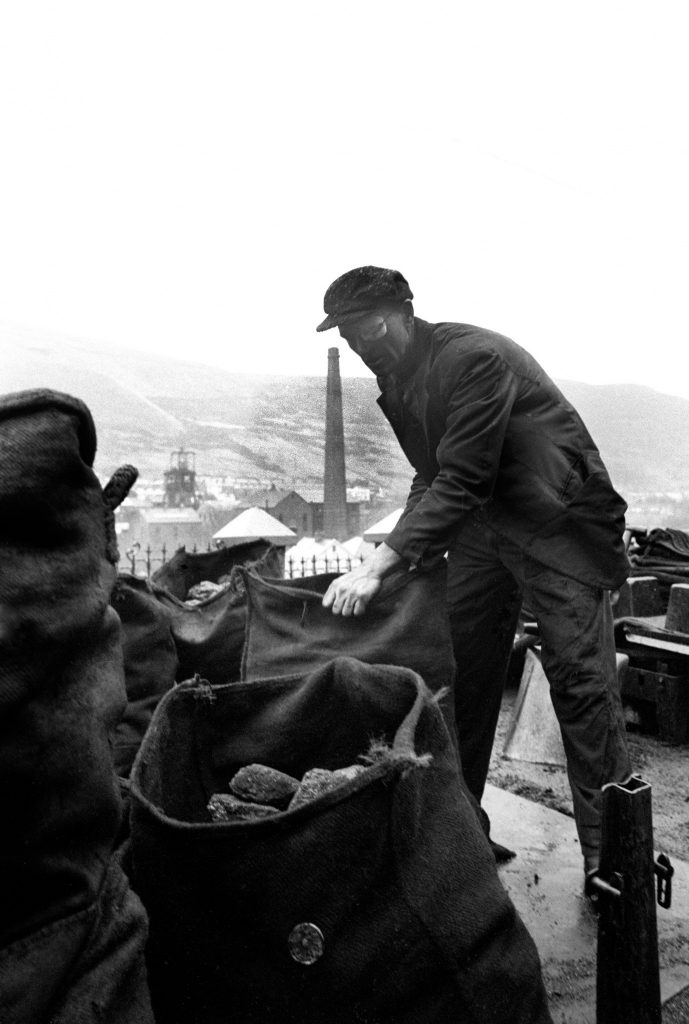
Images all bleak and bare, of course, clashing pointedly with the cluttered, the gaudy and the muscular, the fading imperialist grandeur of the Northern English industrialists’ faux-Scotch baronial folly that is Cyfarthfa ‘Castle’.
What is this exhibition’s purpose? An appreciative retrospective of a period within the œuvre of an artist or “poet with a camera”? Or a decennial memorial for innocent lives lost in a manner so immediate, so near-total, as to defy belief still today, just as it did in 1966, when, for perhaps the first time globally, nascent worldwide news networks spread the in-the-moment message to a vast, incredulous audience?
Suggested Reading

If only we didn’t need Black History Month – but we do
Subsequently described by himself as his “most important work”, Rapoport in 1966, not for a minute surely would he have thought that this portfolio would be not just still venerated six decades on, but would have become a vital component in the expression of the Aberfan community’s agonies at the loss of 116 children and 28 adults, whilst simultaneously achieving that artistic and journalistic ethical nirvana of recognised social purpose and enduring relevance.
In the gallery’s visitor book, there are handwritten direct messages of gratitude “to Chuck”.
And then, unavoidably eavesdropped, anti-whispers tell of a salient feature of this exhibition, a uniqueness even: that the subjects of the photographs are known personally to people visiting, viewing the images – and, more, that subjects in the photographs are actually there, there in the room; not in some metaphorical sense, but physically shoulder-to-shoulder with the onlooker.
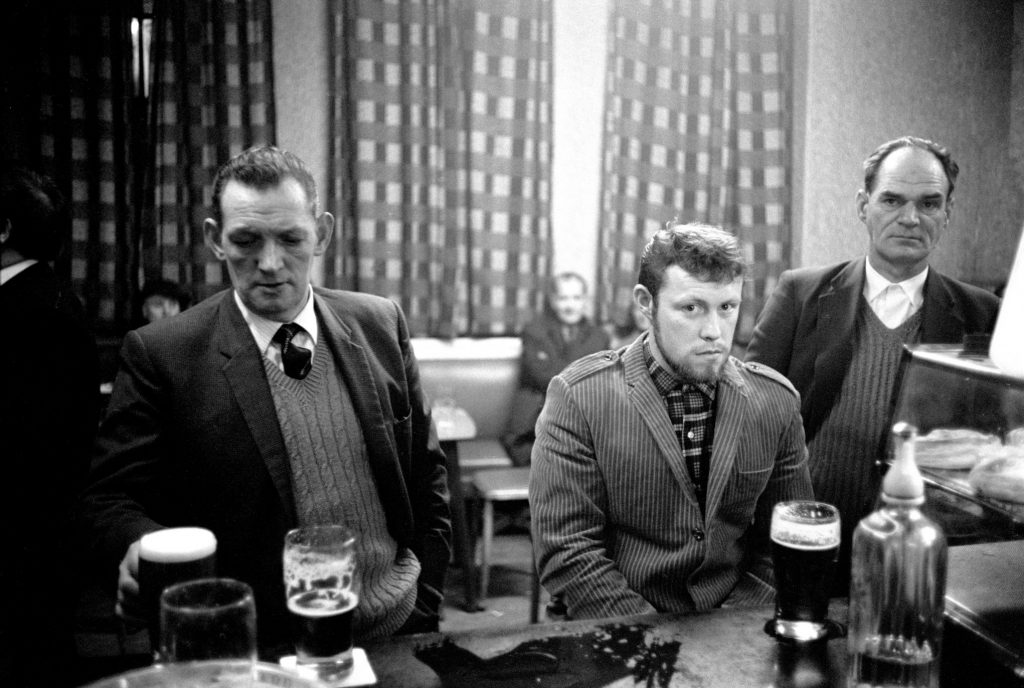
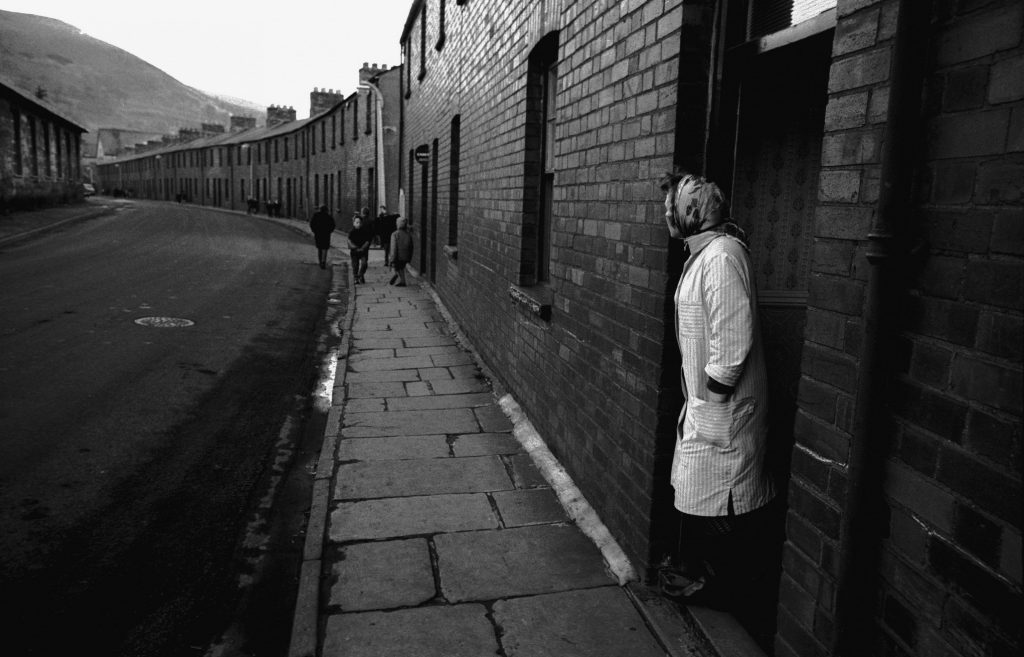
This is a feat that no McCullin, no Salgado, no Leibovitz show will surely ever have achieved, and certainly not 60 years on.
As lean as a collier’s torso, the exhibition’s introductory filmscape sympathetically, in moments empathetically, does enough to inform the uninformed, to prepare the unprepared, to gently prompt those who already know.
And as time’s nicotine-stained teeth consume the dwindling first-hand account-holders of record; and as Chuck himself, now almost 90 years of age, doesn’t cross the Atlantic for this latest decennial; this collection of aptly-hued marks hewn onto photographic stock endures, must endure, and will endure, ever evoking emotions of fundamental sadness and loss.
Aberfan 60: The Days After (Y Dyddiau Ar Ôl) is at the Cyfarthfa Castle Museum and Art Gallery, Merthyr Tydfil, until November 1
 Most popular


My truly deranged encounter with Trump apologist Kellyanne Conway


The moral depravity of Robert Jenrick


Is this the real reason Trump keeps falling asleep in public?


Suella Braverman’s book has sold only 106 copies. This is why