When I met Moha, who is 45, he was brewing tea in a shanty town that had been built on Valencia’s abandoned Grand Prix circuit.
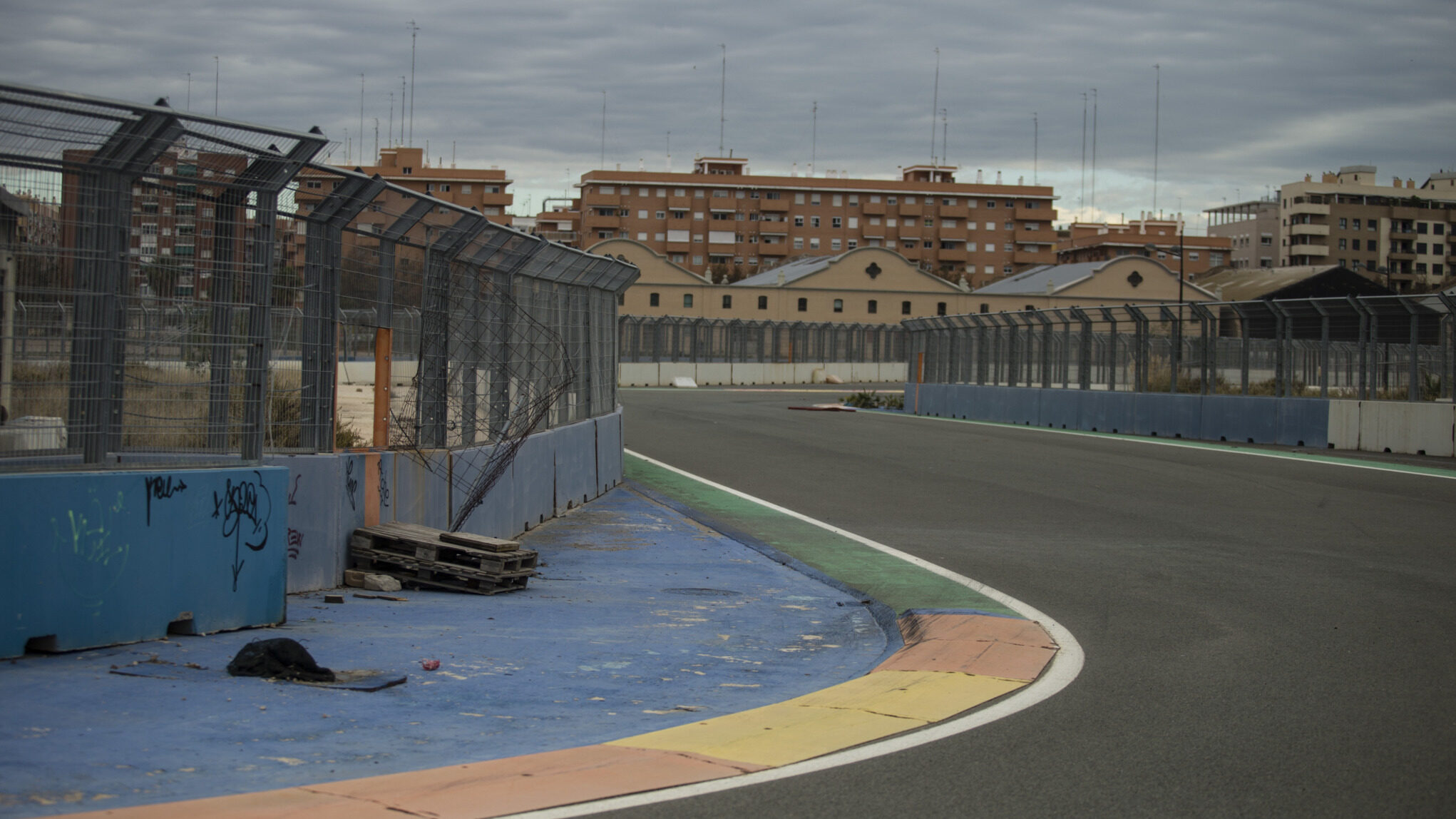
The European Grand Prix was held here five times. Now, long sections are covered in huts and shacks, pieced together with wood, plastic, metal, mattresses and tarpaulins. The last Grand Prix was held here in 2012, and was won by Spain’s own Fernando Alonso. Now the tarmac is overgrown with weeds and wildflowers and strewn with debris and broken glass. But you can still see the pit lane, the coloured curves and bends, tyre marks and faded advertising.
Our tea comes to a boil. Trained as a nurse, Moha tells me he was born in a Sahrawi refugee camp near the Morocco-Western Sahara border, and came to Spain in the 1990s. He’s lived on the track since 2023. “It’s changed a lot,” he says, serving our steaming tea. “There only used to be 15 or 16 shacks. Then people started coming from Valencia… Spaniards who couldn’t rent a flat, who had children.”
Suggested Reading
The most expensive coffee in the world
Estimates now put the number at 400 houses, and the population at 800. Moha tells me the camp is like the UN: there are Sahrawis and Spaniards, Moroccans, Ghanaians, Algerians, Poles, Bolivians. Each community has their own part of town.
We set off to make a circuit of the track as a man locks his door and sets off on a scooter wearing a Deliveroo bag. Many here work or want to work. Moha used to work for El Corte Inglés, the department store. He was renting but now sends what money he has to his wife and daughters in the Tindouf refugee camp, in Algeria.
“It’s better to build yourself a shack and keep working,” he says. “You’d rather put food on the table for your family… or give them money, rather than rent somewhere yourself.”
Several other Algerians also have work permits. One has enough money to rent a room in town, but was rejected. Others are caught in administrative traps: without a home address, you can’t register with the local authorities, which means you can’t work. And without a job, you can’t rent, and so on and so on…
The track sits between two of Valencia’s gentrifying beachfront neighbourhoods – the City of Arts and Sciences, a major tourist attraction, and the marina. The circuit is overlooked by luxury apartment blocks with balconies and glass-fronted entrances.
In the distance there are cranes and cement trucks, hard hats and fluorescent bibs, hammering, drilling, the chatter of construction workers. A temporary showroom displays mortgage offers and model-scale skylines. A few hundred metres away, a man builds his hut by hand.
Suggested Reading

It might not look like it, but a motoring miracle has now happened
The intention of the new project is to turn the site into what local media calls “the Valencian Manhattan”. It will house a tech hub and the city’s tallest building. The people living here on the track now have no water or electricity. Residents claim the authorities cut off the water supply to force them out.
When I put this to the council a spokesman assured me that “there’s no eviction order” and denies that any “pressure or coercion has been exerted on the residents”. But sitting among the shacks are excavators and heavy machinery. I watch a rubbish truck trundling back and forth along what was once the pit lane for Ferraris and McLarens. One truck is parked just metres from a row of homes.
The council claims this is all part of “regular cleaning operations to maintain sanitary conditions”. I ask what plans there are to rehouse the people living here, but receive no response.
Asked where he’ll go when construction begins, Mahmoud, a 35-
year-old from Western Sahara, shrugs: “Where? On the street – in the trash?”