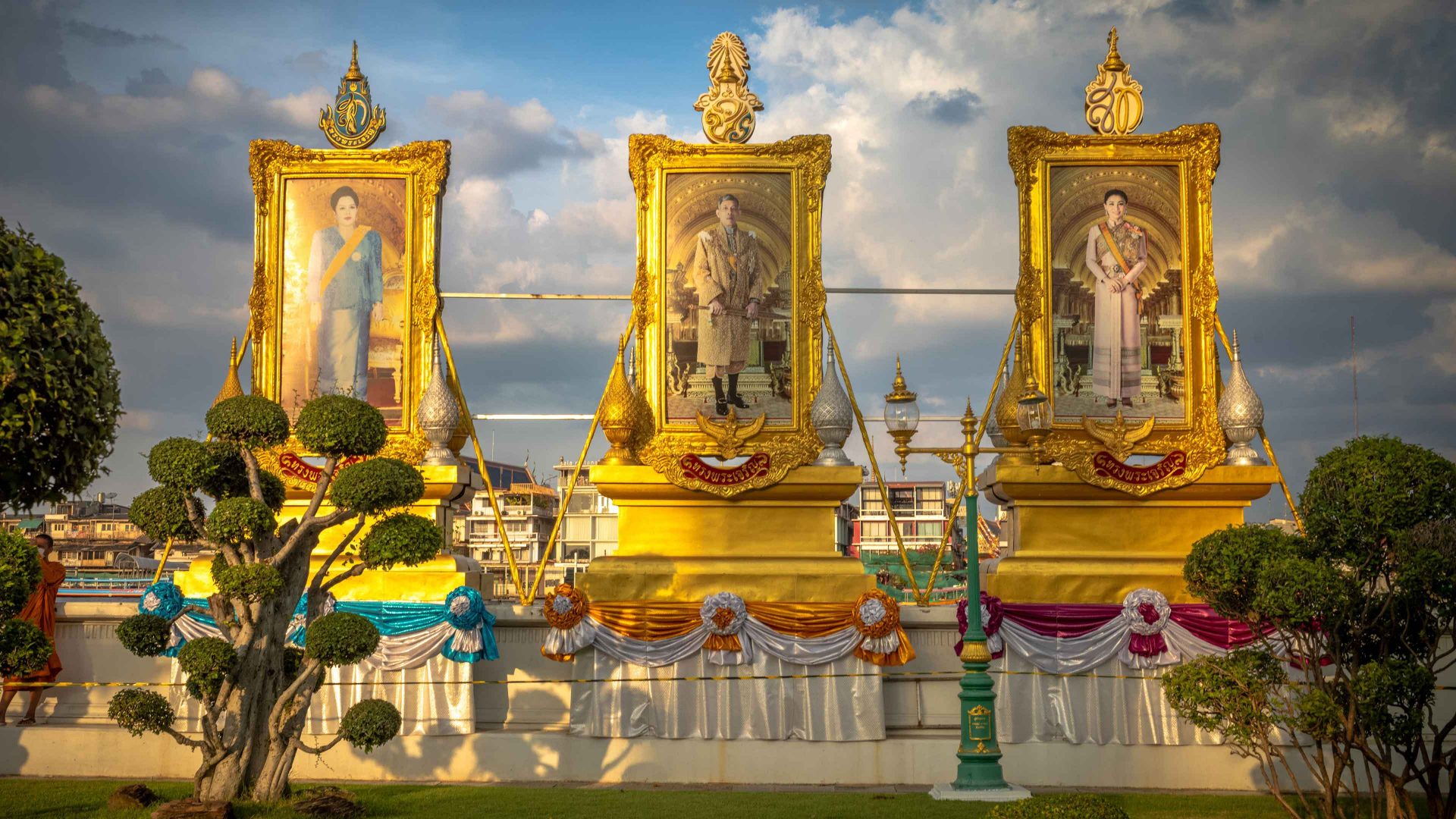
If Prince William were suddenly to become gravely ill and die, the whole country would be talking about it.
In Thailand, a similar situation has happened for real. Princess Bajrakitiyabha, considered the most suitable heir to her father, 73-year-old King Vajiralongkorn, has died, having been in a coma since December 2022.
Her death calls into question the succession of the Thai monarchy. The late princess would have ruled one day either as Queen or as regent to her younger brother, Prince Dipangkorn, who is thought to suffer from learning difficulties. Many believe he is unfit to govern.
But, unlike in the UK, talk about the future of the royal family is off limits in Thailand.
When the princess collapsed three and a half years ago, I was teaching in Maha Sarakham province in north-east Thailand. Overnight, official portraits of Princess Bajrakitiyabha adorned the school’s corridors.
“We must pray for the princess,” one teacher told me, but beyond that it was hush hush.
I would (naively) ask my Thai friends and colleagues for their opinion on the monarchy. On each occasion I was met with a shocked expression before a darting look over the shoulder. If I was lucky, an inoffensive remark about the king was uttered behind a hand over the mouth.
Their hesitancy was for good reason. Thailand’s “lèse-majesté” law, or Article 112 of the criminal code, says that anyone who “defames, insults or threatens” the royal family will be punished with a jail term of up to 15 years – and it is now being applied more frequently to imprison those who go against the status quo.
Paul Chambers, a lecturer at the University of Oklahoma in the US, says lèse-majesté poses a “genuine threat” to ordinary Thai people. He would know. Last year he fled Thailand, where he’d lived for over 30 years, after he was arrested on lèse-majesté charges. That arrest is thought to have been sanctioned from within the military in a bid to intimidate those calling for reform in Thailand.
Suggested Reading
The VP who dreamed of decapitating the president
“The idea was to scare the living daylights out of me, which it did, and put me in prison,” he told me. “I think they wanted me to be killed in prison or be forced out of the country – they were successful with the latter.
“The military is trying to increase its power, and it will use any law it can to go up against its perceived opponents. There are close to 300 lèse-majesté cases that exist today, which is an obstacle for improved human rights in Thailand.”
The progressive Move Forward party won the general election in 2023, after campaigning to make Thailand’s military more accountable and reduce the heavy punishments dished out through lèse-majesté. The establishment’s response? To disband the party and ban its leaders from running for elected office.
According to Chambers, a “perfect storm” of events has helped the conservative establishment foster “extreme Thai nationalism”; the current government is riding this populist wave and is strongly pro-royalist. “The rise of nationalism, particularly anti-Cambodian nationalism since the 2025 border conflict, has made it easier for a more draconian application of lèse-majesté,” he said.
“The publicised deaths of the monarch’s mother, Queen Sirikit, and his daughter, only help to energise nationalism as they become part of the mythology of the regal institution.
Suggested Reading

The love stories we should see on the news
At the forefront of my mind when I bought a ticket to Thailand a few years ago were the beautiful beaches, the food, and the nightlife. I didn’t consider the military’s grip on power and the erosion of human rights.
Thailand has a reputation for openness, but that’s the perfect disguise for the authoritarian regime. People travel there seeking “freedom” in a spiritual and recreational sense; an escape from the perceived monotony and stagnation of our own lives. But those same freedoms are not afforded to the Thai people who welcome us with open arms.
Ben Sturt has lived in South East Asia and has written about the politics of the region for The New World and The Diplomat