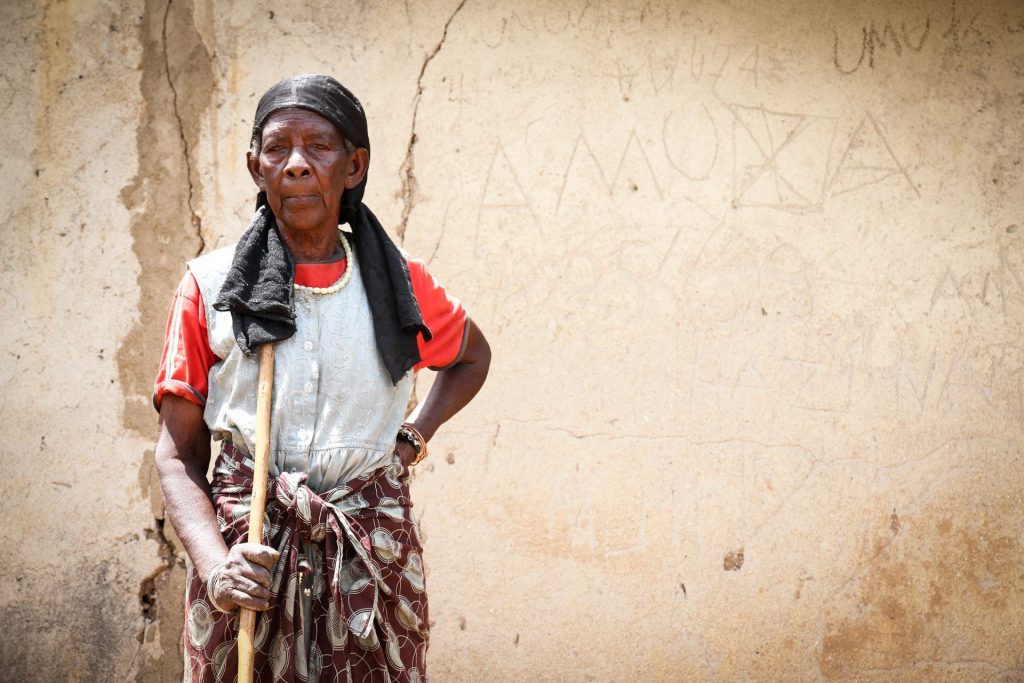
Sally Hayden was just starting out as a journalist when she first met Zula Karuhimbi in Rwanda. Only, that was not how Zula first introduced herself.
When, in 2014, Hayden went to her tiny home in the Musamo village in Southern Rwanda, Karuhimbi was curled up on a straw mat outside, sleeping while embracing a small child. When she woke, she jumped to attention and greeted Hayden with how she had become known: “I’m the Zula who hid the Tutsis”
During the devastating 1994 genocide, more than 100 Tutsis took refuge in and around Zula’s two-room home. As Zula told Hayden, she hid so many people she did not know their names. She took babies off of dead mothers’ backs and brought them inside. During one moment, 40 people hid in her bedroom, under her bed and above a false ceiling.
As the militia murderers closed in, Zula’s plan to keep them away came to life. She covered her hands in herbs that caused skin irritation, running up to the killers and touching their faces, letting them believe they had been cursed. She banged anything near her that could make a noise, yelling that that was the sound of angered spirits. When Hayden met her in 2014, the bullet holes in the front of her home were still visible.
Zula’s is just one of the many acts of strength, resistance and, above all else, love documented by Hayden in her new book, This Is Also A Love Story.
“The message of the book is that humans exist at the centre of geopolitics. I think that sounds very obvious, but sometimes it doesn’t seem to be,” Hayden tells me. She has spent her journalistic career reporting on crises, war and destruction, but it is not these stories she wants to tell.
Instead, they’re ones of a couple separated by the Russian invasion of Ukraine, of the Syrian women searching for their missing spouses while tirelessly fighting for justice and of mothers in northeast Nigeria risking everything to save their daughters from Boko Haram. Like Zula’s, they’re ones of love.
“My job is to report the reality,” Hayden says. But at the same time, she feels she has a responsibility to remind people of the human impact of foreign policy decisions. Newscycles are fueled with “dehumanising language”, she says, and it is partly this that helps “enable atrocities”.
“I hear a lot of things like: ‘Oh well, that country is always having problems’, ‘war is normal to people there’ or ‘these things always happen in that place’.” So when it came time to write a book, Hayden asked herself a question: why couldn’t she tell these stories through the prism of love? Imperfect, human yet unfaltering love.
Hayden largely wrote the book for herself. “I was struggling to be honest. I spent years reporting on human rights abuses and seeing really horrific things. I needed to remember that there’s goodness in humanity and that people can do good things for each other,” she says. “Love was always present in these situations, it’s just not necessarily what journalists are trained to look for.”
But this is far from a piece of work claiming that love can conquer all. In fact, one interviewer asked Hayden exactly this, and she had to disappoint them.
“I wasn’t trying to sugarcoat things,” she says. “I don’t have all the answers, but there has to be more of a conversation about how we create a better world.” This Is Also A Love Story was never about viewing the world’s crises through rose-tinted glasses, rather changing the black-and-white lens we tend to see them through.
In another This Is Also A Love Story scene that has stuck with me, we are introduced to Charles, from Uganda. At the age of nine, he was abducted from his childhood home by the infamous Lord’s Resistance Army (LRA), the armed group founded in the north of the country in the 1980s.
Its leader, Joseph Kony, aimed to overthrow the government and his group’s modus operandi was mass kidnappings, allowing the LRA to soon swell in its ranks. As an initiation, kidnapped children were forced to kill or be killed, and Charles was one of them.
In 2000, the Ugandan government passed the Amnesty Act, pardoning those who had been part of the LRA’s rebellion from 1986. Seventeen years later, Hayden was there for his reunion with his parents.
“Charles had been kidnapped when he was very young and he had an injury on his head from a potato farming tool. I was in the car with them and we were driving to the north for the reunion with his family,” Hayden says.
After nearly two decades, Charles soon became concerned over whether those he loved would recognise him. Those in the vehicle encouraged Charles to shave his head, in order for his parents to identify him by this scar from his childhood accident. Later, Charles’s father confirmed to Hayden that this was, in fact, the only way he could ID his son.
“I was there as his father ran over to the car and I didn’t really know what was going on originally. He stuck his hand in and just pulled down his [son’s] head. It was a very emotional moment and an emotional day. It was extraordinary to witness.”
Suggested Reading

The unbreakable Gisèle Pelicot
Then, we meet Zainabeu Hamayaji. In 2014, when Boko Haram was nearing her hometown of Madagali, Northeast Nigeria, Hayden writes that the mother had to think fast. The Islamist group was known for slaughtering men and kidnapping women and children to become wives, recruits or slaves.
“I met her in 2017 in a town called Bama. We went there by helicopter because driving there would be incredibly dangerous,” says Hayden, recounting how Zainabeu had protected her daughter by feigning madness.
“She dug a ditch and hid her eldest daughter there, worried she would be forced into marriage. Then she basically covered herself in faeces and unplaited her hair, which is quite uncommon there.”
Zainabeu got her other children to back her up, spreading rumours that she had been treated in a mental hospital. Soon, the terrorist group believed that if they killed her, it would be bad luck for them. “They basically told everybody: ‘you need to leave her alone’”.
Hayden is quick to point out the irony here. The common joke in the town was that after everything they had been put through, no one was left untraumatised. Or as she was told: “we’re all kind of mad here.”
Hayden later asked Zainabeu if all mothers acted as she had. The answer was no. Others were “thinking of themselves”, wanted to get dowry money from Boko Haram or were “happy to give their daughters away”.
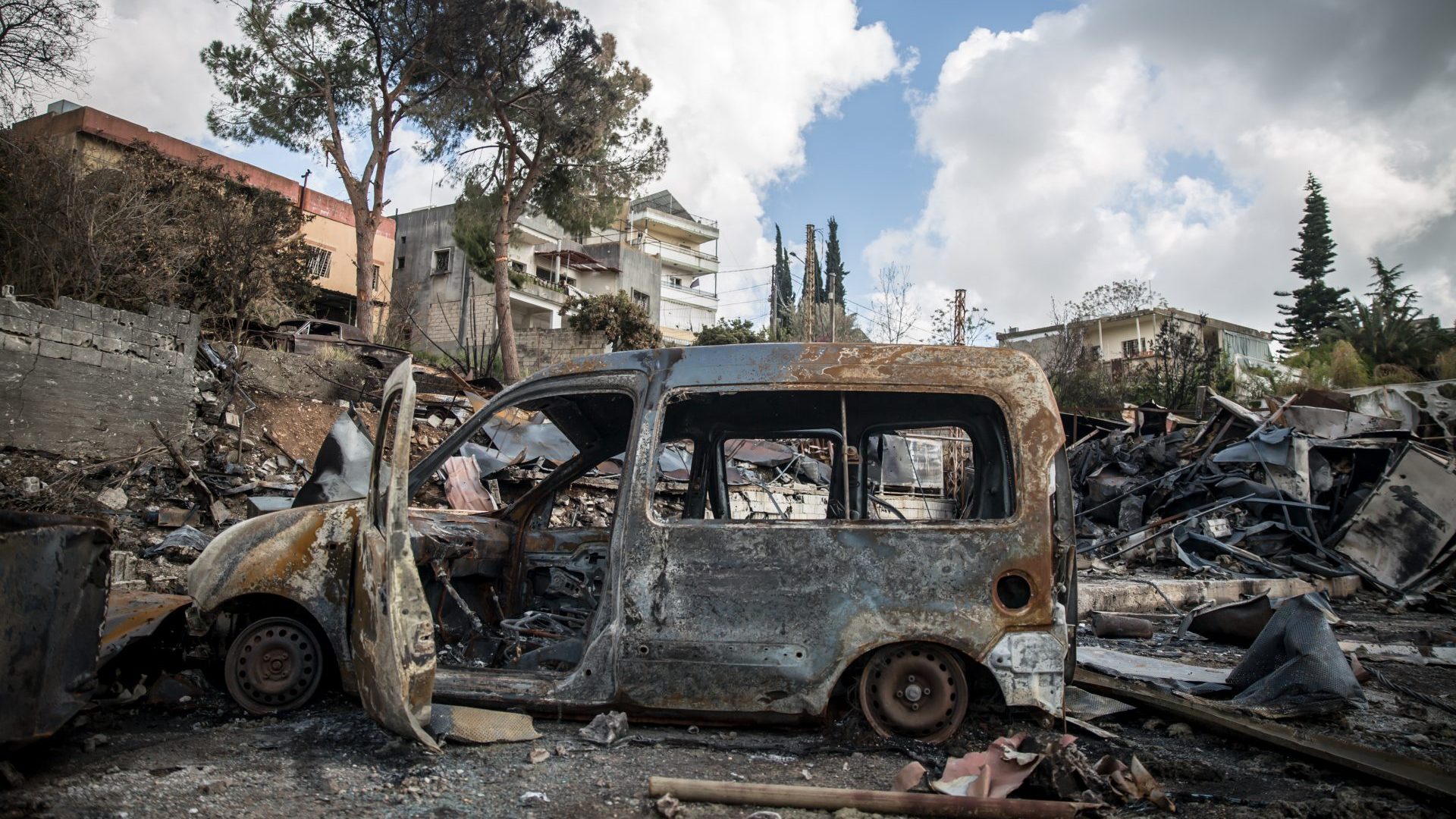
Between September and November 2024, Hayden reported across Lebanon during the beginning of Israel’s second military intensification against the country in less than two years. As she writes in her book, the civilian toll has been “unimaginable”.
Suggested Reading
Will Israel sabotage the US-Iran deal?
She documents how she learned to “ignore the rumble of war planes” and taught herself to scrub her memories after seeing fragments of human flesh disposed of in plastic bags after airstrikes. After one of these attacks, she remembers walking through rubble, finding personal items including teddy bears, university notes and family photos. Scrawled under one of the photographs of a couple posing was the following: “Love is just a word until someone comes along and gives it a meaning.”
“It was so striking,” Hayden pauses, “I don’t even know how to articulate it”. Perhaps it is ironic then, that This Is Also A Love Story does just that.
This Is Also A Love Story by Sally Hayden is published by 4th Estate.
Eleanor Longman-Rood is digital editor of The New World