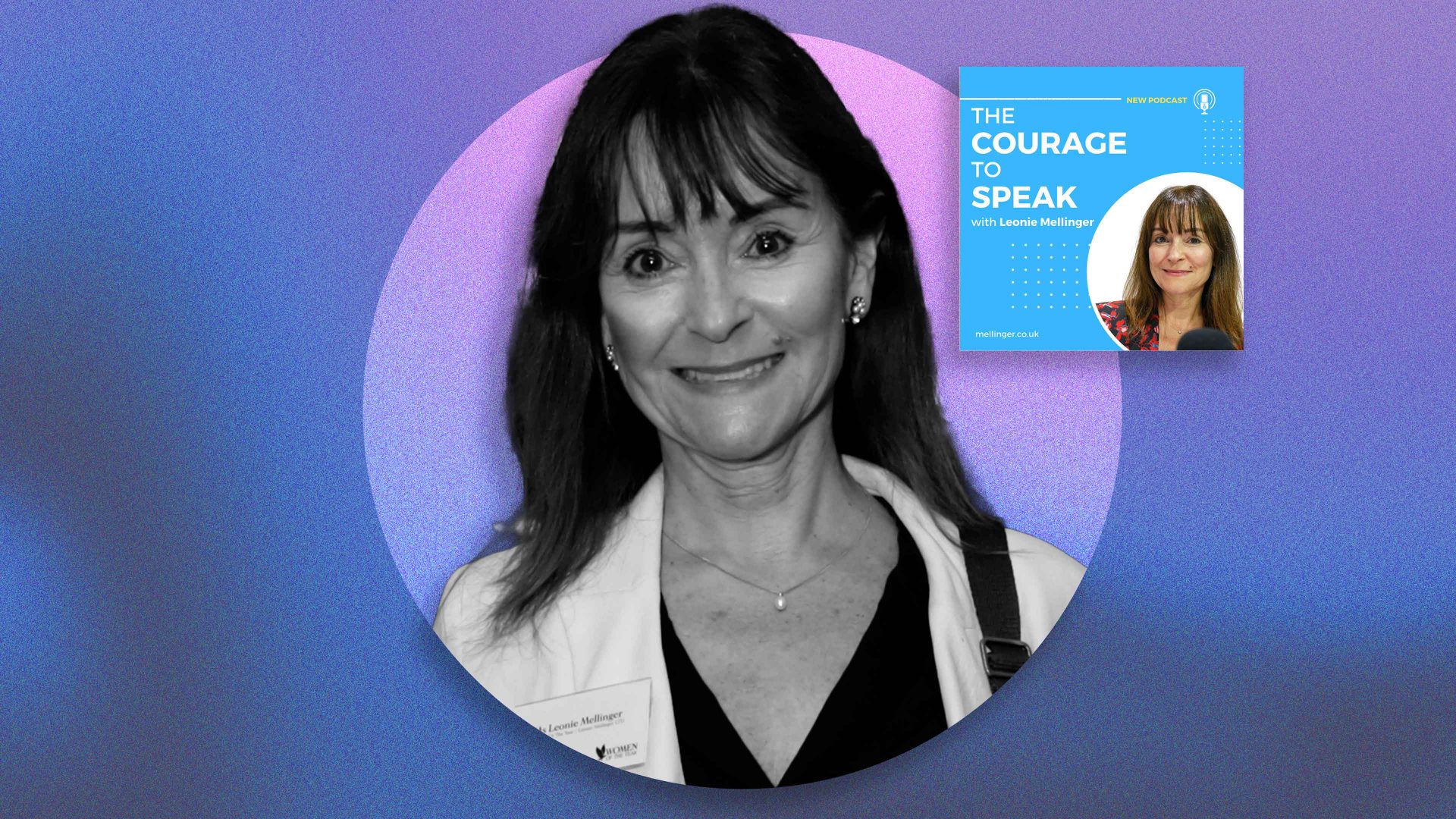
In her excellent podcast, The Courage to Speak, actor and impact coach Leonie Mellinger talks to people from the arts, sport, campaigning and politics to discover what it takes to dare to stand up for what you believe. Her guests have included Gary Lineker, Dame Harriet Walter, Sir Michael Palin and Peter Tatchell.
As the podcast’s new season begins, the culture wars are raging on, authoritarian and democratic governments alike are clamping down on protest and criticism, and online mobs are intimidating people into silence. “I believe people are afraid of speaking up now more than ever,” Mellinger told me. “And that means we are less able to be open and honest, even with people we feel close to sometimes. This results in us feeling more alone and disconnected.”
“Ten years on (from Brexit), it feels as though society has become more polarised and intolerant of opposing views. Silencing today rarely looks like outright bans. It looks like harassment, career risk, reputational damage, and the steady drip of messages telling people that speaking up is not worth the trouble.
Suggested Reading
Will Israel sabotage the US-Iran deal?
“In the episode with Gary Lineker, criticised for speaking out on Gaza, he told me, ‘we’re living in times where we’re encouraged not to speak out, keeping us quiet. Demonstrations have been stamped out… We’ve seen what’s happened with people demonstrating against climate change, for example, thrown in jail.’
“Speaking up in 2026 isn’t about shouting the loudest or winning arguments. It’s about choosing courage over comfort, complexity over slogans, and humanity over fear.”
Though her first guest was Jon Snow in 2023, Mellinger says her inspiration was concern over growing xenophobia, misogyny and racism in the aftermath of the Brexit referendum. It revived old fears.
Mellinger is the daughter of German Jewish refugees who had come to England fleeing the Nazis in the 1930s, only for her mother to be first interned in Holloway prison and then – after being pelted with rotten fruit at Liverpool docks – in a camp on the Isle of Man, where she learned of her father’s murder in Buchenwald concentration camp.
Mellinger’s father was one of 2,500 supposed enemy aliens packed off to Australia on HMT Dunera, on which, she says, “He was butted with rifles by the squaddies, and kept in appalling conditions below deck save for 10 minutes’ daily exercise. Guards would smash beer bottles so the internees would get shards of glass in their feet.
“As a child hearing these stories, I wondered why my parents stayed in England after their respective releases. My mother told me, ‘I thought, well at least in England, I’m still alive.’”
Mellinger says her podcast guests are “all inspiring in different ways. Some stories really stay with me because of the resilience involved, others the courage it took, some the personal connections, like Michael Palin’s work with The Michael Palin Centre for Stammering and desire to connect with people due to his father’s stammer. What I find most interesting, though, is the why – what finally made someone decide to use their voice.
“Some of the most impactful stories I was told were from individuals who spoke out because they had to, not because they wanted the limelight, such as Lee Castleton, the first victim of the Post Office scandal to sue the Post Office, and journalists Caroline Wheeler, who spoke out on the infected blood scandal, and Julie Etchingham, who told me the story behind her investigations into modern slavery. What unites them is not fearlessness, but clarity about what happens when silence takes hold.
“These stories taught me that courage is often misunderstood. It is not loudness. It is not perfection. It’s not shouting on social media. Often it is a quiet refusal to disappear. Sometimes it is choosing to speak even when your voice shakes.”
Mellinger always asks her guests for a piece of advice. “Two themes stand out,” she says. “Firstly, even those who appear brave have their fears and doubts. Many of the guests stressed how it’s OK to be nervous, encouraging others to find courage where they can and speak out as much as they are comfortable with.
Suggested Reading
India’s lessons for the world on defence, trade – and Trump
“Gina Miller (the businesswoman and activist) shared this advice: ‘Don’t think about being fearless. I’m not fearless. I’m fearful for how the world would change around me if I don’t speak up… Speaking up is not about power for you, but it’s stewardship for everyone else around you.’
“Peter Tatchell told me: ‘We can all do something, and it’s these little somethings that add up to something big. You know, what I like in the struggle for human rights and freedom, it’s a bit like a mighty river takes many small streams, and we can all be the small streams that make that mighty river for human freedom.”
“Lastly, the dancer Fernando Montaño gave me: ‘Try to be curious.’ We need to stay curious and keep listening to each other, even when the stories are difficult to hear – because progress, justice and real change have always depended on ordinary people finding the courage to speak, even when it costs them something.”
The Courage to Speak’s new season starts on October 13, with Jonathan Caplan KC as the interviewee