
Was it not remarkable how quickly, and how vehemently, Nigel Farage and his Reform ragbag of MPs reacted to Andy Burnham’s announcement of a new National Centre for Information Defence – “to detect, attribute and disrupt hostile state information attacks. To support and defend our democracy.”
The prime minister had set out in some detail the efforts Russia goes to in order to influence UK opinion – bots, fake websites, forged branding of 28 British organisations, including some of our top universities and the BBC. He explained how Russia pounces on events such as the Southport killings or violence around the immigration debate to push narratives designed to drive us apart. He revealed that the Kremlin spends around £1.3bn each year on manipulating information.
He did not mention Reform UK. Yet for some reason Nigel Farage decided the reason for this new government initiative was to embarrass him as he prepares to work out how to spend £72m worth of crypto gains on pumping propaganda into the homes and minds of the electorate.
Delving into the usual MAGA-Putin playbook, he made the claim that this was an issue of free speech. So just think about that… his approach to free speech is that Russia should be free to tell as many lies as it likes, spread as much disinformation as it likes, with a view to weakening our society, our communities and our democracy.
It is a very weird thing indeed, to see him standing by union flags, and standing up for the Russian right to lie. The speed and vigour of the response really did smack of protesting too much.
Time to get the full story about Russia’s role in the 2016 referendum out there methinks, as Andy Burnham works to undo the enormous damage Brexit has done.

Halfway through a key scene in James Graham’s brilliant new play, The Standard of Living, proceedings were halted by the cry “is there a doctor in the house?” as someone a few rows behind us was taken ill. The actors walked off, the lights came up, the sick person was helped out, the play resumed, to loud applause for the theatre staff, as the actors returned.
The following evening, my daughter, Grace, was doing a comedy show in Birmingham. There was a power cut midway through.
Grace did not want to leave the stage. She asked everyone to turn on their phones and put the lights on, and got the crowd singing a Coldplay song before returning to the planned material.
Two very different ways to make sure the show goes on. Obviously I recommend anyone who wants a laugh to check out Grace’s shows – she has one coming up at the Palladium no less, on November 7.
Suggested Reading
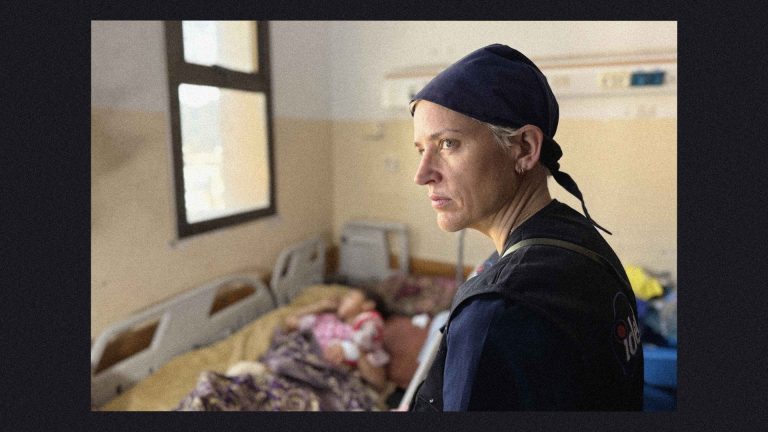
I met a hero of Gaza in a cinema queue
But I also cannot recommend strongly enough The Standard of Living. I am biased because I have got to know him well over the years, but I genuinely think James Graham has a touch of genius.
The government whips’ office, data theft, the Angry Brigade, Brexit, Rupert Murdoch, a TV quiz show, the life of a Labour MP, the William Buckley Jr v Gore Vidal debates, the life of a US evangelist, football manager Gareth Southgate, restorative justice, an election day… he can take on any subject and make it dramatic, witty, wise, and relevant and meaningful for the here and now.
His latest offering is the story of John Maynard Keynes, and his intellectual battle with Margaret Thatcher’s favourite economist, Friedrich Hayek. Keynes was a Liberal Party supporter, but current Labour ministers could do worse than pop round from Westminster to the Theatre Royal Haymarket to check out the play. Big brain, big thoughts, big consequences for the good.
“A good life” for ordinary people was how Keynes viewed the purpose of economics. Not a bad guiding light for politicians too.
There are somewhere between 12 and 13 million children in the UK, and more than one million of them have no books to call their own. Yet across the country there are an estimated 280 million children’s books which, now the children who read them are grown up, nobody reads.
These were stats I picked up while chairing a panel at M+C Saatchi to talk about the work of the Children’s Book Project. CBP founder Liberty Venn seemed a little abashed when I introduced her as Britain’s Dolly Parton, but she has helped get millions of books into the hands of children across the UK, just as dearly departed Dolly has done, and will continue to do through her amazing Imagination Library.
Also, if there isn’t a US country singer called Liberty Venn, there should be. Great name.
In addition to Liberty, the panel consisted of Alison David from HarperCollins, David Hayman, managing director of the National Year of Reading, and James Barge from Asda supermarkets. Why Asda? Because in 250 of their 600 major stores, you can drop off books that the charity then distributes to children. They have already topped the million mark for books handed over by their shoppers.
The book trade is in fairly good shape, but Alison David pointed out that this is largely because those who do buy books do so regularly, but a lot of people never buy books at all. Hence the stat about so many bookless children, exacerbated by the cost-of-living crisis, and tech-induced shortened attention spans, too.
It is sadly not unusual for children to arrive in school, be presented with a book, and think they have to swipe it rather than turn the page. Yet despite the tech revolution, 97% of children’s literature is consumed in physical book form, not using some kind of device, whereas for adult fiction it is not far off half and half, half for printed books, half for Kindle and audio. Kids still love the feel of paper, beautiful illustrations, and being read to.
All of us on the panel were able to recall moments in our childhood when a particular book gave us special joy or excitement – mine was the Charles Buchan football annual I was given as a Christmas present by an aunt. And that 97% stat suggests that children today want the same access to the joy books can give. Added to which, in addition to the sheer pleasure of reading, how much you read as a child is a key determinant of success in later life.
I was not proud to say that as a shopophobe, the only time I had ever been in a British supermarket was to sign books in Tesco, when my first novel was their Book of the Month. Shameful, I know.
But I did promise a visit to an Asda store near me, to drop off loads of books. I love a good cause when I stumble upon it.
Early in the life of this paper, which has now reached this terrific 500-edition milestone, I wrote of Sophie Pender, a working-class young woman from Essex who had set up The 93% Club, so called because it represents the 93% who went to state schools, not the privately educated 7% whose networks do so much to keep wealth, opportunity and top jobs in their hands.
I spoke this week to their “Social Mobility Factory” conference, at which 2,000 state school leavers mixed with employers, entrepreneurs, work coaches and the like. It was fabulous to see how the club had grown, from an idea that popped into Sophie’s head when being patronised at university, into a gathering that felt so confident and positive, despite all the challenges facing young people today.
 Most popular

Emily Maitlis’s diary: Trump doesn’t fear the AI apocalypse – but he’s terrified about the midterms

A new film about Elon Musk reveals him as so awful it’s almost tragic. Almost

My day out with Danny Tommo
I was at Eton with Charles Spencer – this is how it explains his battle with the royals