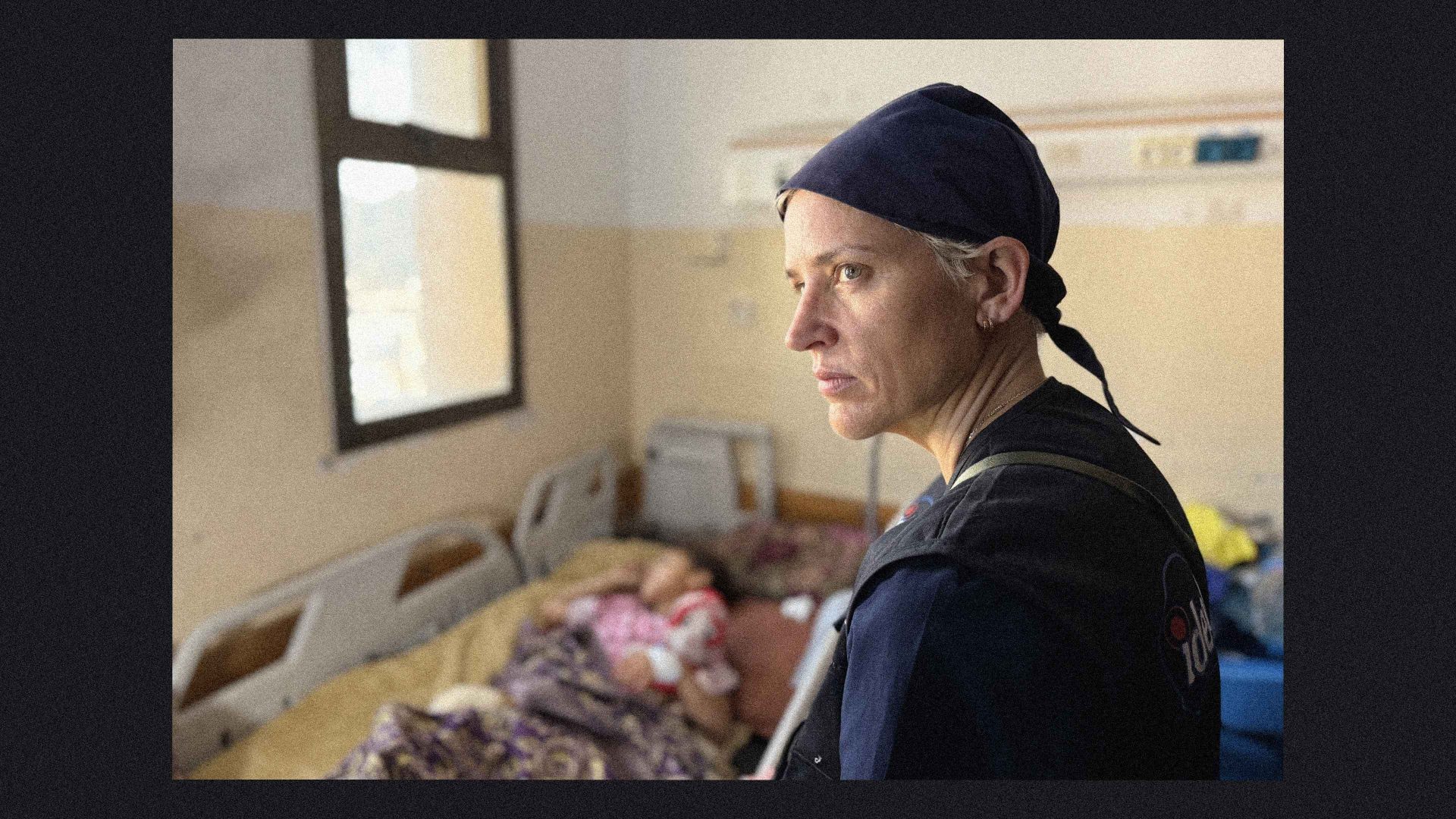
So you’re not supposed to meet your heroes? But what if you didn’t know they were your heroes until you met them? And no, this is not another piece about the time I played with Diego Maradona. It is about a doctor called Victoria Rose.
I met her for the first time last week, at the entrance to a cinema in central London, where Fiona and I were about to watch Life Support, an often harrowing documentary about Gaza, with a focus on international doctors who try to support their Gazan colleagues in a health care system collapsing in the face of Israel’s onslaught.
Victoria Rose is one of those doctors, a plastic surgeon who has made several visits to Gaza, and whose accounts of that experience are dotted through the film. And before you allow the words “plastic surgery” to transport your mind to facelifts, bum tucks and boob jobs, this is a woman who was dealing with horrific burns, shrapnel wounds, blast wounds, gunshot wounds and more, often in circumstances that can only be described as hellish.
We see so little of what is happening there these days, because international journalists are banned, many Palestinian journalists have been killed and though Gaza was once top of the global political and news agenda, that’s no longer the case. However bad you think the situation there is, watch Life Support and you’ll see that it is far, far worse.
Suggested Reading
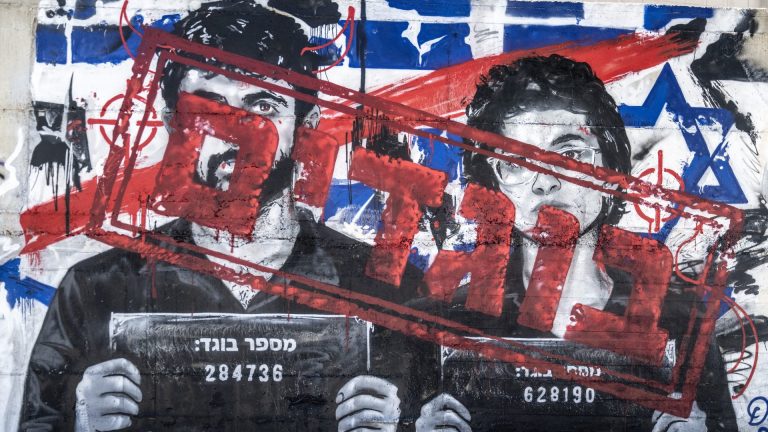

Why Netanyahu hates the most powerful film of the year
So doctors like Dr Rose, and her British and American medical colleagues interviewed for the film, are not merely saving lives and easing pain, they are also bearing witness to levels of suffering and cruelty that no human being should wish, let alone inflict, upon another. It is impossible to watch Life Support, and hear the accounts of these doctors, without reaching the view that Israel is deliberately destroying access to the care needed for the wounds and the misery their actions are causing, with little regard for civilian life. “War crimes” doesn’t convey the full horror.
There were moments when it was hard not to look away, so upsetting was the sight of operations being carried out on patients lying on a blood-spattered floor, of malnourished children, of weeping parents realising their child was gone, of doctors killed and hospitals bombed, of mass graves… it really is a tough watch, though the “persevilience” of the Palestinians leaves you in awe, and the courage and commitment of the doctors is inspirational.
It is, frankly, ridiculous that the director, Daniele Rugo, is having to take the film to tiny cinemas, such as the one we were packed into, usually with one or more of the doctors alongside him for a Q&A session, in order to build an audience. Ridiculous, because it is a brilliant documentary and should be on the BBC, ITV, or Channel 4.
By a happy coincidence, I was seeing foreign secretary Ed Miliband the following day. I promised Daniele and Victoria that I would ask him to watch the film, and also to meet them. He said he would. I strongly urge all of you to watch it too.
I shall report back on what Ed Miliband thinks of Life Support. I hope that, as Fiona and I did, he recognises true heroism when he sees it, and that it informs government policy on Israel-Gaza.
With my new book now at the printers (no more late changes allowed. Agony!), I have been in The Rest Is Politics studio even more than usual in recent days, recording a series on Persevilience, my new word and the title of my book, and talking to people I have cited as examples of this acceptable P-word.
Among them is former Labour cabinet minister David Blunkett, whose lifelong blindness alone puts him among the top rank of people who overcame setbacks to achieve great things. David was a massive hit among the production team, for three reasons.
First, for consistently taking another P-word out of me. They especially enjoyed him telling me that, though he liked my new word, he felt my planned dictionary definition was two more P-words – pompous and pretentious. Second, because he was with his ever-present guide dog, Barley, a black retriever-German Shepherd cross, who had the team in a total swoon. And third, because he has a great sense of humour.
I had asked all my guests, having sent them proofs of the book in advance, to tell me what the word persevilience might mean to them. David came armed with a braille note, which stayed on his lap, until such time as he came to tell us his answer to this question.
“I’ve brought the braille because I want to get it right,” he said, as his fingers ran across it. It was a quote from an episode of season six of The Simpsons, in which Lisa says to Homer: “Did you know the Chinese use the same word for ‘crisis’ as they do for ‘opportunity’?”
“Yes,” replied Homer. “Crisitunity.”
That would definitely have found its way into Persevilience – one of whose central themes is getting good out of bad – had the printer not been already at work. Maybe it can wait for the paperback.
Oh, and by the way, I checked with a Chinese speaker who tells me Homer was talking nonsense, but I haven’t had the heart to tell David yet. He loved his joke too much. We laughed so much we almost woke the dog.
Canadian prime minister Mark Carney is making a habit of making memorable speeches that might well be making history. In his latest noteworthy address, to the European Parliament, he told the story of Goethe’s Oak on the site of Buchenwald concentration camp.
It was so-called because Germany’s Shakespeare used to walk in the area and was known to admire the tree in question. Indeed, out of respect for Goethe the oak was spared when the Nazis chopped down other trees while turning Buchenwald into what it became.
Carney began his speech with the tree theme, and returned to it at the end, telling the story of first world war survivors who went back to Canada with acorns from the battleground of Vimy Ridge, which grew into trees back home.
“Let us now deepen these roots, widen this canopy and grow a transatlantic forest under which our citizens can flourish as free people on free ground,” he said. A standing ovation followed, amid just the latest signs that the new world order taking shape might yet work to the advantage of the free world, and the disadvantage of Donald Trump’s US.
When Trump came on the news to pour scorn and bile on the notion of Canada getting closer to the EU, I wondered, as he rambled on, whether he knew who Goethe was. I rarely use AI, because I don’t especially want to reward Trump bankrollers, but I made a quick exception to ask a couple of large language models to tell me of any literary references in the many, many speeches Trump has made.
The Godfather came up, but I am guessing it was the films he knew, not the book. Likewise, there were many references to Hannibal Lecter, but I doubt he has read The Silence of the Lambs novel on which the film was based.
AI seems to believe that Trump’s favourite literary reference is “The Snake”, a 1960s song written by musician and civil rights campaigner Oscar Brown Jr. Trump uses it as part of his shtick against immigration. I can state with near certainty that he has never read Goethe.