
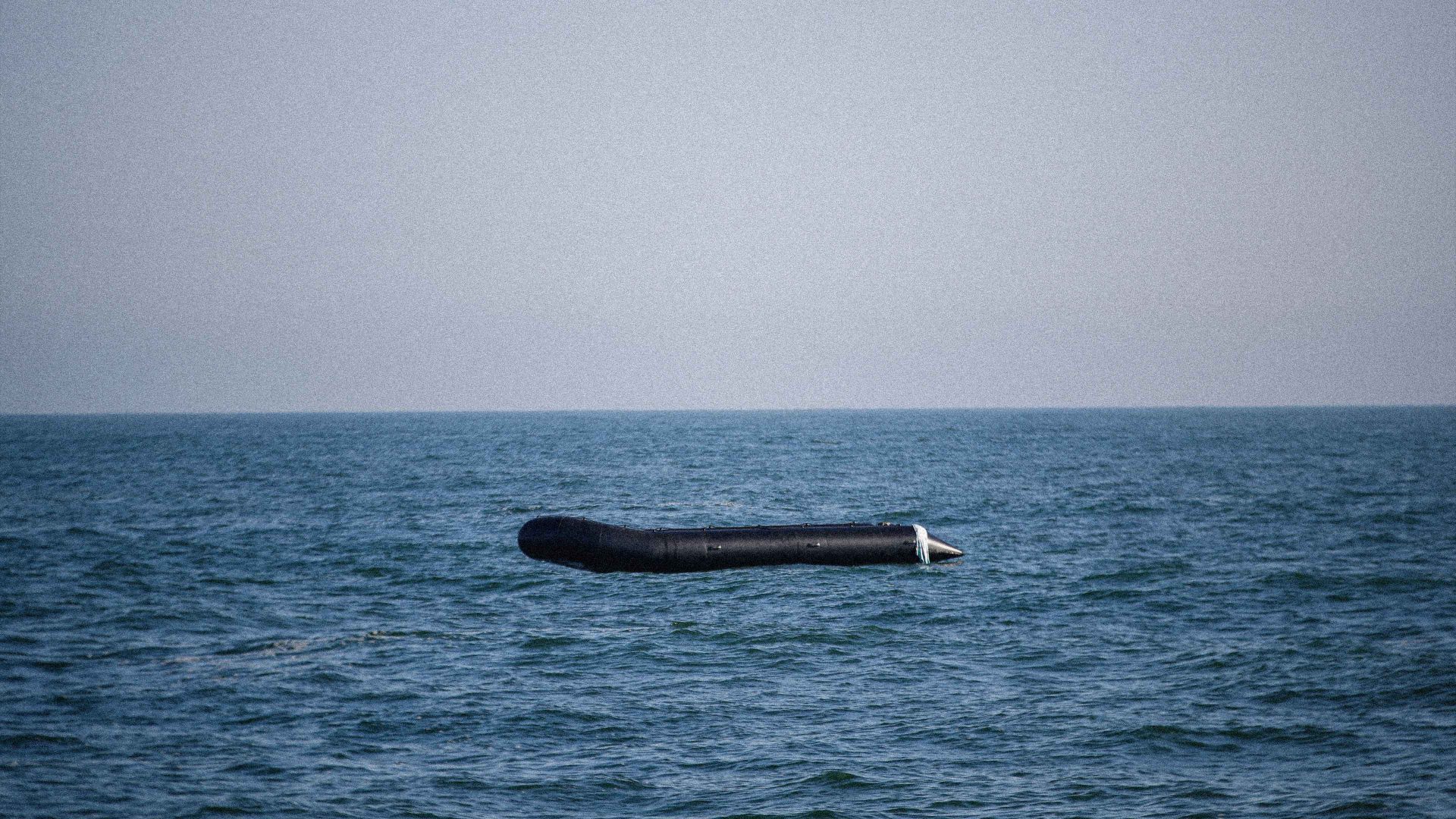
Imagine two hypothetical situations. In the first, you are in a boat with a knife in your hand near a rubber dinghy. On impulse, you stab it and relish the hiss as it deflates. Your action sinks the craft. You’ve just caused wanton criminal damage, perhaps to make a point.
In the second, you are in a similar situation, but unbeknown to you there’s someone hiding in the boat who subsequently drowns. You did exactly what you did in the first case, punctured a dinghy, but now you’ve killed someone by mistake. Quite apart from the legal question, people will blame you far more for what you did. From your perspective, it was no different from when you stabbed the empty boat.
It’s a tragedy, and you were causally responsible for it. Many of us would hold you morally responsible for that person’s death too, though less so than if you had stabbed the boat in order to kill them or had attacked them. Mens rea counts in a court of law too. People who have plotted terrorist attacks, for example, are punished severely even if their plans are thwarted.
In the first boat-stabbing scenario, you were reckless. In the second, you accidentally killed someone. In both, you did something stupid and risky. From your perspective, though, you did precisely the same thing.
This is a bit like the difference between a driver who is over the alcohol limit driving home safely, and the situation when he does the same and a pedestrian suddenly steps in front of the car without looking and is killed. The stabber and the drunk driver in the first scenarios were lucky that they didn’t kill anyone, and unlucky in the other scenarios because they did.
These tragic outcomes were caused by an initial foolish action: you should have known better. You are guilty of a kind of culpable negligence in all these cases. But it seems more blameworthy when someone dies.
Immanuel Kant thought that chance outcomes should never determine the morality of an action. He described our Good Will as like a jewel that shines within us and has intrinsic value whatever happens. You should be judged by intentions alone.
For Kant, all four of the above scenarios would be morally equivalent because the intentions were the same. But that is not how most of us judge cases like these.
Suggested Reading


What if reality doesn’t exist without us?
It seems intuitively right to say that someone did something morally worse when death resulted. But at the same time, that doesn’t seem fair since the person who initiated the chain of events that led to that outcome didn’t deliberately or knowingly cause that death and didn’t foresee it (perhaps because they lacked imagination).
The philosopher Bernard Williams introduced the term “moral luck” to describe this paradox. We want morality to be immune from luck when talking about general principles and think we can only rightfully blame someone for what they can control.
At the same time, however, we are deeply un-Kantian and condemn people morally in the light of how things turn out. This is an unsettling phenomenon because we are pulled in two directions.
Once you start thinking about it, you’ll quickly realise this paradox goes even deeper and touches on issues about free will. Take character.
Suggested Reading
The tech bros’ wager on AI doesn’t make any sense
No one creates themself ex nihilo: only part of what we become is within our control (though existentialists might disagree with this observation). You’re just lucky if you’re the kind of person who can curb your worst instincts. Luckier still if you don’t have them and are considerate.
There’s so much about ourselves that we don’t choose. This is the problem of constitutive luck.
What makes someone an impulsive person prone to stabbing rubber dinghies? Perhaps it’s almost entirely down to a difficult childhood exacerbated by genetic factors. If so, should we blame them, or just feel sorry for them and keep them away from inflatables?