Jane Caro is a well-known London-born Australian writer and commentator, a renowned feminist and atheist, anti-private school campaigner and all-round good woman. Indeed, apart from the Australian bit, she sounds exactly like my partner, Fiona.
She interviewed me at Sydney’s beautiful State Theatre, almost 100 years old (the theatre that is, not Jane, who is my age) and with the most extraordinary collection of chandeliers hanging above the 2,000-strong crowd. She recalled hearing me say, before the 2025 election which saw Anthony Albanese re-elected as prime minister, that Australia was avoiding the populist virus sweeping the democratic world.
Jane said this had given her comfort, “because I trust your analysis.” A hard and heavy “… however…” went unspoken, the look on her face telling me that this wonderful country was not, after all, wholly immune.
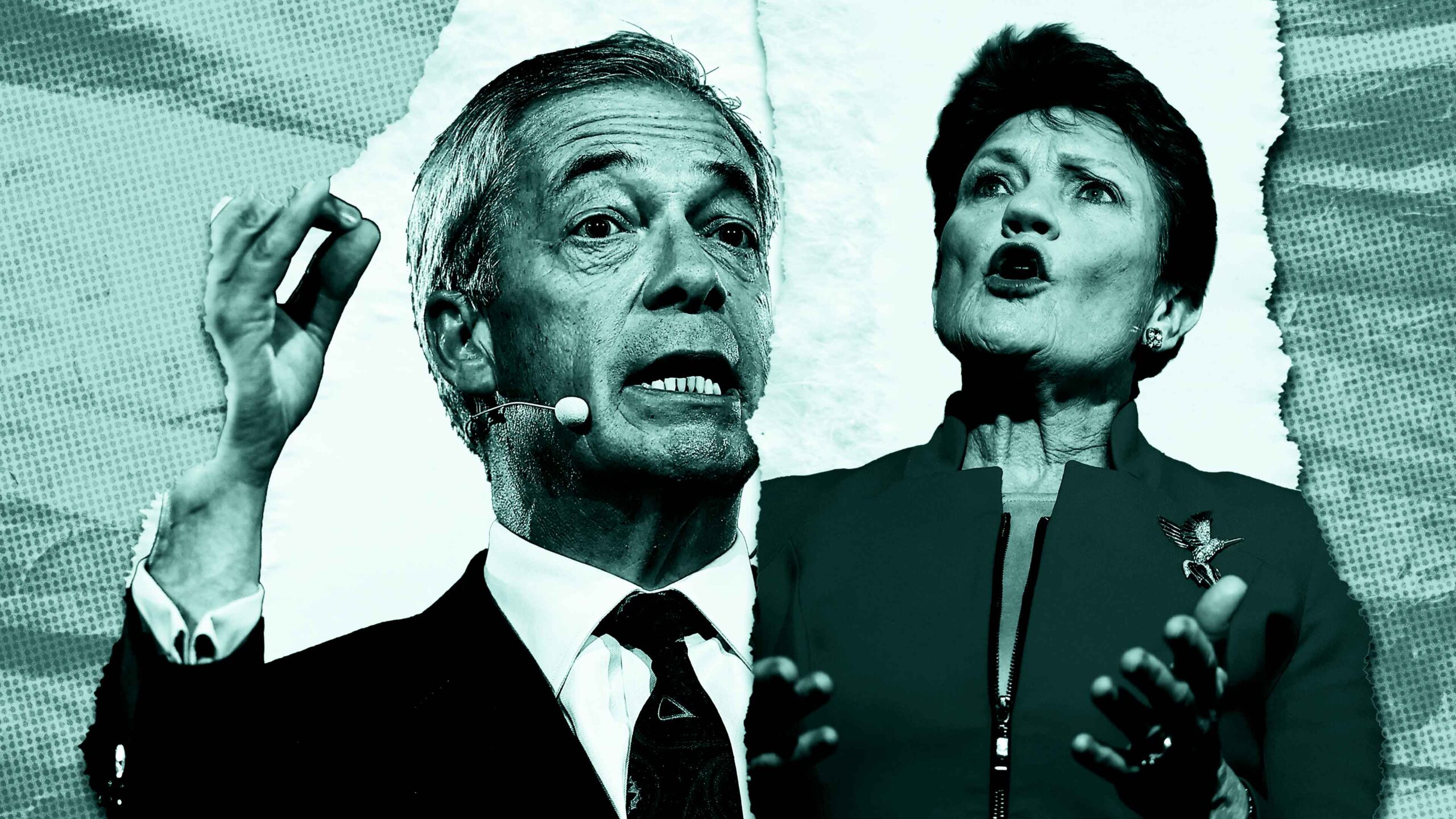
Pauline Hanson, Australia’s Nigel Farage, has been around even longer than the nicotine-stained man-frog. Yet until recently, like Farage, she was seen more as an irritant disrupter with extreme, simplistic views, rather than a contender for power.
As with Farage, it has become clear in recent times that the One Nation leader might need to be taken more seriously. Polling graphs make grim reading for Labor and the Liberals (the Aussie Tories), both showing a steady decline. One Nation has been the main beneficiary, seeking to do to the Liberal-National Coalition what Farage has been threatening to do to the Tories; replace them as the main force on the right.
At the risk of giving Jane false comfort, I said I felt Hanson, à la Farage, would fade and even implode once the real possibility of power hoves into view. Hanson lacks Trump’s charisma or Farage’s cheeky chappy shtick, is woeful on detailed policy, but good at throwing out talking points that appeal to the “sod the lot of them” mood which accompanies periods when cost-of-living challenges are real.
Just as Farage has crypto-billionaire donors on his side, so Hanson has Gina Rinehart, the richest woman in Australia, giving her millions in donations, jets and use of property.
This Saturday, November 28, Victoria goes to the polls, and Labor’s 12-year stretch in power there is almost certainly ending. It has governed the state for all but four years this century, but in some polls they now lie third behind the Libs and One Nation. This is a pretty seismic shift, and will be a very sobering moment for Labor.
However, let’s think of five reasons why Farage and Reform UK are currently struggling. One is money (and Rinehart’s role will become more salient as the next federal election nears); the second is the largely dreadful performance of Reform councils, councillors and candidates; a third is the sheer nastiness of some of his new high-profile campaigners, a trend he has always sought to avoid.
Suggested Reading
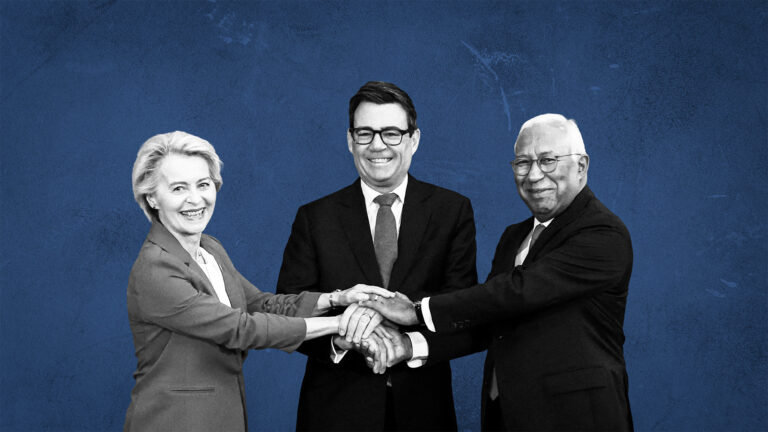

Burnham’s new EU deal has left Farage trapped and humiliated
A fourth is the environment: (and what the deadly summer heatwaves did for Reform’s boneheaded climate stance will be as nothing to what El Niño might do to Hanson’s climate denialism if floods and fires come as expected); and fifth, if there is one poll Farage definitely tops, it is the one to find which party leader most people would vote against to keep out of power.
He can’t be written off. But I am more confident than I’ve been for some time that he will never be prime minister. Watching from afar his reaction to Andy Burnham’s entirely sensible early steps in improving relations with the EU, Farage looked very much a figure of the past, and frankly, just silly, and not very relevant.
Four of my five factors above apply already to Hanson, and so will number two once people see One Nation as a party of actual power. Indeed, already, the candidate who described Hitler as the GOAT, or the one who mowed his lawn with a swastika pattern, have become better known than when Hanson was a mere irritant.
Also, whilst accepting it is difficult for parties in power to say what they really think about Donald Trump, my sense is the US president is if anything more loathed here than in the UK. One Nation have removed pro-MAGA and Trump statements from their website, suggesting they know the link to the global leader of populist charlatanism is a potential weakness for them.
The AUKUS defence deal or not, Labor need to find a way of exploiting that weakness. Defeat in Victoria this weekend will feel like an earthquake for Labor. Persevilience is required.
They should use it as the pivot to show Australians the reality of what a One Nation government would mean. Get good out of bad.
The Xi-Putin-Trump Dictators’ Trilateral in Shenzhen was stomach-churning. We can give up, I fear, on any hope that Trump, or his Putin shoe-lickers Witkoff and Kushner, are anything other than on Russia’s side against Ukraine, so the rest of the world will have to step up more. The audiences here, I’m pleased to report, have been totally on Ukraine’s side.
Suggested Reading
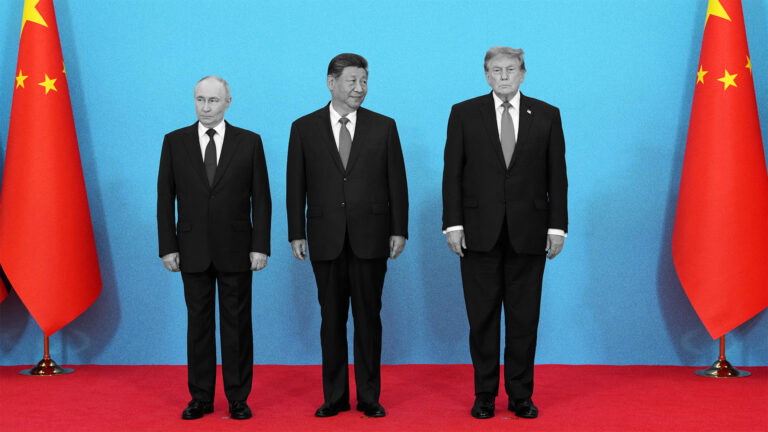
Donald Trump’s disappointing far east threesome
I pointed out in one of my speeches that if Marine Le Pen becomes president of France, the Permanent 5 on the UN Security Council will be headed by two convicted felons, an indicted war criminal, the keeper of one million Uyghurs in prisons and internment camps… and Andy Burnham.
Hillary Clinton said last week that Mark Carney was now the leader of the free world. But given we Brits have that seat at the UN top table, maybe his fellow Everton fan could share the load.
Rupert Murdoch featured heavily in my speech to the National Press Club in Canberra on Monday. I circulated a draft to a few Aussie friends, one of whom suggested, as the Rupe era draws to a close, and the real Succession plot unfolds, that what follows could be even worse; that the next generation cares much less about papers, for example, and a Musk or a Bezos might move in.
It’s quite something, to think Musk is even worse than Murdoch when it comes to poisoning the well of public discourse.
My one day of pure pleasure and relaxation was Saturday, spent at the Melbourne Cricket Ground watching the Australia v England T20 match. Sandpapergate was top of everyone’s conversational agenda. Even Fiona, who loves sport as much as I love going to the dentist, wanted to know what it was all about when I phoned home.
It really is quite the story, of cheating, of lying (somebody is, for sure, and the whole country is divided on who) and above all, in sporting terms, of teamship falling apart.
In 2015, when I wrote Winners and How They Succeed, I devoted a chapter to Australia’s winning mindset in sport. All my life, I’ve loved the Aussie winning mentality. Sandpapergate is what happens when it is taken a tad too far.
But the real story for Cricket Australia is the oldest crisis management story of all… that the cover-up is worse than the crime. Bowlers have sought to manipulate the ball for as long as I can remember, and this is far from the first time a little bit of underhand pocket activity has gone on.
It doesn’t make it right. But once the wrongness was known, they had one job to do… establish the facts. If facts good, go on the offensive. If facts bad, take appropriate action against offenders. For heaven’s sake, don’t allow a free-for-all.
I was half hoping for a call to go and help them out, such an enormous, challenging mess has it become. They’re pretty good at cricket, but dreadful at crisis comms.