One major virtue of a liberal society is that it is tolerant. You don’t have to respect everyone else’s beliefs, but you should give others as much freedom of thought, expression and action as possible. This toleration is most needed where those with religious or political disagreements live side by side. You might then assume that toleration is so good that the more of it the better.
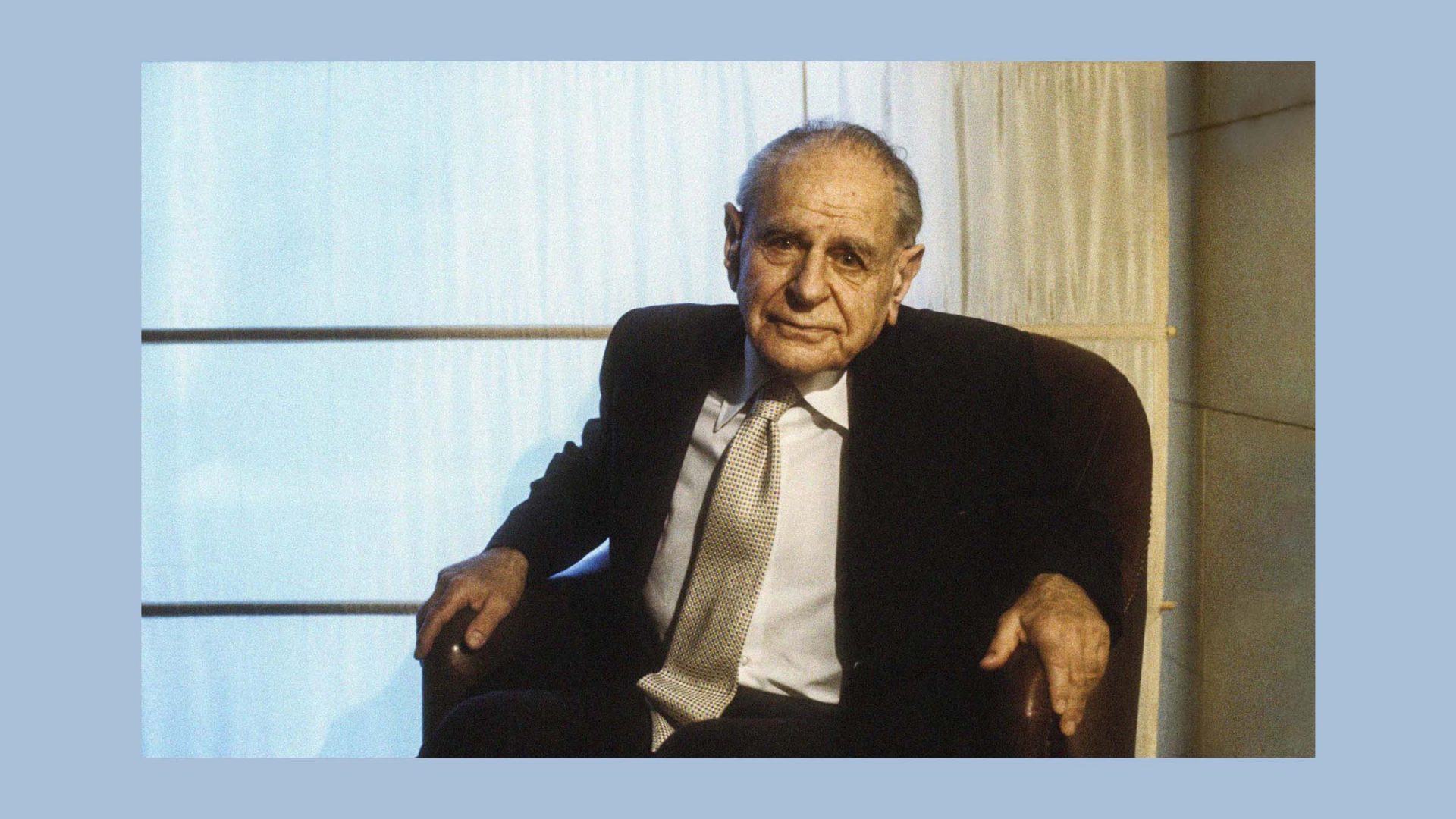
However, as Karl Popper noted, that leads to a paradox: The Paradox of Tolerance. Here’s the problem: if you tolerate the intolerant, they’ll probably destroy your tolerant society.
Toleration can be self-defeating. Give the intolerant rope and they may hang you with it. Fascists love free speech while on the path to power, but not so much when they have it. If you dissent at that point, you’ll find yourself beaten up, in a cell, or worse.
Suggested Reading
Everyday Philosophy: The philosopher’s take on capital punishment
Popper saw this happening in Vienna in the 1930s and got out. As a former communist, and someone Hitler considered a Jew, despite being baptised a Lutheran, he was lucky to escape in 1937. He emigrated to New Zealand, where he wrote The Open Society and Its Enemies.
Popper didn’t want to censor or suppress the intolerant – at least not automatically. He was explicit about that, arguing that while there is still the possibility of meeting intolerance with rational argument, and when public opinion could win the day, it would be unwise to silence those who if given power would silence every dissenter.
But tolerance must have limits. “Anything goes” doesn’t work. He argued that in the name of tolerance, we should have the right to limit what the intolerant can do and say. That’s the paradox: any workable tolerant society has to be intolerant at some point if it’s not to self-destruct.
The question then is: “At what point?” One response is that we should draw the line at threats of violence. That was John Stuart Mill’s response in On Liberty, but, as he realised, what counts as a threat is not just a matter of words, but of context.
As we saw last week, words that seem to advocate assassination in one context can be a poor taste joke in another. On the face of it, Zack Polanski’s reposting of a photograph of a man wearing a T-shirt featuring a guillotine with the caption “We’re only making plans for Nigel”, was poor humour, not close to being an instigation to end political disagreement by murdering the Reform UK leader.
The context here included Ann Widdecombe’s violent death, so the act of reposting was potentially toxic, dangerous even. Polanski claimed he didn’t realise what he was doing; it was an “inadvertent mistake”. What kind of action would Polanski have been performing had it been deliberate? An immature, but not a vicious one.
Suggested Reading
An eye for an eye can never be justice
We expect much better of our political leaders than to make this sort of jibe, but we know very well, whatever Farage has claimed, that it wasn’t intended as an incitement to murder. What matters in these cases is not just what a re-poster does, but what they mean by what they do, or could reasonably be thought to mean.
It’s inconceivable that Polanski would want to silence debate by having his political opponents killed, the sort of act of which both Vladimir Putin and Mohammed bin Salman have been accused. To suggest otherwise is disingenuous.
A liberal society should tolerate a wide spectrum of jokes, including some that really aren’t funny (though making these might rightly damage a political career), but, as Popper advocated, be prepared to legislate against those who are genuinely intolerant in order to survive.