
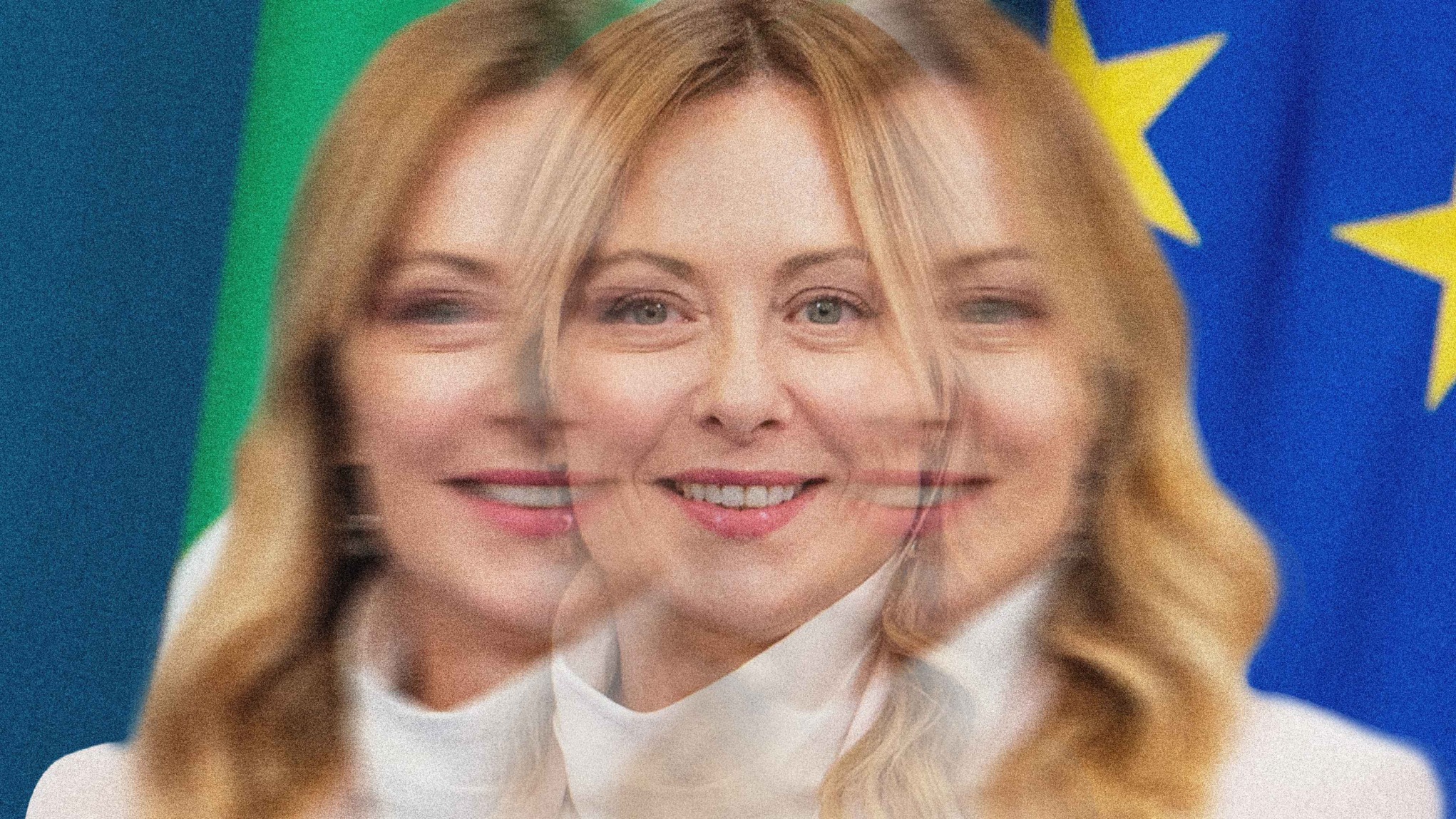
In a few months, Italians will be called to the polls to elect their next leader – the primaries take place in February. The current PM, Giorgia Meloni, leader of the Brothers of Italy party, is on a desperate hunt for “swinging” centrists. Her fascist-adjacent background is well known, but more recently she’s shown a remarkable chameleon-like political skill.
As we say here in Italy, our prime minister has become “neither fish nor meat” – she’s neither one thing nor the other, neither left, nor right. It’s getting hard to place her on the political spectrum.
She has been forced into making compromises with the European Union and into abandoning her pro-Trump and pro-Putin early stances. The political makeover has been total. She has also avoided unpopular reforms like changing Italy’s premiership model. Instead she’s focused on reforming the justice system – Italians mainly approve. She has even begun courting the left, bringing a former trade unionist into her cabinet.
This shift of course contains an element of self interest, as right wing authoritarianism seems to be in retreat. After the fall of former Hungarian leader Viktor Orbán and the weak performance of Donald Trump at the US midterms, the tide of global opinion is shifting away from that kind of leadership. Complicating this is a growing sense of political exhaustion. According to recent polls, 34% of Italians say they probably won’t vote next time, while 60% don’t know which party or leader to pick.
Suggested Reading

Le Pen, Meloni, Weidel: The three disgraces of Europe’s far right
Perhaps that’s why Meloni’s electoral campaign will focus less on culture war populist ranting and more on promoting government tax cuts and pro-worker reforms, things that interest all voters beyond their political allegiances.
For decades now, Italy’s leaders have desperately longed to win the centre, in the Blair / Clinton style “third way”. For 50 years after the end of the war, the Democrazia Cristiana party ruled by embracing catholics, liberals and progressive voters alike in a “big center”. That coalition fell apart in 1994 and no one has managed to revive it.
Now, Meloni is trying to win supporters from the populist 5 Star Movement and from the Democrats. She’ll also try to steal voters from other parties in her own coalition, the xenophobic League and Forza Italia parties. By boosting her ambiguity on foreign policy, justice and immigration and further watering down her populist tone, she might even go after fans of the centrist Matteo Renzi.
But this wanna-be centrist transformation will be tough. Matteo Renzi himself tried it himself back in 2019 when he created the centrist Italia Viva party. Since then, his support has been stuck at 2.5%. Meloni is now trying to do the same thing from the right.
Suggested Reading

Trump and Meloni insult each other in public, but don’t be deceived
Meloni is not a natural centrist – but she has become one, and has done so out of necessity. Meloni is known to be a lot more right wing in private; but when she’s on the global stage, or participating in electoral events, she shows a reassuring, conciliatory stance that can potentially appeal to voters of all kinds.
At the EU level, her Brothers of Italy party has gone mainstream, embracing a pro-European approach, which is usually associated much more with Italian centrism. It is very likely that Meloni’s party might soon become part of the European People’s Party group, the christian democratic and liberal conservative bloc in the European parliament.
Meloni’s tone can still at times come off as aggressive when she talks to her extreme right wing. That voice will no doubt put a strict limit on her appeal. But she has also said, in a recent speech, that the “centre” is not an “empty space to occupy” but a political culture based on key values such as family, work and the importance of the state. The messages are mixed – but they are being carefully directed. It will be hard – but it could well work for Meloni in 2027.
 Most popular

Why Vanity Fair turned on Taylor Swift
I read David Walliams’s autobiography – and one revelation in it could spell trouble

The noughties were rotten – and we were all part of the problem

Did fame warp Russell Brand – or was he a predator all along?