Just under a year ago Brazil’s former president, the radical right-wing Jair Bolsonaro, was jailed after trying to burn off his ankle monitor with a soldering iron. He was under house arrest at the time, having been convicted of leading a violent coup plot. A year on, his political clan looks poised to return to power.
During Bolsonaro’s chaotic, populist tenure as president, Amazon deforestation surged, along with the violent invasions of Indigenous lands. Like Trump, he was a Covid sceptic. He refused to take the vaccine and oversaw a chaotic pandemic response, during which over 700,000 people died.
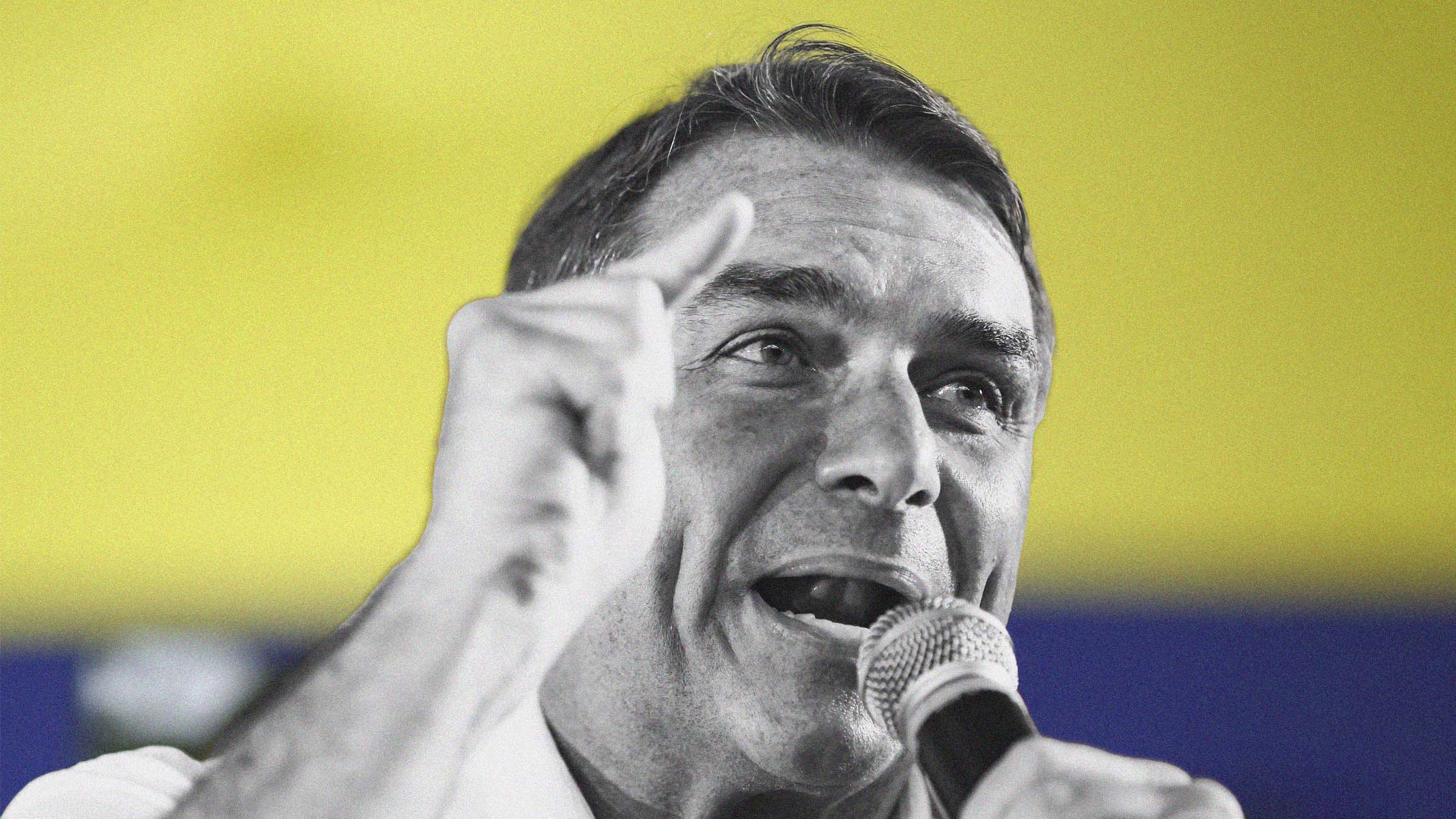
Now, Bolsonaro’s eldest son, Flávio, looks set to implement a “Bolsonaro 2.0” government. Flávio enters the 25 October runoff as the firm favourite, having narrowly yet convincingly won the first round of the presidential election. Bolsonaro allies made sweeping gains in congress, turbocharged by social media, underpinned by powerful agribusiness interests and conservative Christian groups.
Luiz Inácio Lula da Silva, the veteran leftist who presided over Brazil’s boom in the 2000s and implemented social policies that lifted millions out of poverty, is on the ropes. But not out of the race.
A win for Flávio Bolsonaro would be of great interest to Washington DC. Brazil is the region’s largest economy, and according to Dawisson Belém Lopes, a politics professor at the Federal University of Minas Gerais, it is the missing piece of the right-wing “puzzle” that the US administration is attempting to assemble.
“Donald Trump has been trying this mission of reconquering the Americas,” he says. “He’s been very successful so far.”
A year ago, Bolsonarismo, the insurgent, hard-right and openly anti-democratic political movement of the former president’s loyalists, seemed to be on the back foot, especially as Lula and Donald Trump appeared to bury the hatchet.
Opponents initially celebrated when Bolsonaro chose Flávio, 45, to carry the clan’s torch. Analysts saw him as too moderate for radical Bolsonaristas. For one thing he had taken the Covid vaccine. But there also appeared to be something vulnerable about Flávio – he once fainted live on TV and has long been dogged by scandals connected to Rio de Janeiro’s criminal underworld.
The Financial Times recently called the Bolsonaro family-political franchise “as radical as it is dysfunctional”, which may well be true – but it now has its teeth sunk even deeper into the Brazilian state than ever, with a record number of family members and ideological allies currently in office.
Jair Bolsonaro’s third wife Michelle is popular among evangelical protestants who now make up a quarter of the population in the world’s largest Catholic majority nation. She now has a senate seat.
She’ll join Bolsonaro’s second son Carlos in the upper house. He has a tattoo of his father’s face on his right tricep and apparently isn’t on speaking terms with his stepmother. Other Bolsonaro family members won seats in national and local legislatures.
Suggested Reading
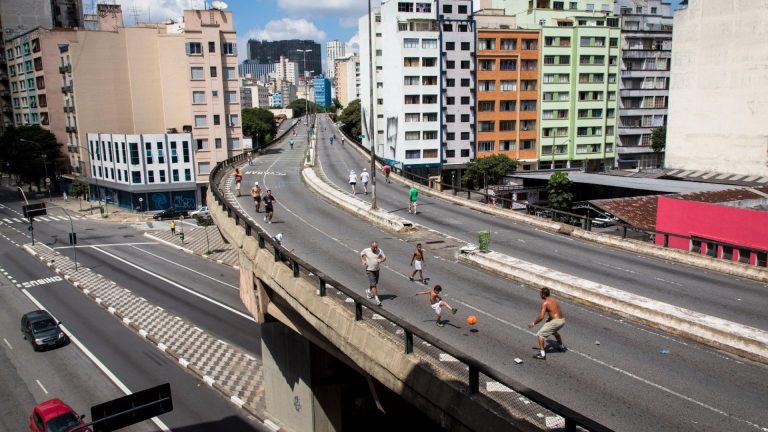
The Brazilian motorway that thinks it’s a park
Meanwhile, Bolsonaro’s so-called Liberal Party swept both houses with radical-right influencers and provocateurs, along with killer cops, religious fundamentalists and other oddballs, who weaponized outrage against identitarian issues like trans-bathrooms.
Like-father-like-son, Flávio has also indicated that he will ease firearms restrictions implemented by Lula’s government, much to the delight of gun-lovers across Brazil.
“This is quicker than calling the emergency services,” said Bosco Foz, gripping an assault‑rifle bullet. A Bolsonaro ally and firearms activist, he is a city councilman serving Foz do Iguaçu, on Brazil’s border with Paraguay and Argentina.
The flood of new firearms that entered the country during Flávio’s father’s time in government also found its way into the hands of criminal groups. Brazil had more than 40,000 homicides last year, and the prospect of more guns on the streets add to fears of greater democratic backsliding.
“They are not state builders, so even chaos interests them,” said Rodrigo Nunes, the author of Anatomy of Disintegration: What Brazil Reveals About the Global Far Right. “Because in the end the goal is private appropriation of the public machine.”
On Avenida Paulista, São Paulo’s main thoroughfare, 81-year-old president Lula greets an adoring crowd. Indeed, his rather complacent campaign now seems to have stepped up a gear, though perhaps too late.
But Lula rose from barefoot poverty to lead metalworkers strikes against Brazil’s military dictatorship. He was the first working class president and arguably the most recognizable Latin American statesman of the 21st century – the odds are undoubtedly against him, but he remains a formidable political opponent.
One of the centrepieces of his campaign, a final shot at victory, is a bill to reduce Brazil’s gruelling six‑day working week, mainly for working‑class jobs, in sectors like retail, services, construction and manufacturing. It’s a bipartisan measure popular among voters.
Flávio, wary of rallying against an idea with such support, has tried to frame it as “opportunist”, along with other proposals from Lula, such as banning sports betting and increasing welfare payments. Overall, left-wing candidates grew slightly in the congressional races, though not quite enough to match the Bolsonaristas firepower.
But then in September, a scandal in the Supreme Court exposed members of the court’s involvement with a disgraced banker at the heart of Brazil’s largest ever financial fraud. That scandal increased the simmering anti-incumbent and anti-establishment sentiment.
The irony is that Flávio Bolsonaro is directly involved with the scandal. Recordings published by the Intercept Brasil appear to show him asking the same disgraced banker, Daniel Vorcaro, for millions of dollars to help fund a biopic about his father – but his involvement seems lost on many voters.
Flávio remains the firm favourite to win. Under Lula, Brazil acts as the biggest regional counterweight to US influence. It is also Beijing’s main trading partner in South America, a status that goes directly against Trump’s so-called “Donroe Doctrine”.
Suggested Reading
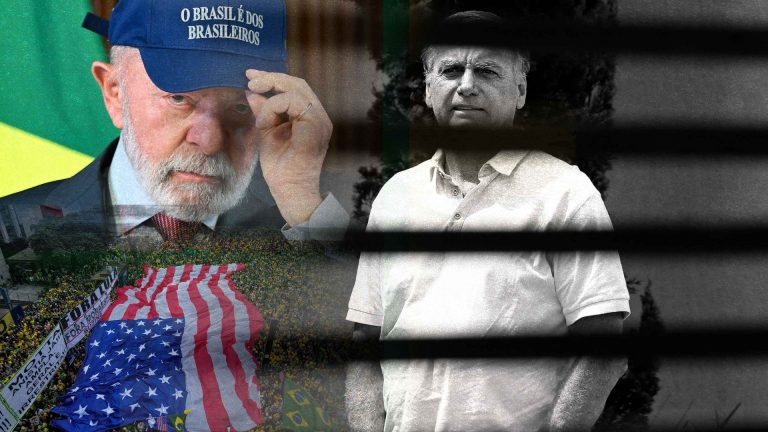
Can Brazil break free from its violent past?
In contrast, Flávio has said he wants to join Trump’s Marvel‑coded “Shield of the Americas” bloc of right‑leaning governments. That grouping is ostensibly dedicated to combating so‑called narco‑terrorists, but critics argue it is merely a guise for Washington to establish a greater foothold in the region.
If Flávio wins, one of his first priorities would be to get his father Jair out of house arrest from his Brasília mansion. The patriarch will likely command an important position inside his son’s government. “He will walk up that ramp with us and put the presidential sash on his son,” Flávio recently told reporters.
Still, many analysts note that the honeymoon period of a Flávio government would be short. Professor Belém Lopes also pointed out that Latin America’s radical right is great at winning elections but not so good at governing.
The low approval ratings of Javier Milei in Argentina and José Antonio Kast in Chile is clear evidence of that.
“Right after coming to power,” said the professor, “they simply do not deliver the public goods.”
 Most popular
My truly deranged encounter with Trump apologist Kellyanne Conway

Is this the real reason Trump keeps falling asleep in public?

Why are all AI posters so bad?

23 stupid reasons why Britain should never rejoin the European Union