
Do you remember when Britain’s first high-speed railway line opened? Almost certainly not. Tony Blair opened the first section of High Speed 1 in September 2003. He “gave a perfunctory speech and there was a small ceremony near Folkestone, but the event passed off almost unnoticed,” writes Christian Wolmar in Fast Track, a history of high-speed railways.
It was very different 22 years earlier when François Mitterrand opened the high-speed line between Paris and Lyon, and immediately announced that Bordeaux would also get a Train à Grande Vitesse. Perhaps this helps to explain why Britain has been unable to build HS2, the extraordinarily expensive railway that was originally intended to open this year but might, just might, make it to Old Oak Common – not even Euston! – by the late 2030s.
Yet we love railways. Why else has the Shrewsbury-Swansea service survived? This single-track trundler takes between three and four and a half hours, stopping 32 times along the way.
No one wants to see these stations closed. But it was not always so.
Until the second world war, British train companies were locked in competition with each other – and France and Germany – to run the fastest trains. When the Mallard reached 126mph in 1938, the UK was still a leader in rail engineering. That all changed because of war, and our attachment to steam.
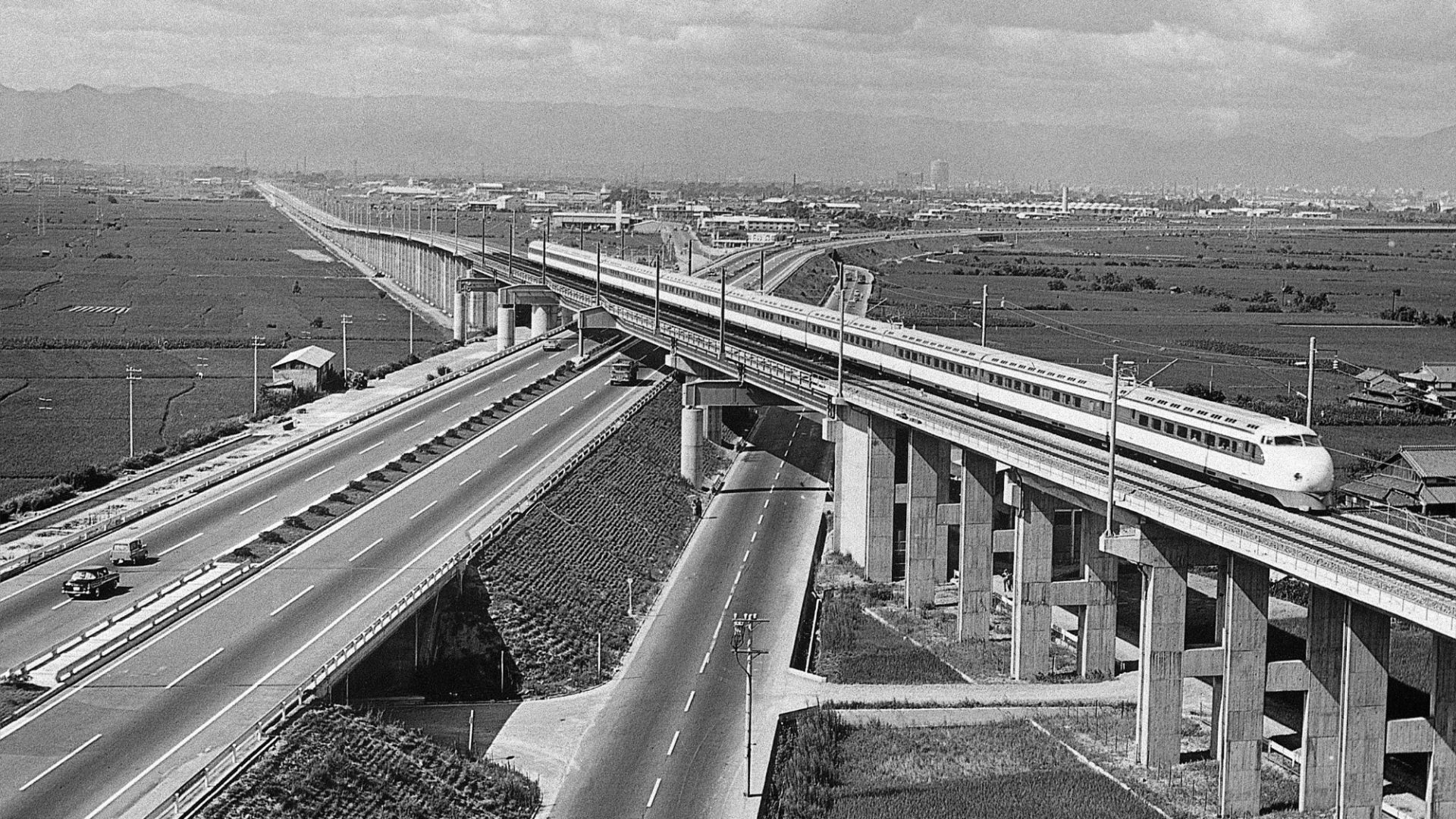
Japan, which began developing the Shinkansen in the 1950s, quickly realised that electrification was the future for railways. Britain did not stop running steam trains until 1968 and continues to prefer diesel, playing around with tilting trains in the 1970s before abandoning them. By the ’80s, France was far ahead of us, and Germany, Spain and Italy followed.
Wolmar points out that France and Spain, in particular, regarded high-speed trains as a nation-building effort whose returns were difficult to quantify during the planning stage but which paid off handsomely. They also linked cities that were far enough apart to make fast trains an alternative to flights.
For Wolmar, who is not a fan of HS2, that is one of the reasons why the Manchester-London link was doomed from the start – even before Chilterns MPs like Cheryl Gillan set about ensuring it would cost billions more than envisaged.
He is eloquent about the appalling lack of transparency surrounding HS2’s finances and especially the bat tunnel, which has cost as much as a hospital. “A Chief Executive paid a salary of £750,000 should have had the courage to simply say, ‘No, we are not paying this insane amount for a possible risk to a few bats. End of.’” Quite.
Suggested Reading


The trouble with Diane Morgan’s Ann Droid
Like its subject, Fast Track is a pacy read, and there is very little technical detail – a welcome thing in a book about railways, where enthusiasm sometimes overwhelms the author. We also discover why maglev trains have not yet taken off, despite the fact that they can go even faster.
Wolmar is withering about hyperloops. What is missing is a sense of the excitement as speed records were broken. True, it is hard to convey the thrill of travelling at 200mph rather than 199mph, but these targets are what drive tremendous innovation by railway engineers – and could lead to fatal mistakes. As he was writing this book, Spain suffered a rare high-speed crash that shows how dangerous these accidents can be.
How much faster can conventional trains go? China is trying to find out, and Fast Track conveys the extraordinary ambition of the Chinese high-speed network, which is already bigger than any of its rivals. But extremely fast trains are so noisy that we may be approaching the limits of the technology.
Meanwhile, Britain is a high-speed backwater, an embarrassment to ourselves. What if we had regarded fast rail links to Scotland and Wales as vital to keeping the nation together? What if, instead of spending decades breaking up the management of the railways before putting them back together again, we had made them an ambassador for British engineering?
Still, we do have some delightful old heritage lines…
Fast Track by Christian Wolmar is published by Michael Joseph