The near future. As its wars spiral out of control, America is swept by protests and bombings. Invoking the 1950 Internal Security Act, the hard right president declares “insurrection” is afoot. Dissidents are sent to detention camps, then hauled before tribunals – which present them with a horrible choice…
This is not the plot of a new movie. It’s the scenario of a mock-documentary from 1971.
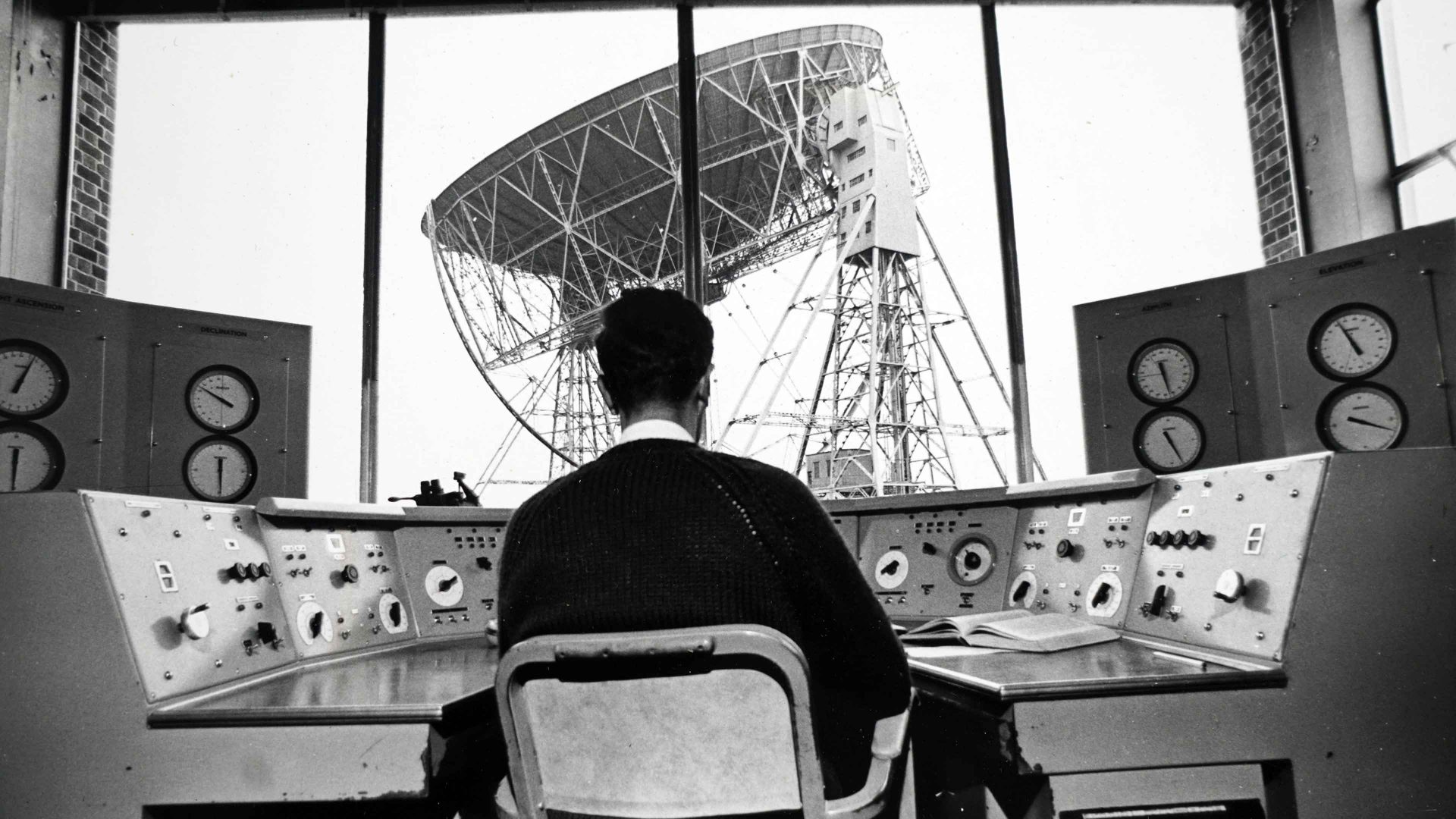
Punishment Park was made by the radical British director Peter Watkins during the Vietnam war, soon after the National Guard shot dead four young people at Ohio’s Kent State university. It will be soon on screens again at London’s BFI Southbank, as part of a season of Watkins’s work, alongside his earlier visions of the near-future, such as 1965’s The War Game: a vision of Britain amid nuclear war which the BBC notoriously refused to screen.
Punishment Park’s re-emergence could hardly be more timely. Partly because it raises a tricky question: how should cinema respond to a society that may be sliding into tyranny?
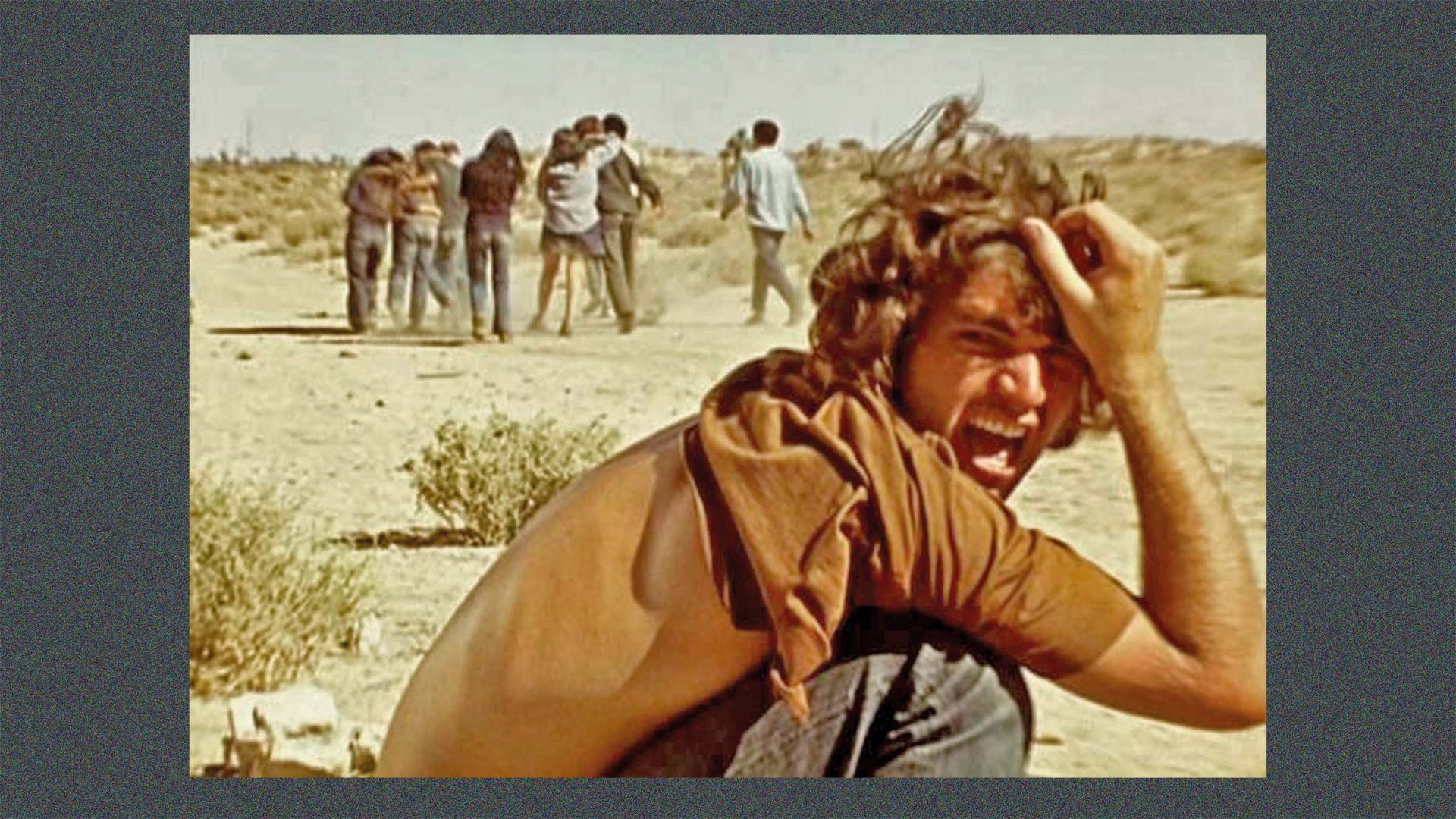
Watkins’s premise is brutal. Dissidents are handed draconian sentences, but given a choice to enter “punishment park”: a roasting expanse of the Californian desert. If, in three days, they can make it to an American flag planted 53 miles away – eluding the police and National Guardsmen giving chase – they’ll be released. Or so they’re told.
The desert trek of one group of dissidents is intercut with the tribunal hearings of the next. The detainees are excoriated by the assembled enemies of the anti-war left – an industrialist, an FBI G-man, a concerned conservative housewife – and give as good as they get.
This is all made significantly more intense by the fact that the whole thing is improvised by non-professional actors, many of them pretty much playing themselves. At the end we learn one of the actors has been indicted for a real bombing conspiracy. Likewise, out in the desert, the cops chasing the heat-exhausted dissidents are largely played by real-life law enforcement.
Watkins himself starts the film delivering a clinical voiceover, but also plays the off-camera head of a documentary crew shooting the desert chase. By the end, he is screaming at the cops about their atrocities.
Unsurprisingly, the movie divided audiences. Some saw prescience; others, just paranoia.
And while it drew on real events, and its participants’ real experiences, no such sadistic large-scale suppression of dissent happened in 1970s America. The film was revived during the post-9/11 war on terror and released on DVD, amid fresh fearful visions of a near-future America under the iron heel of the Patriot Act. That didn’t happen either.
And yet here it is again, just when the Trump administration is declaring that dissent is terrorism and acting accordingly.
The twin risks in using a near-future scenario to think about the present are that you underplay it, and risk being outmatched by reality – or overdo it, and risk losing the audience. This is particularly acute if, like Watkins, you’re a Brit anatomising America.
Alex Garland’s Civil War was widely criticised by failing to set out how America had fallen apart. By contrast, Jesse Armstrong’s Succession walked us step by excruciating step through the media’s role in helping a fascist edge a neck-and-neck race – only for voters to send Trump surging back to power, without the need for any such shenanigans.
If you extend existing tensions to their “logical” conclusion, you can extrapolate the slightest crisis into Armageddon. Better to identify where the strongest resistance to your dystopian future is likely to come from and dramatise that.
Suggested Reading
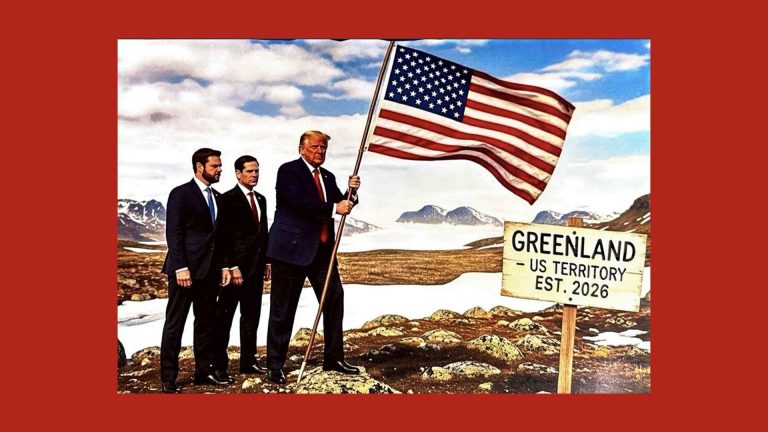
It’s October 2026 and, oh god – Trump has invaded Greenland
In Punishment Park, there is little sign of mainstream opposition to law enforcement using young radicals as target practice. This overstated the case. Yet it was also a warning, decades in advance, of the moral failure of today’s white-shoe law firms, university administrations, mainstream Republicans, tech bosses and media tycoons – all too many of whom have been happy to leave resistance to Trump to their far less powerful fellow citizens.
But Watkins’s nightmare vision also carries a subtler lesson for today. A few of the actors were passionately improvising views with which they strongly disagreed. So as well as warning against America’s capacity for violent polarisation, perhaps dramas like this can help people understand the fears driving their enemies.
Without that, an American dystopia will never seem very far away.
Punishment Park is on at the BFI Southbank on August 5 and 14, as part of its season System Critical: The Radical Films of Peter Watkins