
As pundits never tire of pointing out, the political crisis we’re stuck in is partly a crisis of storytelling. We can’t find a compelling narrative that makes sense of things. We can barely keep track of what’s true. That makes the job of the news media vital; it also makes it horribly difficult.
But deep in its folk memory, journalists have a hero-myth to hang on to, dating back to the last time the western world lived through a crisis as long and grim as this one. It may be half a century since it opened in American cinemas, but All the President’s Men remains the beleaguered, righteous hack’s north star.
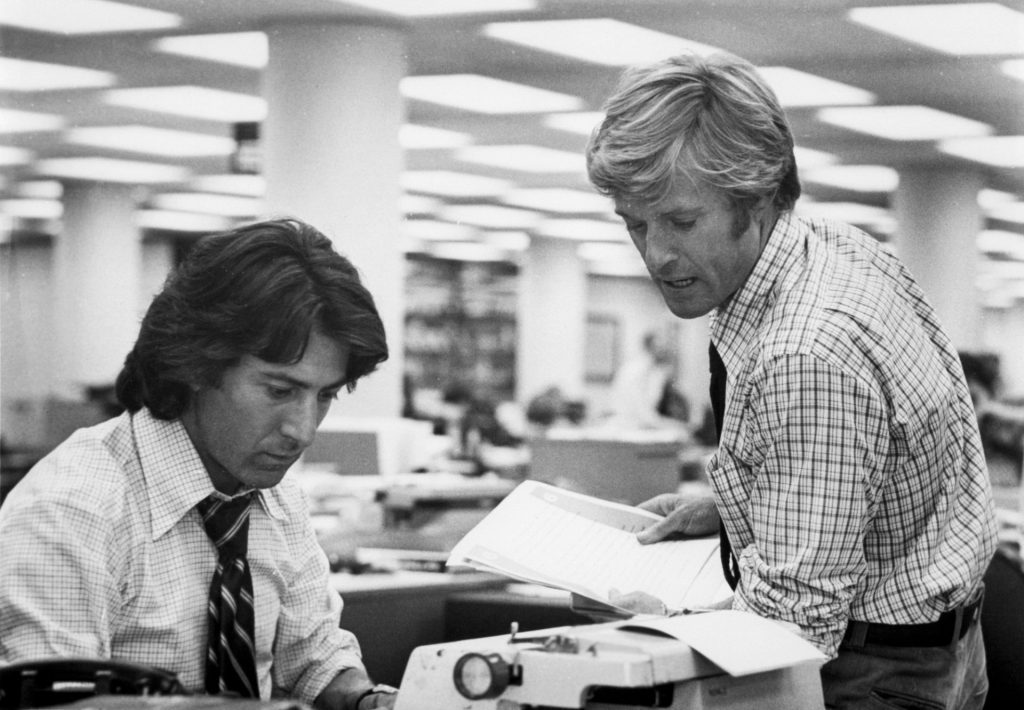
Alan Pakula’s movie, which premiered 50 years ago in April 1976, is the story of how Bob Woodward (Robert Redford) and Carl Bernstein (Dustin Hoffman), two young reporters on the Washington Post, investigated a 1972 break-in at the Democratic National Committee headquarters in Washington’s Watergate building – so tenaciously that they ended up toppling a president. We see them combing through stacks of library index cards, thumbing telephone directories, trudging from stoop to stoop, until they have enough evidence to expose the corrupt, anti-democratic conspiracy in Richard Nixon’s White House, determined to ensnare his political enemies, no matter the cost.
All the President’s Men presents itself as an alliance between two good kinds of storyteller – journalists and movie-makers – against a third, bad, kind – lying politicians. Underpinning it is an unspoken assumption, as quaint now as it is heartbreaking: that once something goes into a reporter’s notebook, it will absolutely be trusted by the public. Much of the jeopardy comes from whether Woodward and Bernstein’s work will clear the steep evidentiary standards demanded by the Post’s fatherly editor, Ben Bradlee (Jason Robards).
The roots of today peak through when right wing politicians attack their integrity, denouncing the Post’s supposed bias and use of anonymous sources. But it is clear who is in the right. Here was a fresh spin on the uplifting story America always needs to hear, which Watergate and Vietnam had spoiled. No wonder the film inspired a generation of young, idealistic reporters.
But less than six months later, another film followed All the President’s Men into the cinemas. It too would go on to win Oscars and be hailed as a classic, but it took a very different view of how the news media was really responding to the chaos of mid-1970s America.
While Ben Bradlee, the grand old man of the Post, rules all he surveys, in Network, his TV opposite numbers are being fired as has-beens. The movie tracks their fall as their news division comes under the sway of their network’s new corporate owners, and a younger, hungrier, more ruthlessly TV-native generation takes over.
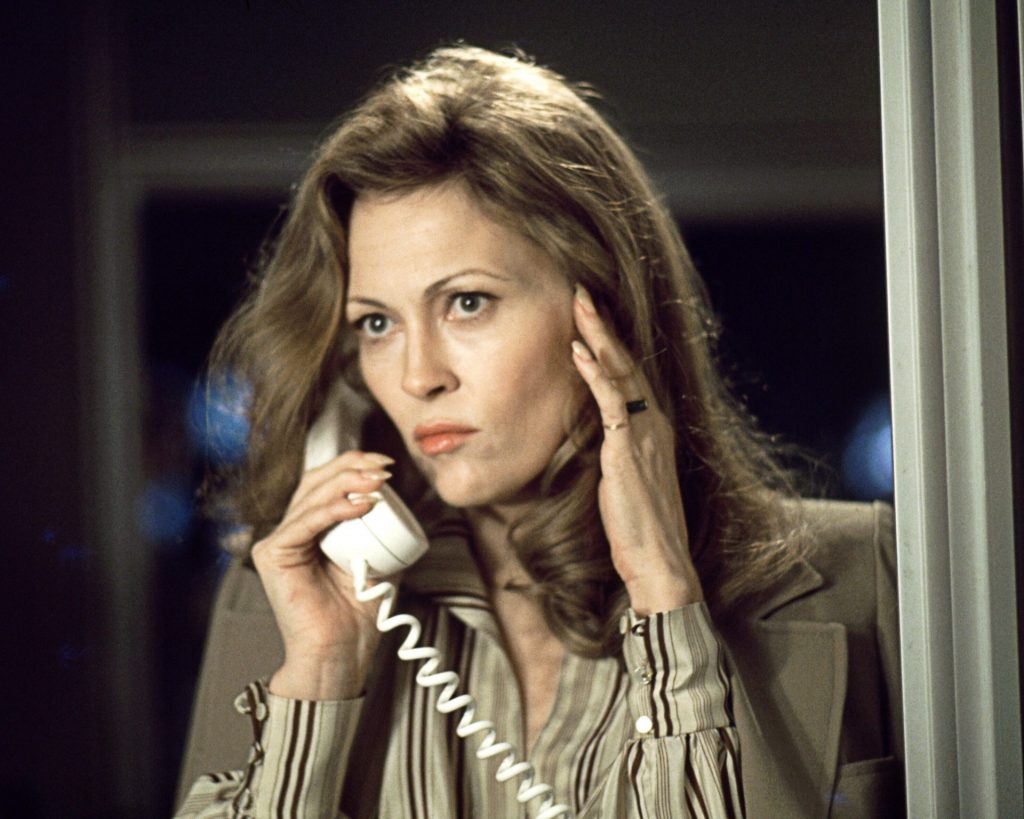
If the abiding sound of All the President’s Men is the clack of the typewriter, in Network it’s the relentless rattle of stats – reach, share, profit, cost. For Bradlee, the first amendment is the Post’s righteous shield against power; for Network amoral Diana (Faye Dunaway), it’s a means to get away with chasing ratings by broadcasting ultra-left terrorists’ footage of a bank robbery.
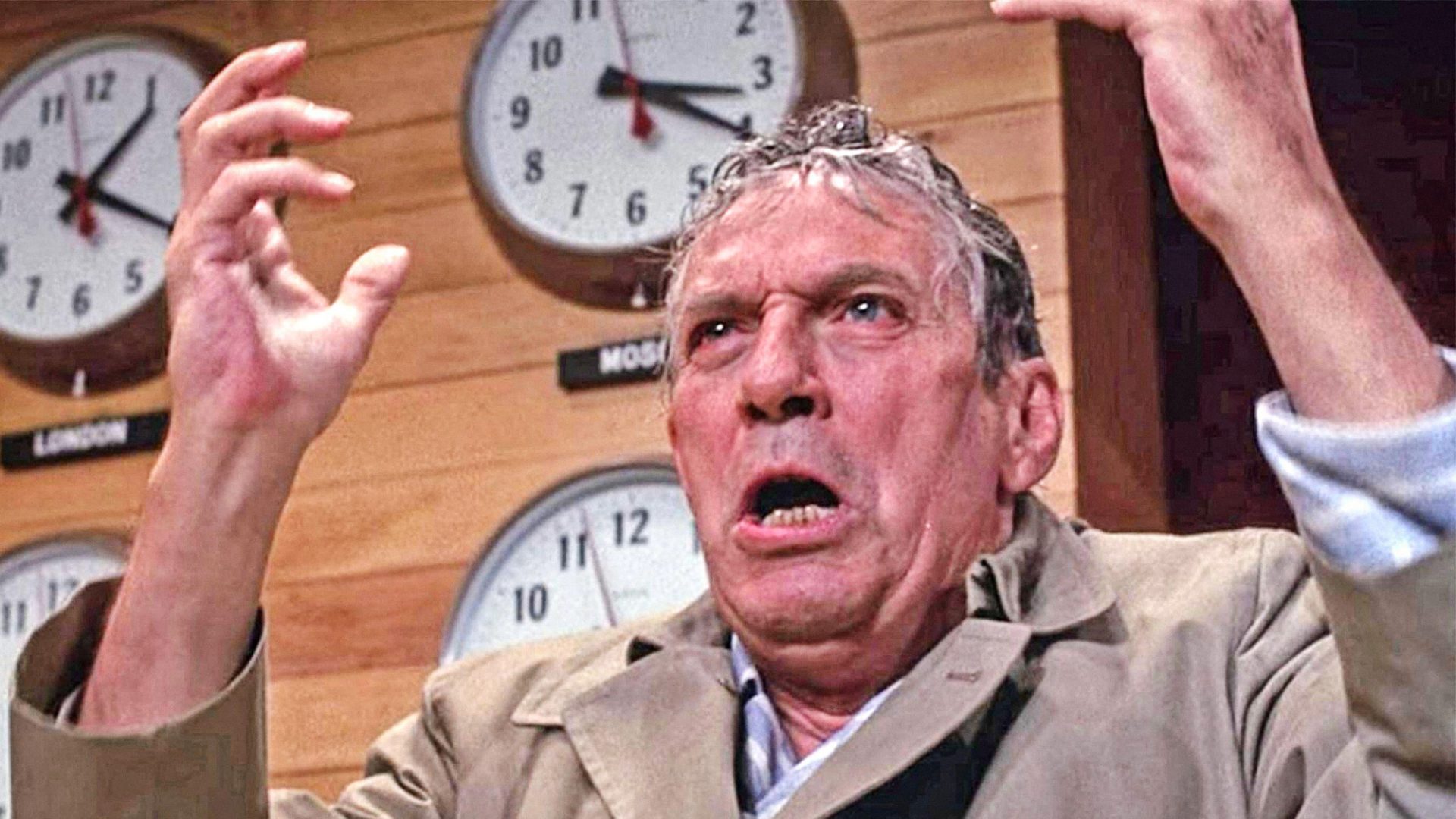
But then one of those jettisoned has-beens, anchorman Howard Beale (Peter Finch), storms on air and rants that he has “run out of bullshit”. America is falling apart and he is “mad as hell” and “not going to take it any more”.
He may be in the throes of a nervous breakdown, but he becomes a ratings sensation. The network repackages him as “the mad prophet of the airwaves”, on a show that opens with the audience gamely chanting on cue that they’re “mad as hell”.
Ratings, and profits, soar… until Beale turns his righteous anger on the corporation that is trying to buy the network, denouncing TV news as propaganda, and telling people to switch off. The more his ratings help the business, the more his rantings hurt it, forcing his bosses to take ever more drastic measures.
Today, All the President’s Men looms up like a monument to a lost age. It remains an ominous glimpse of overweening presidential power and the corruption that comes with it, but as the online journal The Bulwark put it last September, in Donald Trump’s second presidency, “It’s Watergate, Every Day”. For all his crimes Nixon, once facing impeachment, did at least resign. He did not whip up a mob to march on the Capitol.
Today, the chances of Trump being impeached are laughably small, and it would by no means be certain that he would go willingly even if he were. The Washington Post itself, meanwhile, is now the broken toy of a pro-Trump oligarch, Amazon’s founder, Jeff Bezos. Under his ownership swathes of journalists have departed, including a cartoonist who walked after her image of Bezos genuflecting before Trump was spiked.
Network, by contrast, feels like the raging of a mad-as-hell prophet who saw what was coming decades down the track. Here is current affairs as presented by Sybil the Soothsayer: a hyper-prescient dig at our media’s maddening habit of trying to report the future.
We see a news network that’s been bought by a vast corporation, which demands that it broadcasts the pro-business propaganda it wants people to hear. Shades of the pro-Trump Ellison family’s company, Skydance Media, hoovering up CBS (and, soon, CNN too).
Beale rails about Saudi money eating US media – the very source of funds on which Elon Musk’s acquisition of Twitter came to depend – and about how American democracy is “a dying giant, a decaying political concept writhing in its final pain”. And an angry CEO delivers a tirade about how there is “no America, no democracy” – only the great corporations.
“Those,” he proclaims, “are the nations of the world today.” Network’s screenwriter, Paddy Chayefsky, died in 1981, but his masterpiece still has satirical bite.
And yet both these films, as great as they remain, don’t only diagnose the beginnings of today’s political diseases. They also present some symptoms themselves. In particular, of a sickness that has grown worse ever since: conspiracy theory.
Network identified that people were mad as hell, and that that rage was directionless, and could be commodified and exploited. But in Chayefsky’s despairing account of the American people as endlessly manipulable dupes, he overdoes it.
He has Beale tell the audience that all they believe is the illusions pumped into their heads by “the tube” and that people are becoming “humanoids… mass-produced, programmed, numbered, insensate things”. Likewise, we learn that Diana, the ratings-obsessed executive, is one of those humanoids, incapable of human feeling.
This kind of talk – all too common in the postwar period, just as it is today – takes reasonable criticism over the line into totalism. It’s a way of thinking that had long been a common intellectual reaction against the flooding of American life by advertising, as vividly critiqued in books like The Hidden Persuaders by Vance Packard in 1956. But this condescending view of ordinary people is also the basis of that core conspiracist trope, the “sheeple”.
Even All the President’s Men, for all its veneration of journalists’ striving for hard evidence, is a little too keen to play with conspiracist imagery. Its director, Pakula, had only recently made The Parallax View, in which the hero is a journalist trying to expose an evil plot. That movie plays with paranoid notions coined by JFK conspiracy theorists about the murder of witnesses to an assassination, stirring the vague sense that powerful people were plotting against the public.
Suggested Reading
Markwayne and Hannah – a tale of two plumbers
In All the President’s Men, there is much talk of people being “got to”, that the journalists’ lives are in danger, and of conspiracies that “lead everywhere”. This helps to legitimise the kind of nonsense that reappears in Oliver Stone’s 1991 movie JFK, in which another dissident insider supposedly spills the beans on a gargantuan scheme to kill the president.
So today, one reason All the President’s Men is still useful is to stiffen the spines of beleaguered reporters in the face of constant MAGA screeching about “fake news”.
But another is that it points us to the difference between a real conspiracy, like Watergate, and the fever-dreams of the Kennedy conspiracists.
The Watergate conspiracy did not “lead everywhere”. It was largely confined to one tight-knit group of men. Part of the reason to run a cover-up may have been to keep secret other covert operations Deep Throat refers to, such as the surveillance and sabotage of left wing groups. But it was not all one great sprawling plot that involved “the entire US intelligence community”.
What Woodward and Bernstein’s legwork shows is how hard it is to establish substantive connections between conspirators. Unlike the conspiracy theories that spring up instantly online whenever there’s a jarring shock in the news, it took them two years of trying and failing and testing.
Fifty-year-old images of Hollywood stars playing heroic reporters are consoling in their way, but this distinction is the more useful weapon to face down the cries of fake news.
Phil Tinline is the author of The Death of Consensus, and Ghosts of Iron Mountain: The Hoax That Duped America and Its Sinister Legacy, out in paperback in May