On Tuesday, as Labour’s leadership frenzy reached new heights of frantic inertia, I went to the launch of a report about how the government might save itself. I found myself joking bleakly that it had got itself into this mess through its addiction to risk aversion and processology. But that now at least, a bunch of candidates who didn’t quite dare declare themselves were edging gingerly towards the Labour Party’s leadership election procedures.
The following day, we were treated to the absurd news that Wes Streeting was “preparing” to resign.
I’m old enough to remember the day when Michael Heseltine stormed out of Margaret Thatcher’s cabinet. It was so sudden that the clip on the news began with a colourful smudge, as a stunned cameraman scrambled to capture the moment. Heseltine’s move may not have been ‘strategic’, but it was decisive.
Over the 40 years since, there have been other dramatic resignations, but our politics has got itself ever more stuck in 5D-chess galaxy-brain strategising, with potential decisions gamed out and tested to the point where the safest thing seems to be to say nothing, stay very still, and hope no one gets cross with you.
Some of this stems from early New Labour’s desperate determination not to lose a fifth election in a row. And in 1997, when the economy was growing, it was doubtless a smart approach.
Suggested Reading

Burnham is risking it all to show he won’t flinch from big decisions
But strategies can too easily lose sight of their changing context, and ossify into taboos. In the years since the 2008 crash, as ordinary life has become more economically strained, and we’ve been struck by crisis after crisis, that measured, cautious tone has become ever more infuriating.
Voters look to their representatives to do more than explain why everything is terribly difficult. No wonder they have ended up taking a risk on transgressive figures like Nigel Farage and Zack Polanski. Or before them, Boris Johnson, whose outrageous attempt to break the Brexit deadlock by proroguing parliament was rightly blocked by the Supreme Court – but did him strikingly little harm at the election that followed.
And why did Andy Burnham not win the Labour leadership, as widely expected, in 2015? Partly because he came over as second-guessing himself so much that by comparison, Jeremy Corbyn’s sod-it willingness to just say what he thought felt to many like a breath of fresh air.
But perhaps, finally, the dam has burst. In her livid letter resigning as safeguarding minister, Jess Phillips charged – fairly or otherwise – that Starmer’s unwillingness to upset big tech was leaving children exposed to preventable abuse. And then, within the space of a day, Streeting completed his preparations and actually resigned as health secretary.
Hours later, the once arch-Starmerite MP Josh Simons revealed he was resigning from parliament, to give Burnham a chance to return to take his place and run for leader. Burnham announced he would put his name forward as Labour’s candidate in Simons’ former constituency of Makerfield. And Starmer himself let it be known that he would not seek to prevent this.
It was a deeply welcome, long-overdue break from all the paralysing caution. Each of these moves is a risk.
Most of all, Burnham really might not win in Makerfield. On May 7, Reform won more than half the votes in the seat’s council wards. Farage has said his party will throw all it has at the coming by-election. Burnham is risking both personal humiliation, and making himself the newest face of Labour’s retreat before the teal onslaught.
Suggested Reading
How PM Andy Burnham could change British politics forever
But precisely because of that, if he wins, it will transform his party’s situation. He will have faced down the main enemy first, and won.
The really big test though, whoever is prime minister by the end of the summer, is whether they can carry this new boldness through into how they run the country. After all, risk aversion is deeply embedded in our systems of government.
Procurement gets gummed up for far too long as endless contracts are drawn up to try to box off any risk of litigation. The planning process forces participants to try to spot potential legal challenges in advance, slowing progress to snail’s pace.
Suggested Reading
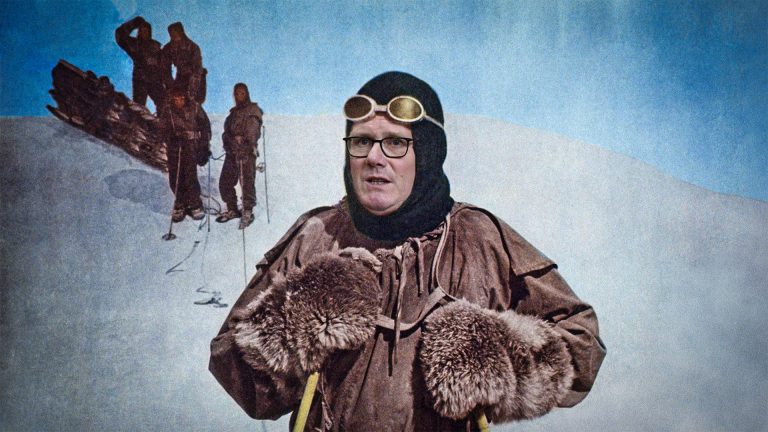

Keir Starmer’s diary: his final, doomed expedition
And alongside this is the public’s own declining tolerance of risk. Think of the headlines when something terrible happens, and the cry for another piece of preventative regulation.
These ways of thinking won’t go easily. When news broke of Simons’s resignation, the pensions secretary Pat McFadden immediately warned that it was a “political risk”. So it was.
But what has unfolded inside Labour, one week on from its calamitous local election results, is a much-needed reminder that in this political climate, McFadden’s kind of caution is risky too. That sometimes, it’s good to make decisions so swiftly it leaves the media scrambling to catch up. And that being bold can change the political weather.
Phil Tinline is the author of The Death of Consensus: 100 Years of British Political Nightmares and Ghosts of Iron Mountain: The Hoax That Duped America and Its Sinister Legacy.