

You may have noticed during the men’s football World Cup in summer that the Spanish national anthem has no words. While the band played the anthem (Marcha Real), some fans seemed to be humming along to it, but there was no actual singing, because there was nothing to sing. A few other nations also have wordless national anthems: Bosnia & Herzegovina, Kosovo, and San Marino.
For Spain, this at least avoids the problem of which language should be used for the anthem’s lyrics, given that, in addition to Castilian Spanish, four languages – Catalan, Basque, Galician, and Aranese Occitan – also enjoy co-official status within their regions of Spain.
In contrast, the Swiss national anthem appears in four versions – French, German, Italian and Romansh, the country’s official languages. Some nations – Canada, New Zealand, and South Africa – incorporate verses in more than one of their official languages into their anthems. But there were at least two countries participating at this recent North American soccer tournament which, strictly speaking, do not have official anthems at all, namely England and Scotland.
Suggested Reading
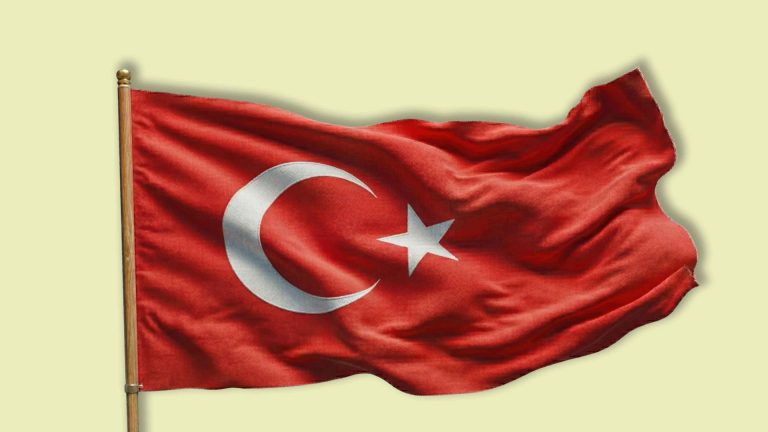

Should we all start calling Turkey Türkiye?
Before England’s matches, the team and fans sing God Save the King – but of course that is the national anthem of the United Kingdom of Great Britain and Northern Ireland as a whole, not just England, though there is also an unofficial English anthem, Jerusalem, which is based on a poem by William Blake with music by Hubert Parry.
The Scots sing Flower of Scotland, which is often described as Scotland’s unofficial national anthem. The words, written by the Scottish folk singer Roy Williamson, concern the famous overwhelming victory of the King of Scotland, Robert the Bruce, over King Edward II of England, at the Battle of Bannockburn, near Stirling, in 1314.
Land of Hope and Glory can probably also be described as an unofficial British national anthem. This piece consists of words written in 1902 by the poet and essayist AC Benson and then fitted to music composed by Edward Elgar in 1901 as his Pomp and Circumstance March No 1. In England, this song is an established feature at the Last Night of the Proms concert in London every year; and in the United States, its slow middle section is traditionally played as the processional tune at most high-school and college graduation ceremonies, something which, I am told, can become very tedious for the musicians involved because of the amount of repetition required.


The phrase pomp and circumstance comes from Shakespeare’s play Othello – the Moor of Venice: “Farewell the neighing steed and the shrill trump, The spirit-stirring drum, th’ear-piercing fife, The royal banner, and all quality, pride, pomp, and circumstance of glorious war!”
Pomp
The rather unusual word pomp – very few words rhyme with it in modern English – has several origins, but the ultimate source lies in Ancient Greek, where the noun pompí “a sending away, solemn procession, parade, display”, is derived from the verb pempein “to send”, and still survives in Modern Greek dialects: in contemporary Cretan, pémbo signifies “I send”.