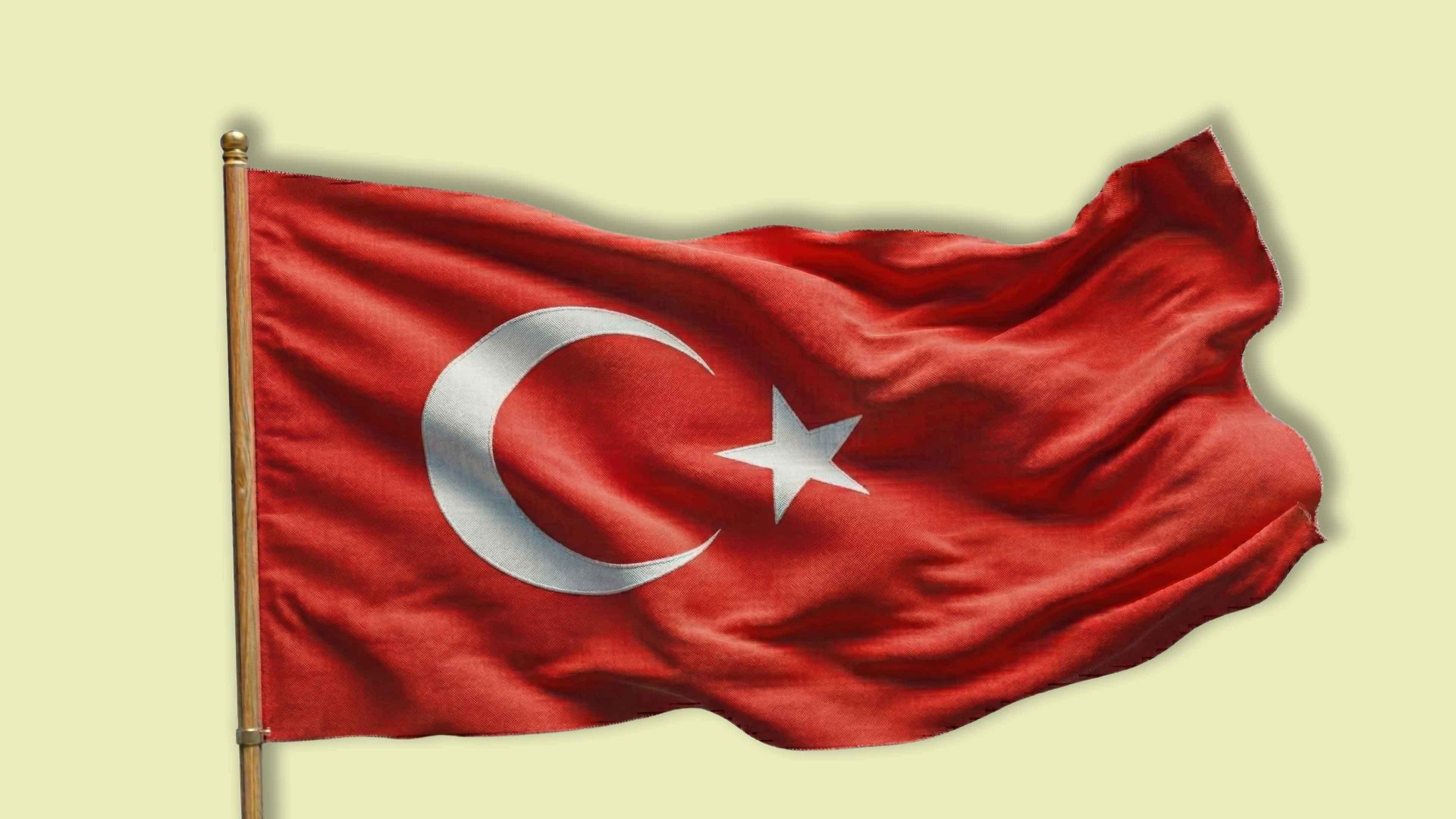
The government of Turkey announced four years ago that it wants its country to be internationally known as Türkiye – its name in the Turkish language itself – regardless of what language people happen to be speaking or writing.
This is very much as if the German government had decided that they wished people around the world to call their country Deutschland, rather than Germany or Allemagne or Niemcy; or as if the Polish authorities had decreed that their nation should henceforth be known as Polska instead of Poland or Pologne or Polen.
Some of the argumentation around the Turkish decision borders on the absurd, such as the assertion that the English-language name should be avoided because the word turkey makes people think of the bird, but also that it can mean “failure” or “flop” – which is news to most British and Irish people, who are not familiar with this slang American usage. It also ignores the fact that the letter ü, although it does occur in German, is not readily available in fonts used for printing most other languages.
Then there is the interesting question of how far policies of this type could be extended. For example, should we prepare ourselves to start calling Japan Nihon and Finland Suomi? How about Russia as Rossiya or China as Zhōngguó?
Many countries have changed their names over the past decades, several replacing those imposed by colonial powers with names from indigenous languages: Ceylon became Sri Lanka, Swaziland became Eswatini, and Upper Volta turned into Burkina Faso.
As for Burma, a former British colony, the ruling military junta officially changed the English version of its name to Myanmar in 1989. While the United Nations and many Asian countries now use that, the UK and various pro-democracy groups continue to call it Burma, as a political statement against the military regime’s lack of democratic legitimacy.
Ivory Coast falls into a rather different category. The country hosts scores of indigenous languages, the predominant one being Dyula (a member of the large Mande language family), which is used as the main trading lingua franca across the country. But the Ivory Coast government demanded in the mid-1980s that the world start calling their nation by its French-language name, Côte d’Ivoire, when French is not an indigenous language but is precisely the language of the former colonial power.
Anglophone Sierra Leone, meanwhile, remains happy to retain its originally Portuguese-origin name.
But Turkey/Türkiye was never a colony. On the contrary, it was the centre of the enormous Ottoman or Turkish empire, which stretched from North Africa to the Balkans and from the Austrian border to the Black Sea and on to the Caspian Sea.
Suggested Reading

Why are there only two syllables in Lowestoft?
Exonym
An exonym is a name used by outsiders for a place, national group, or language that differs from the native name, known as an endonym. Examples include the French Angleterre for England, the English word German for Deutsch (both the language and people), and German Nizza for the French city of Nice.