
The current administration in Washington DC apparently consulted and cooperated with Israel, which is not a member of Nato, before (probably illegally) attacking Iran, but it seems that it did not consult at all with any members of the Nato alliance. Donald Trump has nevertheless threatened to “punish” these other members for having the temerity to fail to provide the USA with military support in this adventure.
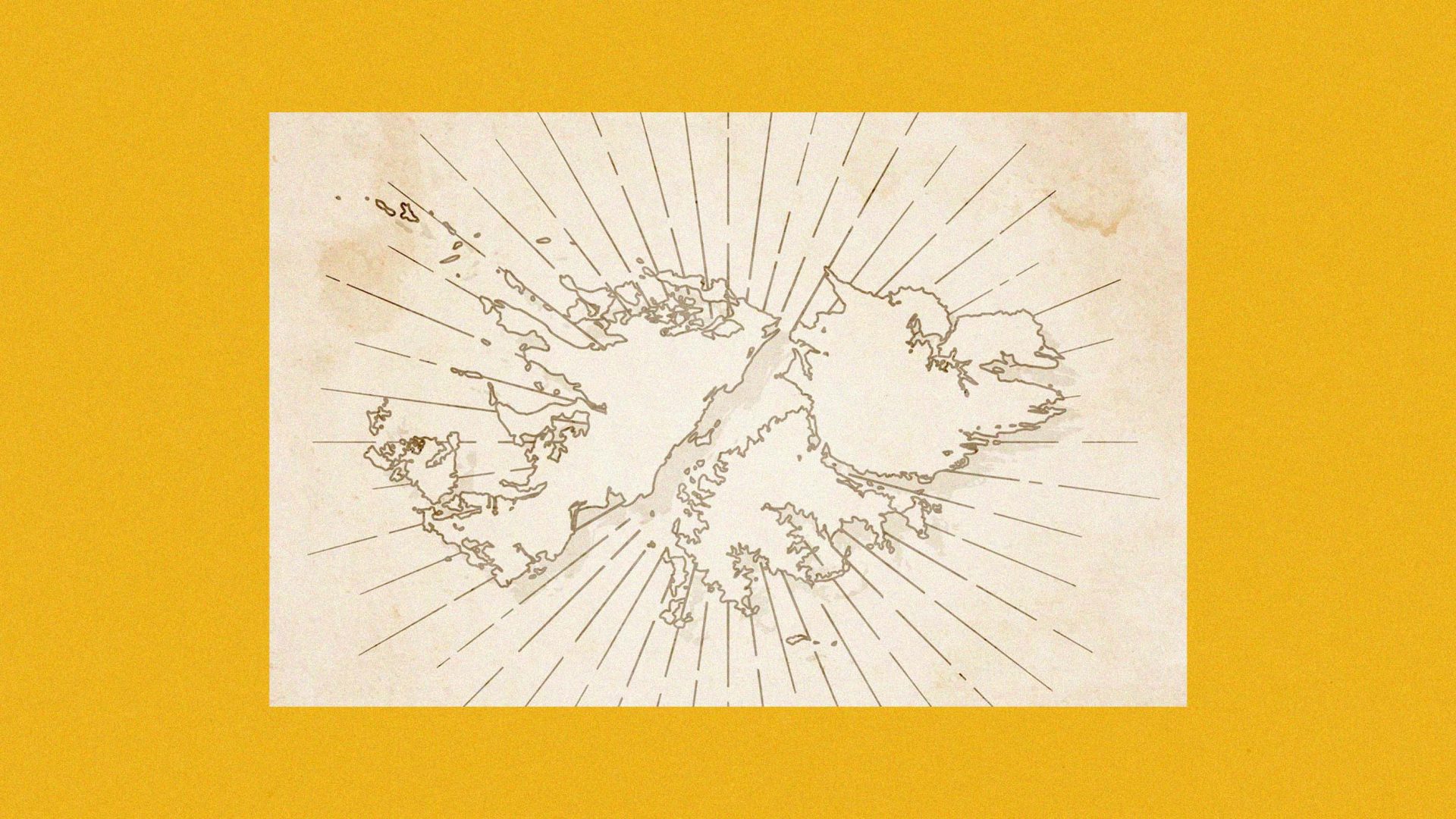
One of Trump’s ideas to specifically punish Britain was by provoking discussion around the issue of the sovereignty of the Falkland Islands, the English-speaking archipelago which lies around 300 miles off the coast of the former Spanish colony of Argentina. This is in spite of the fact that in 2013, the Falkland Islanders voted overwhelmingly (99.8%) in a referendum in favour of remaining British.
The politically far right president of Argentina, Javier Milei, is apparently a good friend of Trump and has said that he thinks the Falkland Islanders should “go back to England”. That seems as specious as suggesting a choice of places that Milei could return to: Spain was the main coloniser of the territory which later became Argentina, while Milei’s own grandfather arrived in South America from the Calabria region of southern Italy as recently as 1926, and his mother’s paternal grandparents came from the island of Hvar in Croatia.
Argentina is the Italian word for “silvery”. The main language of Argentina today is Spanish, but there are 40 or so indigenous languages there which managed to survive the originally rather brutal European colonisation process, including members of the Mapuche, Tupi-Guarani, Guaycurú, Quechua, Mataco-Mataguaya, Aymara, and Chon language families. Tragically, many of these are now endangered.
The Falkland Island archipelago is called the Falklandseyjar in Icelandic, Le Isole Falkland in Italian, the Ilhas Malvinas in Portuguese, and Islas Malvinas in Spanish. This latter name derives from a group of French, but possibly partly Breton-speaking, sailors from the port of Saint-Malo in northern France who visited the very isolated and then still uninhabited islands in the 1760s, calling them Malouines after the name of their home town.
Over the last two or three centuries, and like other anglophone territories in the Southern Hemisphere – including New Zealand, Australia, South Africa, Tristan da Cunha and Saint Helena – the Falklands have developed their own distinctive dialect of English, which to an extent resembles Australian English.
The Falklands are one of 14 British Overseas Territories (formerly known as British Dependent Territories, or Crown Colonies), which include the Caribbean territories of Anguilla, the British Virgin Islands, Montserrat, the Turks & Caicos Islands and the Cayman Islands. The English-speaking island of Bermuda, which lies about 650 miles east of the American mainland, is also an overseas territory, as are Gibraltar and Pitcairn.
So far, the British have been too polite to point out that America, too, has colony-like overseas territories whose sovereignty could be disputed. These include Puerto Rico and the US Virgin Islands in the Caribbean; and American Samoa, the Northern Mariana Islands, and Guam in the Pacific. The indigenous language of American Samoa is the Polynesian language Samoan, while in the Northern Marianas and Guam, the indigenous people speak the Micronesian languages Chamorro and Carolinian. Micronesian and Polynesian are both members of the Austronesian language family (see TNW #467).
Suggested Reading


How Britain blundered in the first refugee crisis – 340 years ago
Anguilla and Cayman
Anguilla is the Spanish word for eel. The name supposedly derives from the eel-like shape of the island. The Cayman Islands are named after the caiman, a large native reptile which looks like an alligator or crocodile. The name comes from the indigenous Taino-language word for the animal.