
People who enjoy playing or watching snooker will know that the scoring is measured in terms of units called frames. A match may, for example, be a contest consisting of the best of 13 frames, so that the first player to achieve a score of seven frames is the winner.
But the interesting linguistic question here is: why is the word “frame” employed in this context? This term in snooker refers to a single, distinct game within a broader match. But it takes this name from the physical wooden triangle, called a frame, which is used to group together all the red balls at the start of every game.
There are many other sports whose vocabularies involve a degree of polysemy – a linguistic term referring to cases where a single word has several different, even if often related, meanings.
The most extreme example of sporting polysemy is probably the cricketing term wicket. As someone who had grown up playing and enjoying cricket, I never realised how polysemous the word wicket was until I undertook to help a Norwegian friend understand cricket reports in the Guardian newspaper. His English was very good indeed, and he was genuinely interested in sport, but he was initially baffled by the cricket articles.
Wicket was certainly the most confusing of all the different technical terms. It has, if I am right, four different meanings.
Wicket comes from the French word guichet, and first appeared in English in about 1300 with the meaning of “a small door or gate made in, or placed beside, a large one, for ingress and egress when the large one is closed; also, any small gate for foot-passengers, as at the entrance of a field or other enclosure, so a wicket-gate”. The most usual meaning in French of guichet today is “ticket window”.
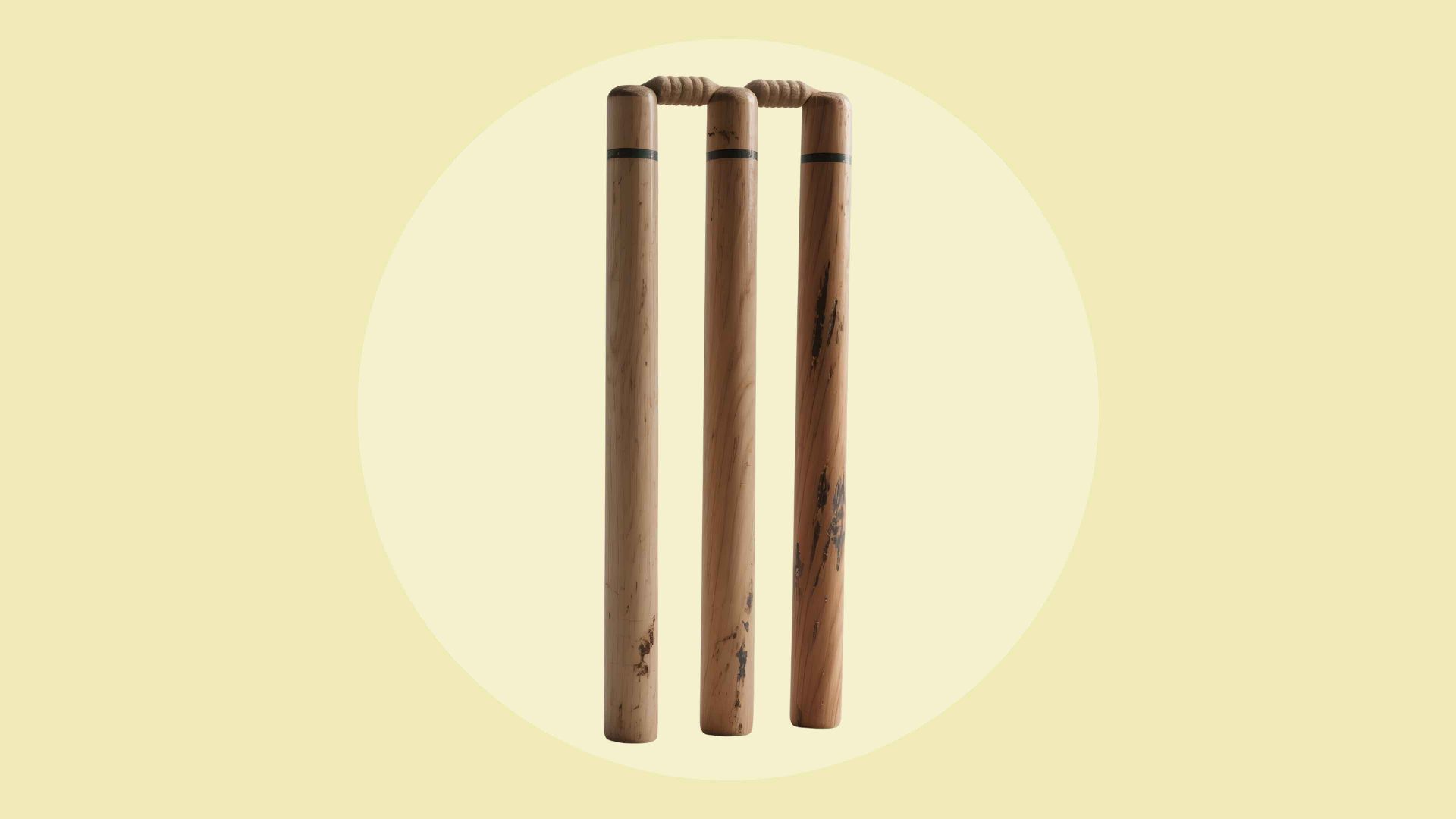
The basic sense of the word in cricket now is to refer to one of the structures which stand at each end of the pitch consisting of a set of three wooden stumps with two bails on top, the bails being the two small wooden sticks which are placed horizontally across the top of the three stumps to complete the wicket. Bowlers try to hit the wicket with the ball and dislodge the bails to dismiss a batter.
But wicket can also refer to the dismissal of a batter. When a commentator says that a bowler has “taken a wicket”, it means they have successfully dismissed an opposing player.
In addition, wicket can refer to the central 22-yard-long rectangular strip of the cricket field between the two sets of stumps. The condition of this area of ground has a strong influence on the choice of the best bowling and batting strategies in any particular game.
A further meaning is that of “the continuous batting effort of the two players currently at the crease” (in bat). It is common to refer to the two opening batters as “the first-wicket partnership”. (In cricket there are always two players in bat at any given time.)
Many other sports have similar examples of polysemy. In football (soccer), a goal is the physical pair of upright posts joined by a crossbar with a net framework behind, forming an area into which players attempt to send the ball as a means of scoring. But the word is also used to refer to the act of scoring itself.
Suggested Reading


The incredible story of the real Xanadu
Strategy
Our word strategy came initially from Greek strategos “general, commander of an army”. It was borrowed into English directly from the French form stratégie, which originally signified “the art of a general, the science of war”.