At our sixth form leaving party in July 1978, a group of us linked arms on the dancefloor and sang Tom Robinson’s Glad to Be Gay. It was a spectacular way to say goodbye to the Salesians of Don Bosco, the Catholic order whose priests ran our boys’ grammar school. None of us were, to my knowledge at the time, actually gay. In fact, many of us had been routinely homophobic.
But it was an act of rebellion designed to annoy the men who’d rapped us on the knuckles, smacked us around the head and shouted into our faces in the name of Christianity for seven years. And, as I recall, it worked.
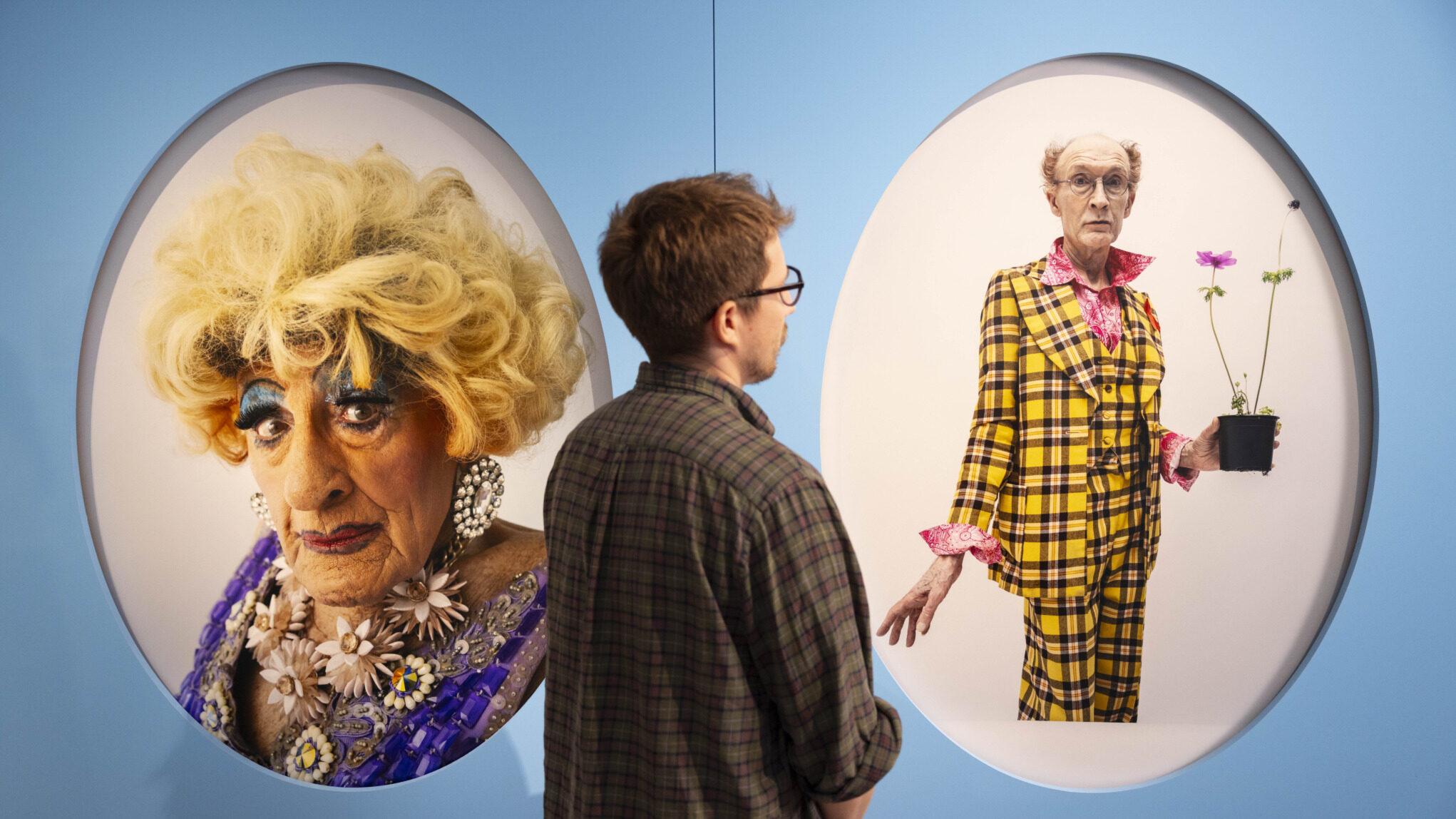
So it is amazing to stand, at the other end of a lifetime, in the National Portrait Gallery in front of a photograph of Tom Robinson, posed in the garb of a Tudor nobleman with a falcon. The image is part of a vast new exhibition entitled Fairyland, in which the artist Tim Walker celebrates the advance of queerness in Britain, and the people who made it happen.
The exhibition begins with a room commemorating the activists who staged the first Gay Pride demo, which took place in 1971. They’re dressed and posed like Tudors because it was in the reign of Henry VIII that the Buggery Act was passed, making anal sex with a man, woman or animal punishable by death, seizure of goods and exclusion from the clergy.
And as the exhibition progresses from the 1970s into the era of HIV, the pioneers are followed by others who, through relentless campaigning, changed the world.
In the room devoted to health workers and patients during the HIV epidemic, I saw photographs of a close family member and many friends, reminding me of a time when every Christmas party in the Aids wards of London hospitals was tinged with the knowledge that, for many patients, it would be their last.
The exhibition celebrates rebel dykes on motorbikes, the body disabled and disfigured, the first civil partnerships, the rise of transgender as an identity and – in a room with a trigger warning and an 18+ entry requirement – the physical facts of same-sex relationships.
I came away from Fairyland with my belief restored in the unfashionable concept of progress.
As a straight, white teenager in the 1970s, my understanding of what homosexuality meant was shaped by clues and allusions, above all the movie Victim, in which Dirk Bogarde plays a persecuted gay lawyer. There’s a line in it, uttered by a cockney barfly, which summed up what tolerance meant at the time: “They can’t help the way they are,” she tells the homophobic barman at the Salisbury Arms in Covent Garden, “if they had gammy legs or something, you’d be sorry for them.”
To have moved from that, to a position where the entire ground floor of a state-run London gallery, just yards away from that pub, is devoted to the riotous affirmation of sexual difference, is evidence that if you “find each other and act”, with the right coalition and narrative, almost every injustice can be fought.
Of course it’s not over. There is still queer-bashing. There is transphobia, homophobia, body shaming and fear of the other. But the political lesson of the era Walker documents is clear, and every social movement can learn from it.
In-your-face activism, grassroots self-help, broad coalition building, the creation of role models, seizing the time, recruiting capital as well as labour to the cause, splintering into fragments where unity becomes too painful, and sheer perseverance are what moved Britain’s gay communities from the world of Victim to the world of Fairyland.
Pictured in Fairyland, for example, is Craig Jones, a Royal Navy officer who came out on the day homosexuality was legalised in the forces. Today, up to 3,500 ex-servicepeople drummed out of the forces by the “gay ban” stand to receive in excess of £65m in compensation for this historic injustice. And the defence secretary overseeing the scheme is an out gay man.
Because it’s a celebration, Fairyland does not dwell on the human cost of the resistance that got us here. It was, of course, immense.
But despite the demands of Pete Hegseth, Putin, the Islamic Republic of Iran and – with its recent ban on the Beijing Queer Film Festival – China’s Communist Party, I do not think western society is going back to the atmosphere that clouded Victim. Not because there aren’t people who would like it to: but because they are too weak and the appeal of the new normal depicted in Fairyland is too strong.
Suggested Reading
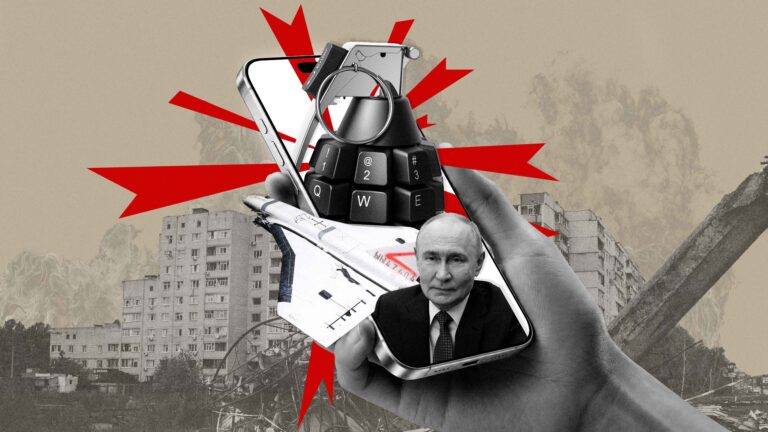
The frontline of our war with Putin is the phone in your pocket
The advance from “gay rights” to LGBTQ+ pride is, together with the collapse of the USSR, one of the most surprising things to have occurred in my lifetime. For it to happen in the teeth of the violent homophobia stirred during the HIV epidemic, and despite an entire generation of kids being raised under Section 28, is a startling social fact.
We live at a time when networked communications, the globalisation of culture and the atomisation of traditional communities have allowed the emergence of a new kind of person, for whom the rigid social boundaries of every previous generation look like an obstacle to be smashed. Challenging though it sometimes is for those born before this started, we should observe it with awe.
“On or about December 1910,” wrote Virginia Woolf, wryly, in the 1920s, “human character changed.” If she could visit Fairyland, I think she’d be impressed by exactly how far, and how relentlessly, that change has progressed.
Tim Walker’s Fairyland: Love and Legends is at the National Portrait Gallery, London, until February 7, 2027