A few weeks ago, former Google chief executive Eric Schmidt started making predictions about AI during a commencement speech at the University of Arizona.
“Whatever path you choose, AI will become part of how work is done,” he told the audience. Their fears about the future of work were rational, he said. The audience booed. Jensen Huang, another CEO in the tech world, recently told Carnegie Mellon students that AI would be a net positive for humanity, so go for it.
At one level these look like two well-informed, powerful people making straightforward predictions about the impact of AI. Schmidt and Huang are much more likely to know what’s going to happen next in tech than you or I (unless you’re part of that Silicon Valley club).
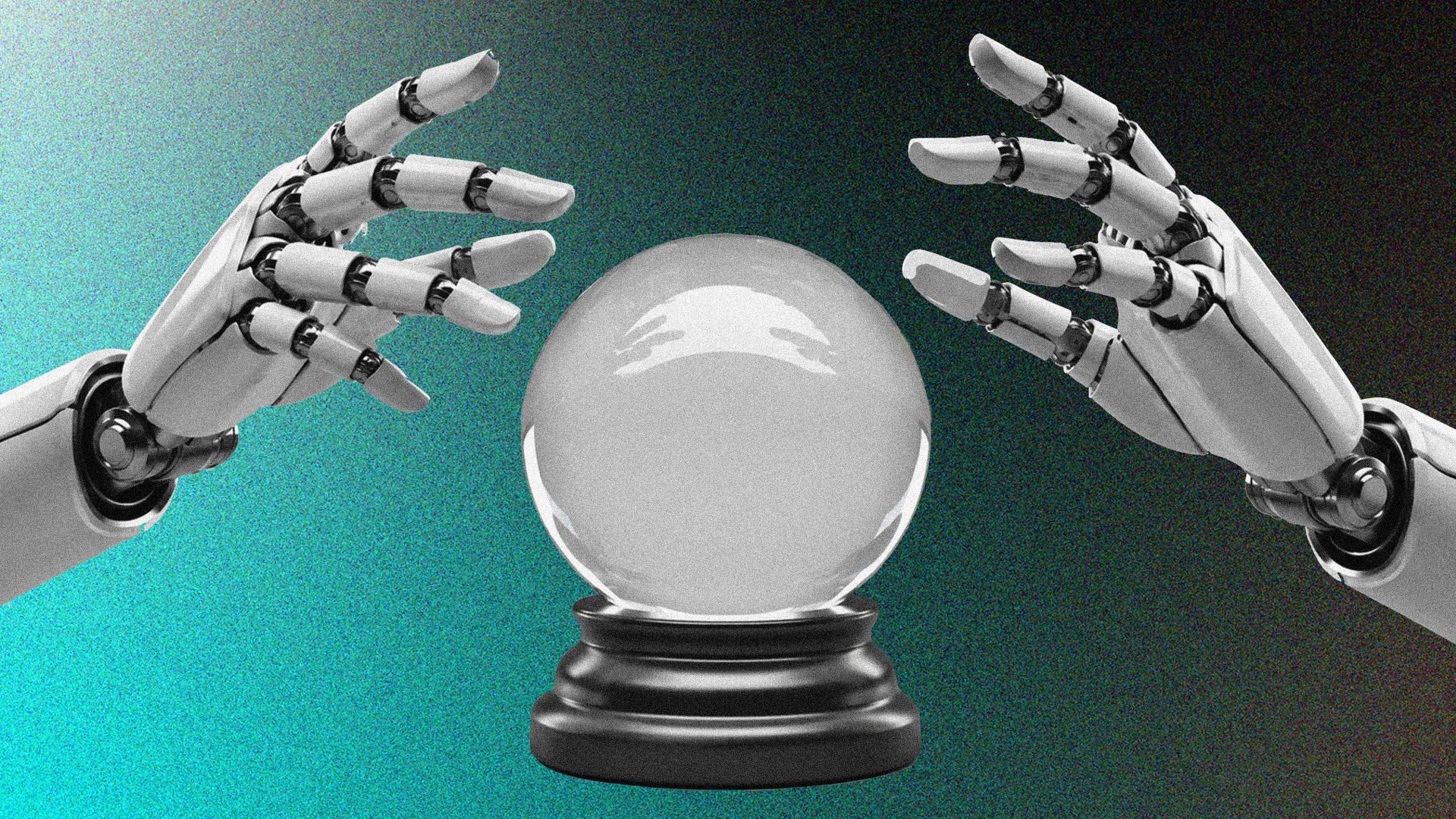
But, as the Oxford philosopher Carissa Véliz has argued in her book Prophecy, and in her recent TED talk, predictions, or “prophecies” as she labels them disparagingly, aren’t always what they seem to be. They may sound like descriptions of a likely future. But it’s not necessarily that simple.
Suggested Reading
It’s official: AI hates women
“Predictions are often power plays,” she says. Predictions about the weather don’t cause it to rain. They’re estimates of probabilities based on extensive data and a regularly updated analysis of changing climatic conditions. Notice, too, that they sometimes get it wrong. Even a prediction about the likelihood of rain in a fortnight can fail. How much harder, then, to predict what humanity will be up to a decade from now. Not many people foresaw the Internet, but look how quickly that has transformed society.
Predictions about how human beings will be affected by AI are very different from predictions about downpours. They’re at least as fallible, of course. There are many complex factors at play, including the potentially disastrous effects of the huge demands that AI puts on energy in a world of very limited resources.
But where people are involved, there is the risk that our behaviour will be shaped by the predictions made by prophets like Schmidt and Huang. As Véliz puts it, “They bend reality towards themselves,” through their speech acts. They do things with their words, not just speculate about a future reality. Some prophesies are self-fulfilling.
Suggested Reading
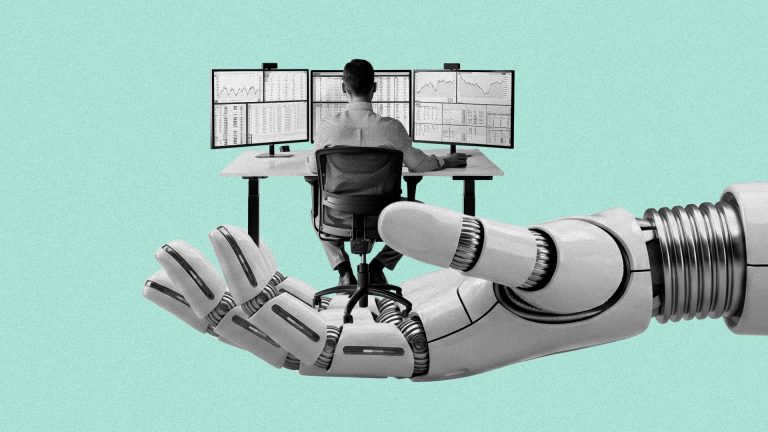
Should robots decide whether or not you get a job?
It’s in the interests of the tech guys that AI changes everything and that we all become entirely dependent on it. Their predictions are strong nudges that push us in a particular direction, towards a future that will make billions for the tech elite.
As Véliz notes, many people in that world speak about “inevitable” futures, which she takes to be a way of stopping the conversation: “They’re telling you ‘Don’t question me, just accept what I’m saying as a fact’.”
David Hume had a more fundamental problem with predictions that has come to be known as The Problem of Induction. We assume that the sun will rise tomorrow. Why? Because it always has done in the past. But how reliable is a sequence of similar occurrences as an indicator about the future? Our evidence is always itself due to the kind of reasoning known as induction, that is, observing a number of similar cases, and then making a prediction about the future on the basis of that.
If you’ve only ever seen white swans, then using induction you would conclude that all swans were white. But then if you go to Australia and see a black swan, what seemed like a very reasonable generalisation turns out to be wrong. Induction is not a completely reliable method of reasoning. That’s because with any generalisation, a single counterexample can undermine it.
Suggested Reading
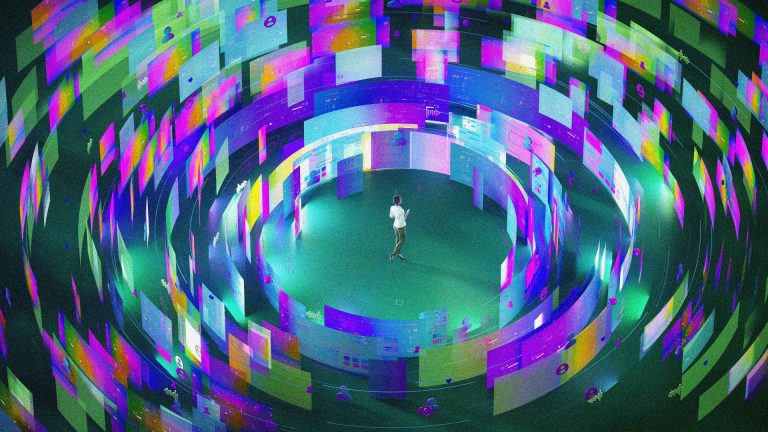
What happens when AI starts running ads?
Yet we have to rely on induction every day. When I take a step I implicitly predict the ground won’t open up into an abyss and I feel secure about that because it hasn’t ever done that yet. But how can I be so confident about that method of reasoning? A turkey might expect to be fed every day and treated reasonably well. But then suddenly it’s Christmas Eve, and the farmer wrings its neck. So much for induction, a point Bertrand Russell made.
We don’t want to be naive like the turkey.
The tech elite are telling us the future won’t be like the past. Some are telling us AI will wring many workers’ necks. Perhaps they’re right. But the future they prophesy isn’t inevitable. We aren’t powerless to resist or regulate against it. Let’s not get manipulated. Healthy scepticism and more booing might stop us getting served up on a plate.