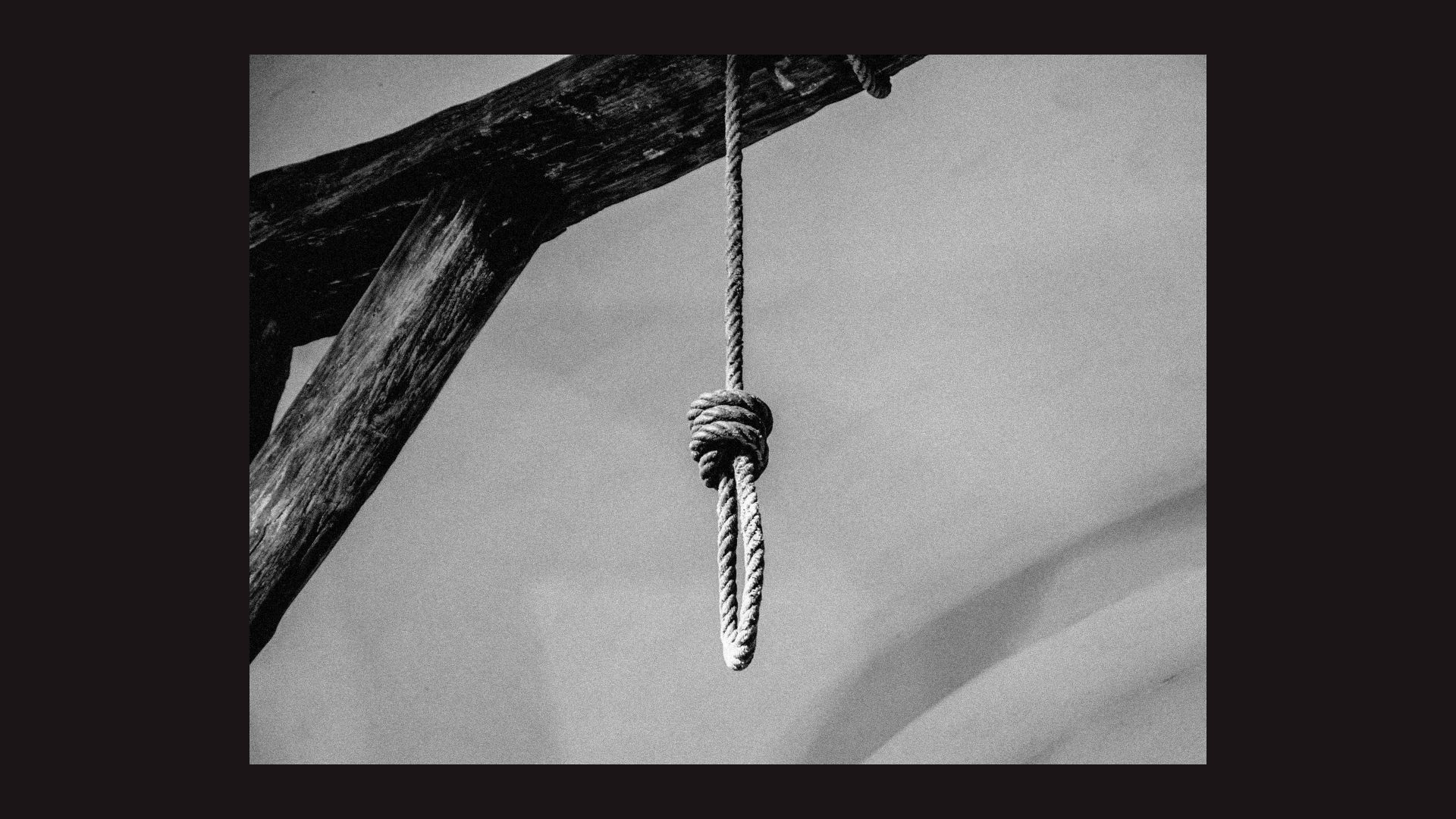
Immanuel Kant thought murderers should be put to death regardless of whether that had a deterrent effect. If a society collapsed and there was no state to impose the penalty, the last killers on death row should still be executed, by civilians if necessary. The harm of death is so great, he believed, that it could only be balanced this way.
His was a version of lex talionis, the ancient principle of an eye for an eye. Kant realised that exactly mirroring the method of murder was not appropriate in a civilised society, but still insisted that if someone took a life, theirs should be taken from them. In short: murderers must die.
Capital punishment, he believed, shouldn’t be a question of torturing perpetrators for their crimes, though: no maltreatment of prisoners was acceptable. They still retained the essential dignity of being persons.
Although many defenders of capital punishment argue from feelings of vengeance, and want murderers to experience extreme pain, Kant insisted judicial punishment shouldn’t be an emotional reaction. Fair retribution was a matter of proportional response, a question of justice: a moral reckoning, not the satisfaction of bloodlust.
Suggested Reading

Why philosophers can’t explain the power of music
Ann Widdecombe, who was, among many other things, a former prisons minister, argued for reinstituting capital punishment for some crimes in the UK. Unlike Kant, she didn’t think it should be an automatic sentence for murder: it should be reserved for the most heinous crimes – presumably like the horrific one perpetrated against her.
As you’d hope of someone who had studied philosophy, politics and economics at Oxford University, she used arguments and evidence for her position. She wasn’t a retributivist appealing to a howling mob of Daily Mail vengeful readers, although many of them would agree with her policy recommendation. Her arguments were founded on her belief that capital punishment was an excellent deterrent and had proved to be so in the past.
To the response that when capital punishment was on the books in the UK miscarriages of justice had occurred and innocent people were hanged, she replied that this was very rare and that DNA testing would give a higher degree of certainty that the correct person was being killed. She was realistic enough to recognise that the death penalty wasn’t about to be reinstated here, but was forthright in her defence of the view that it should be, and that society would be better for it.
The easiest way to refute Widdecombe’s argument would be to demonstrate that she had got her facts wrong and that capital punishment isn’t a better deterrent than life imprisonment. That is not straightforward.
But in most places where the death penalty exists, including many US states, there are still high murder rates. Perhaps there would have been even more homicides without it, but the threat of the electric chair or a lethal injection doesn’t deter many would-be killers, that’s for sure.
Suggested Reading

There is a moral argument for paying reparations over slavery
The death penalty is unlikely to deter suicide bombers either: they’d welcome martyrdom if they somehow survived.
But even if criminologists could show conclusively that the death penalty would deter some murderers, and was more effective at this than the alternative of life imprisonment, would that be sufficient grounds to bring it back for particularly nasty murders, assuming forensic science could accurately identify killers? No. Really no.
I’m with the 18th-century thinker Cesare Beccaria, who considered capital punishment barbarous, and thought it absurd that representatives of the law, whose job it is to oppose and punish homicide, could end up publicly sanctioning murder themselves. You may think otherwise. If you do, this probably won’t convince you. But it should.