
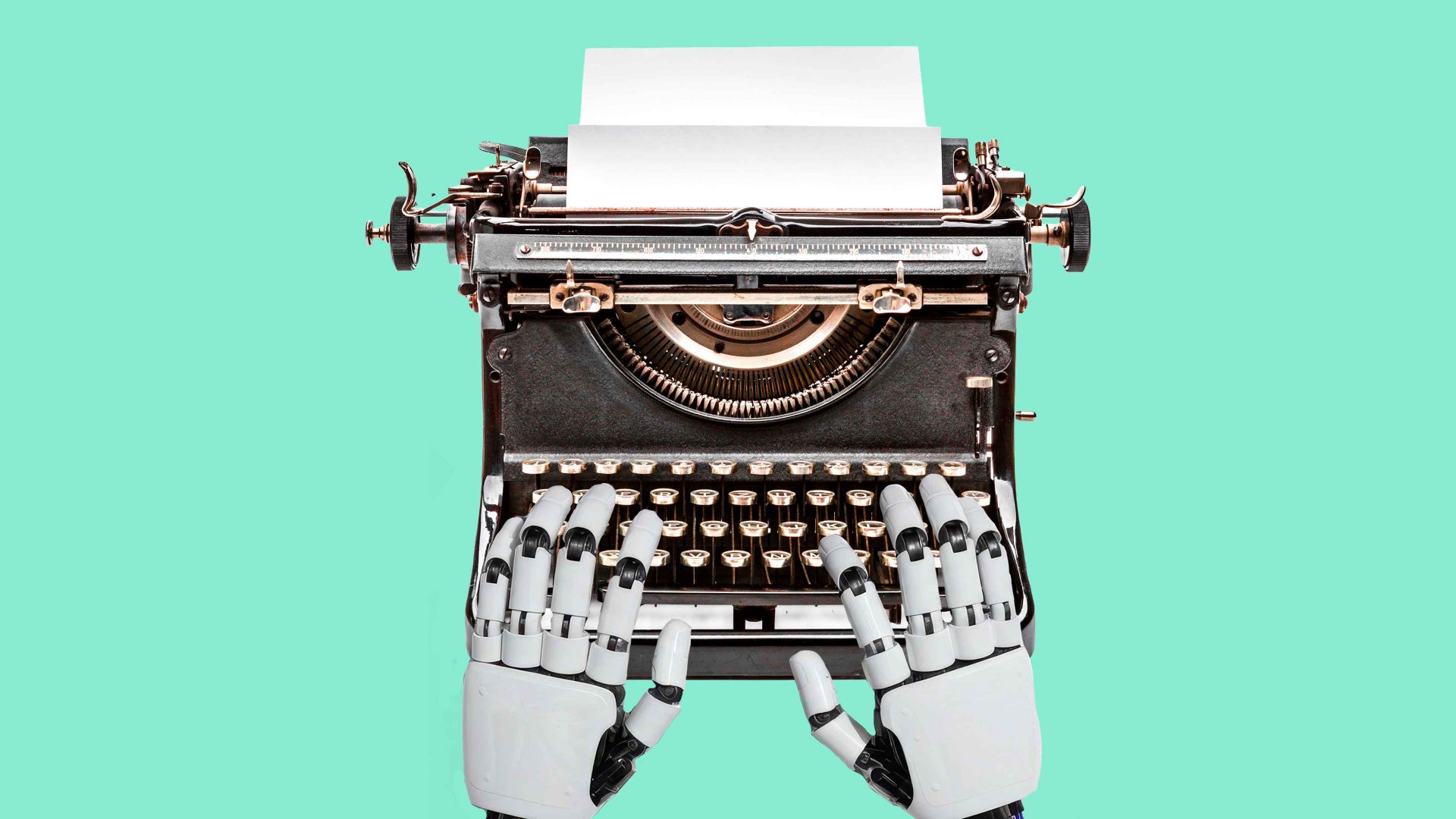
Some technological developments have been great for writers. Others less so. The pen, the bound book, the printing press, the typewriter, the laptop, all these have benefited us. The photocopier, however, wasn’t entirely great in its consequences. Invented in 1938, by the late 1970s cheap electrophotography as it was originally known was everywhere. Xerox became a verb.
In those days, schoolteachers and college lecturers spent much of their time running off multiple copies of chapters, poems, and articles for their students. Important papers were circulated by scientists, and businesses. If you were researching anything, you collected a stack of Xeroxes of relevant articles. That’s what everyone did.
Many trees died to produce unread photocopies. Some of us still have folders of them kept in the hope they might one day prove useful. Photocopiers were great for readers. For counterculture fanzines the machine was a kind of printing press, too. But, for most professional writers, photocopying wasn’t such great news. Good for research, bad for livelihood. Photocopying meant readers could access their work without paying for it. Why buy a book, when you could get it from the library and Xerox whole sections?
Suggested Reading


When tech bros predict the future, boo loudly
The writer Maureen Duffy died on May 27 this year at the age of 92. She was a remarkable person, feisty and eloquent not just about the rights of authors, but about gay rights, and animal rights, too. For her, fair payment to writers for use of their work was a question of justice. She fought hard for this. Perhaps her greatest legacy is that she helped to found the Authors’ Licensing and Collecting Society (the ALCS), in large part as a reaction to the growth of photocopying.
In 1977 she and a small group of writers, among them Brigid Brophy, founded this as a not-for-profit organisation. It could then receive and distribute money owed to writers for secondary use of their work, such as when in education teachers and lectures made and distributed multiple copies of parts of a book.
Since 1977 the ALCS has collected and paid out over £750m to authors of various kinds. That’s an amazing consequence of the far-sighted actions of a handful of campaigning writers nearly 50 years ago. The ALCS now has more than 130,000 members, making it by far the largest writers’ organisation in the UK. It has new battles to fight in the age of AI.
Copyright as an institution has its opponents, particularly within the tech world. It’s always been a compromise between the desires of readers to have free access to all writing, and the financial wellbeing of the publishing industry which writers underpin.
Suggested Reading

Did AI just win its first literary award?
Ideally, of course, everyone would have access to just about everything ever written (that was the dream that Google Books tried to realise). But unless we can create a way of paying authors for their labour, that remains a fantasy that could just as easily destroy a creative industry as enhance it.
At the moment, copyright still gives writers and publishers a way of earning money from their labour, and their descendants can carry on receiving royalties for 70 years after the author’s death. That is far too long a period before writing enters the public domain and becomes part of our common intellectual property, and there are very good arguments for shortening it, but not for getting rid of it altogether.
Most AI technology firms have simply ignored copyright and trained their algorithmic pets on in-copyright material. Some have even argued that training is different from other uses and should be outside any copyright law. Nice try. Only one major company so far, Anthropic, has come to a settlement to recompense authors for this parasitical dependency on their work.
Suggested Reading

It’s official: AI hates women
I’m looking forward to receiving a payout myself, as several of my books were among the 440,000-plus titles used in training their AI models. I suspect that will be the first and last payout from Silicon Valley to writers. Fair payment for use is not a widely endorsed principle there.
Artificial intelligence, with its potential not just to copy, but to assimilate, paraphrase, and build on authors’ words is a much bigger threat to writers than Xeroxing ever was. Perhaps, like that of the shorthand typist, the role of the human professional writer will simply cease to exist. A dystopian world, for sure.
Until then, though, we need to keep alive the defiant spirit of Maureen Duffy and confront the well-funded tanks of AI as they accelerate towards us. Justice is on our side.