Jean-Paul Sartre wrote that at death we become “prey to the Other”. From the instant we die, we lose the power to control who we are (or rather were). Those who outlive us determine everything about us.
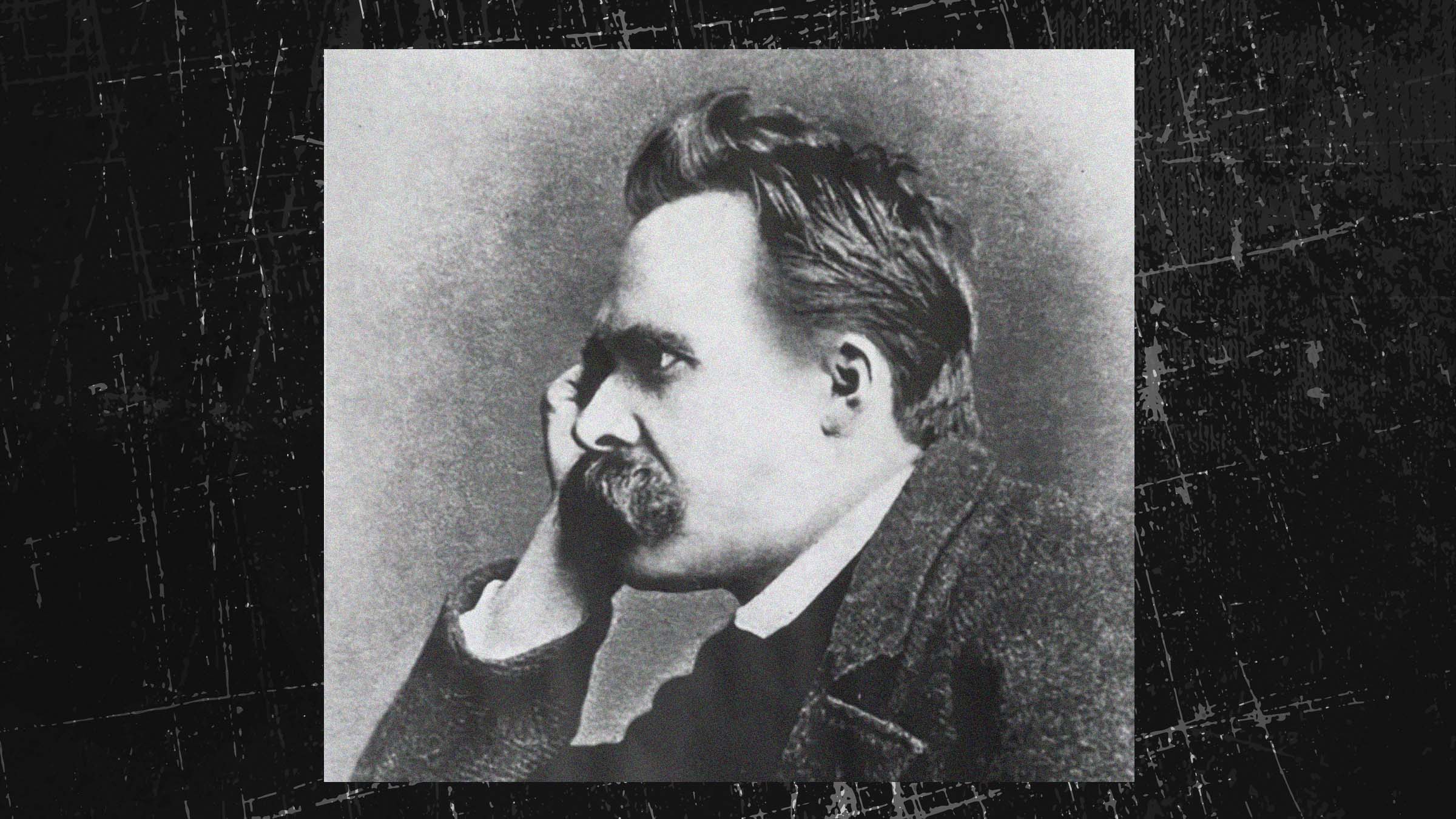
Friedrich Nietzsche was particularly unfortunate in this respect. As a philosopher, he became prey to his sister four years before his body finally gave out.
Shortly after his 51st birthday on October 15, 1895, and more than five years after the breakdown in Turin that left him delusional and incoherent, Elisabeth Förster-Nietzsche bought the copyright of all his writings from his mother, Franziska. Friedrich then became Elisabeth’s cash cow during what remained of his life. She continued to milk this cow for 35 years after his death in 1900.
Elisabeth found a site for the Nietzsche Archive in Weimar, a city with strong literary connections with Goethe and Schiller. Some 40 years later, the Nazis would choose a nearby hillside as the site for the Buchenwald concentration camp. More than 56,000 people died there.
Prisoners entered via gates with the slogan “Jedem das Seine” (“to each what he deserves”) above them. The Nazis had appropriated these words to humiliate those they deemed lesser beings whose fate was to be worked to death, or murdered. No doubt some Nazis were confident that Nietzsche, philosopher of the Übermensch, would have approved.
Elisabeth Nietzsche was no less eccentric than her brother, but a good deal nastier. With her antisemitic husband, she had set up a colony of pure-blooded Aryans in Paraguay.
Suggested Reading

We have fallen into the age of total digital distrust
That failed. Her husband killed himself. She returned to Germany. Once she had acquired Nietzsche’s intellectual property, she morphed into a tyrannical gatekeeper, editor, and sometime fabricator of her brother’s work.
By cutting and pasting aphorisms and passages from Nietzsche’s notebooks, journals, and letters, she created The Will to Power, a book he had intended to write, but never completed (he had scrawled a shopping list over the title page of his notes). She blocked scholars from consulting the original writings from which it was composed.
In the 1920s she made connections with the rich and powerful, including Mussolini, who was a Nietzsche fanboy, and Hitler, who was more circumspect and more strategic. Although never a Nazi herself, Elisabeth allowed her version of Nietzsche to become a component of Nazi propaganda.
Hitler financed a memorial hall for Nietzsche, to be built by Albert Speer. He declared that Nietzsche, alongside Richard Wagner, would be a spiritual pillar of the Third Reich.
There is no denying that isolated phrases from Nietzsche slotted well into Nazi speeches. Talk about overcoming, heroism, the willingness to go beyond conventional morality, the need to love one’s fate, to seek danger rather than comfort, the praise of the strong and the denigration of the weak, all these sat well with their ideology. So too did the idea of the “magnificent blond beast”.
But as Sue Prideaux shows in her wonderful biography I Am Dynamite!, Nietzsche didn’t use this phrase as a racial type. For him, it had no connection with Aryanism.
Suggested Reading
Immanuel Kant versus the far right activists
According to Prideaux, Hitler’s pianist Ernst Hanfstaengl once described the Führer as a bartender of genius who took whatever might go into the mix of his “poisonous genocidal cocktail”. Elisabeth’s version of Nietzsche was a usable source of toxicity. It’s debatable whether Hitler even read Nietzsche.
Prideaux’s message is clear: we should distinguish Elisabeth’s version of Nietzsche from the real thing. This is not to suggest that Nietzsche was a liberal thinker who thought everyone equally deserving of respect. Far from it. There is much in his philosophy that is vile elitism, as well as much that is disturbingly brilliant, particularly his genealogical account of the origins and development of prevailing morality.
He was indeed dangerous, dynamite even, because he challenged received opinion about God and morality, but the idea he would have been an enthusiastic Nazi goes well beyond the facts.