
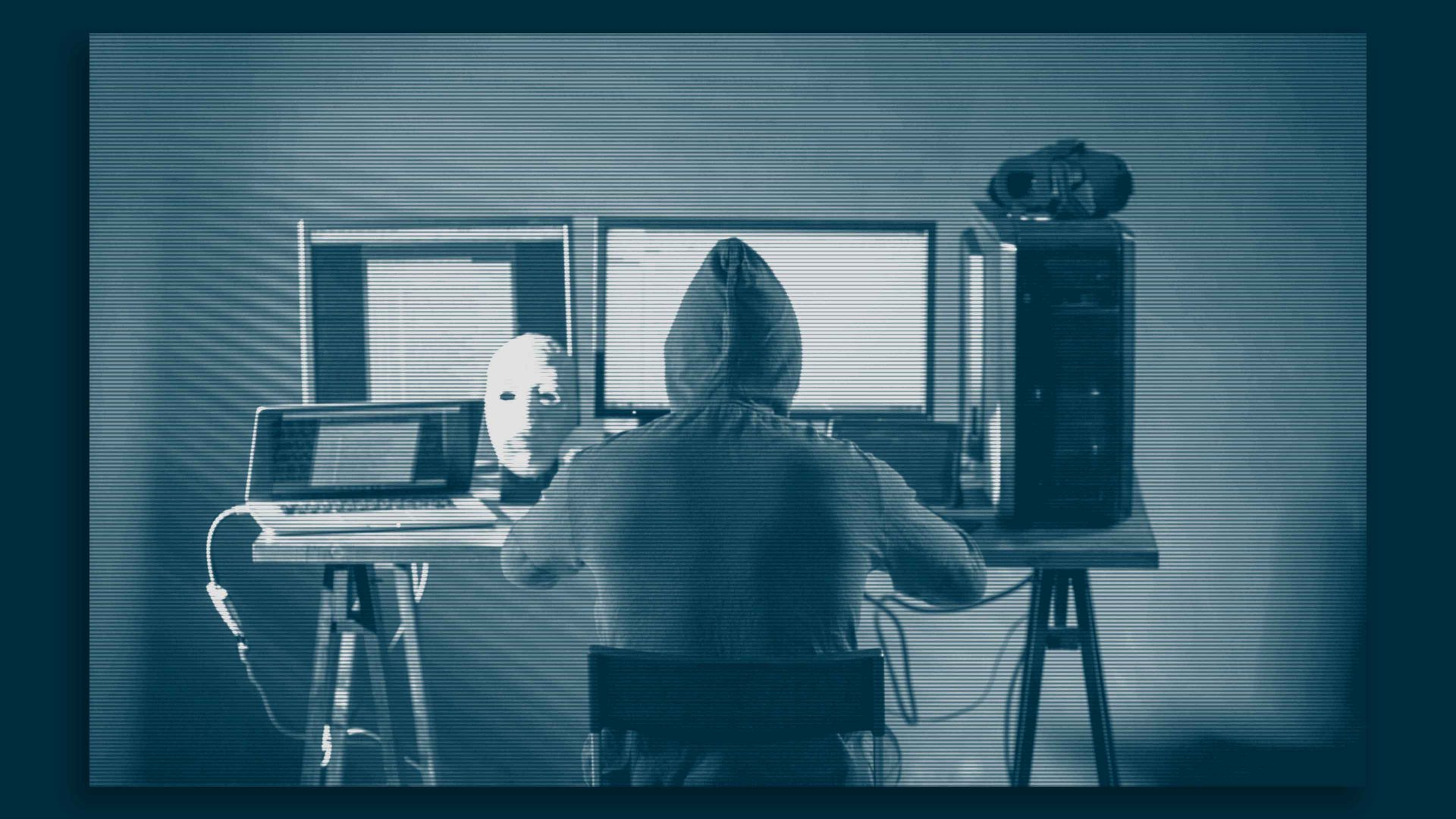
In recent weeks I’ve had many messages from voice actors. Apparently I sent them all an essay, “The Architecture of the Permanent Self”, together with a contract to record it. Except I didn’t. The essay sounds interesting, but I didn’t write it. The perpetrator generated a semi-plausible email address that included my name and generated some fake documents.
Unless someone has it in for voice actors, it’s hard to understand why they’d do this. Did the scammer intend to ask them to pay for something in advance, or hand over sensitive information. Who knows?
I receive several phishing emails a week and they are mostly easy to detect. It’s not just dubious email addresses that are tells. Last week I had one from “BBC Radio 2 America”. It sounded unlikely. Radio 2? In America?
A friend had a “headhunter” approach her with an academic-related job description that perfectly matched her skill set – presumably because it was actually generated from her CV. The giveaway was the implausibly high salary on offer.
For scammers, as for pick-up artists and companion bots, flattery is a weapon. Some targets succumb. Catch just one of them off guard and it’s worth it.
Suggested Reading


Immanuel Kant versus the far right activists
There are analogue equivalents too, tied to expensive tech that can give access to digital assets. A friend was asked for directions at King’s Cross. As he opened his phone, the inquirer’s accomplice whisked it out of his hand and sprinted off. Within 15 minutes his bank account had been drained and someone had booked a stay in an Airbnb under his name. Helping people can be risky.
Phone theft is a nasty crime. Stealing a phone is like taking part of someone’s mind. In fact, if you believe David Chalmers’s and Andy Clark’s account of the extended mind, your phone isn’t like part of your mind, it really is part of it because that’s how it functions. On that view, phone theft begins to look rather like a physical assault.
Whether or not you believe that, it’s increasingly risky to help strangers or to take unsolicited messages at face value.
Today the wary can detect most scam messages. But soon that won’t be easy. We’ll need sophisticated scam detectors. But what does all this distrust and hypervigilance do to us? When does precautionary scepticism become paranoia?
Our situation is a bit like René Descartes’ in his Meditations where he called just about everything into doubt in order to find out what, if anything, he could know for certain. He began by doubting the evidence of his senses. He was sceptical about any information acquired in a way that had once let him down.
Suggested Reading

What if reality doesn’t exist without us?
He knew that his senses had deceived him in the past – a straight stick had looked bent in water, for instance. He recognised that subjective confidence about what was in front of him wasn’t sufficient to guarantee that things were as they seemed. Similarly, messages from strangers are sometimes scams, so the safest option might be not to trust any unsolicited emails. Strangers in the street asking for directions are sometimes part of a sting, so don’t assume that they are what they seem to be.
Descartes pushed scepticism even further than this. He toyed with the idea that everything he perceived might be an illusion created by an evil demon. He escaped from this extreme form of doubt, by using some rather shaky arguments. First he “proved” that he, Descartes, certainly existed. Then he “proved” that God exists and is no deceiver. Then he concluded that whatever we perceive clearly and distinctly is true because a benevolent God wouldn’t want us to make systematic mistakes.
That line of reasoning won’t work for us today. Soon many messages that look genuine will be individually tailored near-perfect fakes generated by AI demons. Being constantly suspicious drains energy, yet what’s the alternative? We have entered an age of digital distrust. It’s going to be exhausting.