
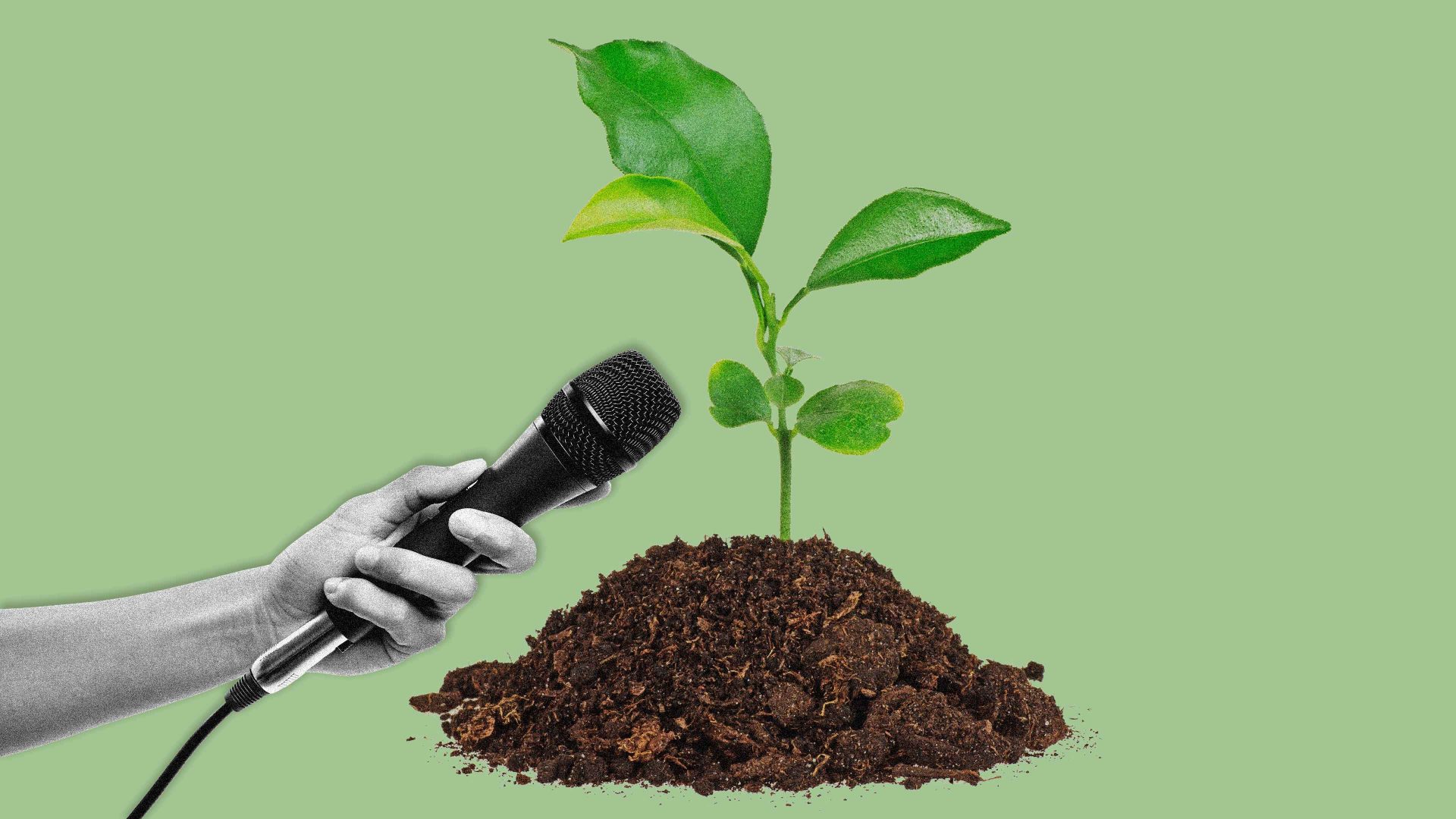
A confession. A few months ago, I was clearing ivy that was choking a cherry tree in our garden. When I’d managed to rip all the main strands from the trunk, I was surprised to hear the tree sigh and say, “I can breathe again.”
Obviously the tree didn’t actually speak to me, and I didn’t hear it. But I did in my mind. I felt slightly mad and decided I was anthropomorphising, attributing human qualities to the tree, imagining how it would feel if it were a person.
In a famous article, the philosopher Thomas Nagel asked: “What is it like to be a bat?” He assumed there was something that it was like, but that its subjective experience was very different from our own, not least because bats spend much of their time hanging upside down, can fly, eat airborne insects, and navigate the world through sonar. Would it, however, make sense to ask: “What is it like to be a cherry tree?”
On the face of it, that sounds like an extravagant question, a non-starter. Although there have been many cultures with animist tendencies and which attributed intentions, thoughts, and language to trees and other plants, surely science has dispelled the idea that, without a complex nervous system, a living brain, and a social world, it’s highly unlikely that any living thing could have consciousness, even at a low level. Yet there are increasing numbers of people willing to countenance the idea that some AI is conscious, or will be very soon, and yet it has none of these.
Why stop there? Why not allow that plants might already have consciousness?
This sounds as if we’re entering King Charles territory (he notoriously talks to trees on his Highgrove estate and occasionally gives them a friendly hand/branch shake). But we don’t have to go that far, nor project human qualities on to daffodils.
Some respectable thinkers are saying remarkable things about plants. The first chapter of Michael Pollan’s recently published A World Appears gives a glimpse of what’s out there.
Charles Darwin was an early advocate of the view that plants exhibit a kind of intelligence in the way they move as well as grow, and reach out, albeit very slowly, to explore their environments both above and below ground. Root tips, in particular, seem to have a good idea about where to go next.
Darwin’s being taken far more seriously now. Paco Calvo, a philosopher and plant scientist at the University of Murcia, has recently argued that we don’t know enough about plants to rule out the possibility that they might have some kind of consciousness.
Mimosa, the so-called sensitive plant that closes its leaves when touched, can learn not to react to a particular stressor (having its pot dropped). Plants can also send and receive chemical signals from other plants and distinguish between shade cast by their own leaves and that cast by competitors for light.
They can also be anaesthetised – Venus flytraps stop closing their traps when administered chemicals similar to those that put humans under.
That suggests there’s something to “switch off”.
Bean plants seem to be able to make predictions about where they’ll encounter a beanpole to wrap around based on information that they acquire through their senses.
Perhaps, then, we’ve been too ready to deny our green companions some form of consciousness, albeit one that is much simpler and very different from our own. Pollan quotes Calvo’s disturbing comment: “I cannot help but to think of plants as, in a sense, these locked-in syndrome patients that somehow cannot flag that they are mentally alive.” That’s an extreme position, and the stuff of horror movies.
It would be difficult to mow the lawn or cut down ivy if you really believed that. And eating a salad might be a form of torture – for the lettuce.
Cicero allegedly claimed “there is nothing so absurd that some philosopher hasn’t already said it.” Is this just a further instance of that? Probably.
But what about the more modest view that plants have basic sentience, and can make inferences about their environment on the basis of sensory input, though probably can’t feel pain? Pollan for one is ready to believe that.
Pace King Charles, we’re not ever going to hold meaningful conversations with cherry trees, and Dryads no more exist than fairies. But we probably do need to revise how we think about plants.
They’re not quite what they seem. They’re smarter and more responsive than they look.