

“It’s supposed to be me as a doctor, making people better,” Donald Trump declared of his controversial Truth Social post of an AI-generated image depicting him as Jesus Christ last week. When a habitual and prolific liar makes a claim like this, it’s difficult to give him the benefit of the doubt. Indeed, there’s even the suspicion that the US president was winking at the audience with that claim, and that we were supposed to recognise that he didn’t really believe the explanation.
It’s “staggering” and “unforgivable”, Keir Starmer declared about not being informed earlier that Peter Mandelson had failed his security vetting before becoming ambassador to the US. Starmer isn’t renowned for lying, but Kemi Badenoch wasn’t alone in wondering whether he was telling the truth about when he first learned this disconcerting fact.
Politicians can find themselves in positions where it would be unwise and perhaps career-ending for them to reveal too much. Sometimes they improvise ways to avoid an outright lie. That can include hiding in a fridge.
They may word their replies to questions very carefully, encouraging listeners not to probe further. That can backfire, as it did with Bill Clinton’s 1998 Zippergate statement, “I did not have sexual relations with that woman, Ms Lewinsky.” As the Brains Trust philosopher CEM Joad might have said, “It depends what you mean by ‘sexual relations’.”
In The Prince, Niccolò Machiavelli suggested that although seeming to be honest and seeming to have integrity can be useful attributes in a leader, it was wise not to feel bound to tell the truth. Strategic liars prosper. Those who abide by Christian values of honesty and integrity are more vulnerable.
Machiavelli believed that a leader should be a combination of a fox and a lion, and at all costs should avoid being a lamb. Keeping promises out of a sense of duty was for wimps. Guile and strength won the day.
For Machiavelli, the aim of a prince was to keep the city-state secure at any cost. That end justified any means, even tricking and murdering your enemies in cold blood if necessary. He praised the duke of Romagna, Cesare Borgia, for doing just that.
The Orsinis were plotting against him. Borgia lured them to Sinigallia, pretending he would negotiate. Instead, he had them locked in a room and strangled. Machiavelli applauded.
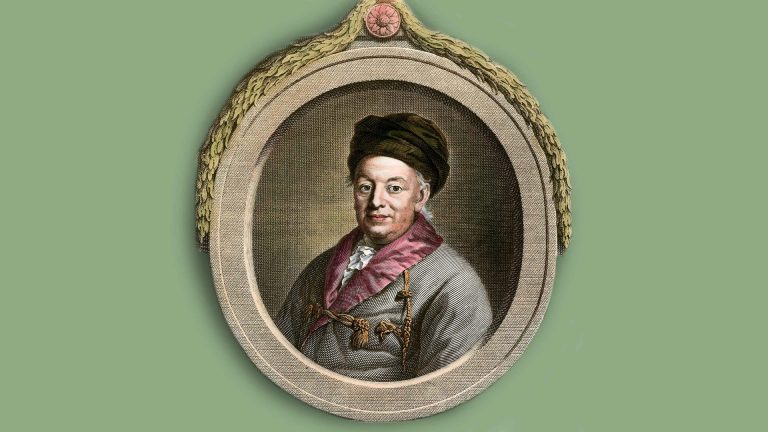
Immanuel Kant, born on April 22, 1724, would have strongly opposed this approach, and not just because it involved murder. He’s famous for arguing that it’s always wrong to lie, whatever ills it avoids or beneficial consequences it might bring.
None of us is completely honest with others, though. That may not be so terrible. Try spending a day without telling a single untruth and see how that goes. White lies smooth social interactions. They’re expected, and anyone who refuses to play along and tell people what they want to hear from time to time comes across as rude and inconsiderate.
The philosopher Ludwig Wittgenstein tried to be scrupulously honest and ended up hurting those around him, as he didn’t make any effort to hide what he thought of their casual remarks. More recently, in 2008, Cathal Morrow decided to live for a year without telling a lie and documented the experience on a blog he called The Complete Kant. Brave man.
Morrow stuck to the Kantian doctrine, but it created some problems, particularly answering his four-year-old son’s questions about Father Christmas, and responding when friends and family asked if they were boring him. For that year, if his wife asked him whether clothes suited her, or if they made her look overweight, or whether he was looking at a woman at another table in a restaurant and found her attractive, he was compelled to tell her the truth.
It’s one thing to run this as a risky personal experiment, but too much to ask for from our politicians. They can occasionally have good reasons for remaining silent on some matters, or for avoiding revealing all their intentions when asked by journalists. But we don’t want them to mislead the public or parliament on fundamental issues, or to tell outright lies. When they do so and are discovered, there should be consequences, not least because it destroys trust.
We don’t want to be led by Machiavellian monsters, but nor should we expect our leaders to take a truth serum that makes them reveal everything whenever asked.
It’s better if they are as truthful as they possibly can be, though: Kant-ish, but not Complete Kants.