As Elon Musk prepares to float his space-flight company, SpaceX, on the US stock market for an astronomical amount of money, it’s worth looking past all the visionary talk about colonising Mars, and taking a moment to consider one of the grittier problems astronauts face – the issue of space toilets.
Much mirth surrounded the malfunctioning toilet aboard the recent Artemis II mission around the Moon. In fact, it’s probably because the mission was so accomplished that journalists went looking for a flaw. That said, it clearly made life onboard both uncomfortable and unsanitary. But did the dodgy loo make Artemis II Nasa’s most unhygienic mission to date? No, it did not. It didn’t come even close. Let’s talk about Gemini 7.
Just as Artemis II is now paving the way for a new Moon landing, the Gemini programme was Nasa’s staging post for the Apollo moonshots. Between 1964 and 1966 there were 12 Gemini launches, and the capsules were designed to carry two astronauts into Earth orbit. In general, missions were relatively short, two or three days at most.
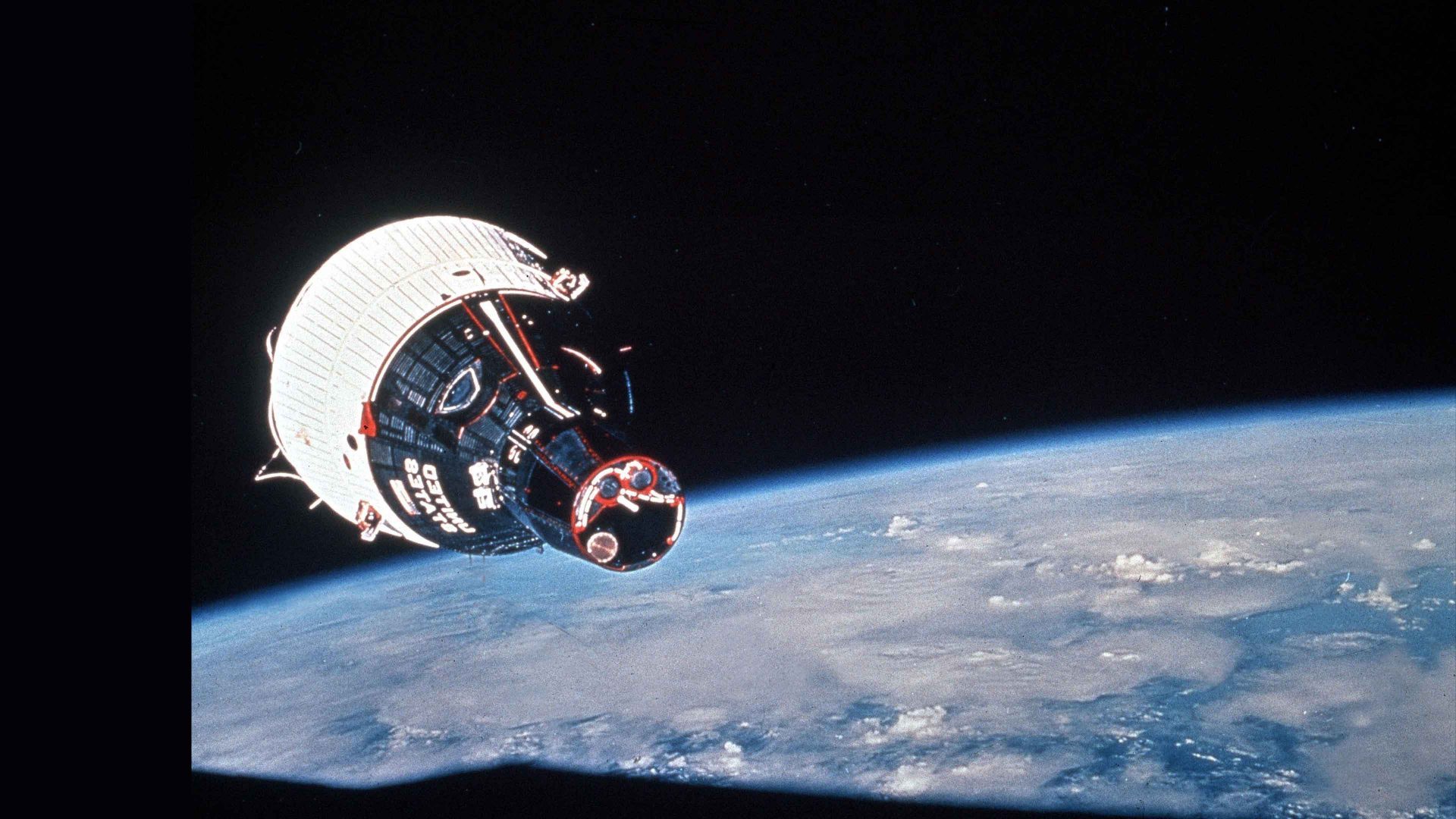
Gemini 7 was different. Launched on December 4, 1965, it was the longest space mission to date, and would remain so until June 1970, when the record was broken by the crew of the Soviet Union’s Soyuz 9.
“Gemini 7 was intended as an endurance test,” says Emily Margolis, curator of the Gemini collection at Washington DC’s Air and Space Museum. “Scientists wanted to study the effects of long spaceflight on humans before sending a mission to the Moon.”
Suggested Reading


The science is clear – the world is heading for water catastrophe
Jim Lovell, later of Apollo 13 fame, and Frank Borman, who would fly with Lovell on Apollo 8, were the astronauts, selected for a 14-day mission orbiting Earth in a capsule the size of a phone booth. The astronauts described it as being like sitting in the front seats of a VW Beetle, but without being able to open the doors to get out and stretch their legs.
“Meanwhile, doctors instructed them to amass their faeces, urine and sweat,” explains Margolis. There was no toilet, not even a malfunctioning one. So, to collect their solid waste the astronauts defecated into a bag (perhaps their companion looked the other way) and added an antibacterial tablet to stop the formation of methane.
“Not only does methane smell, it’s explosive,” explains Margolis. “Neither is something you want in a spaceship.” The bags were then sealed and stored behind the astronauts’ seats. “Unfortunately, it didn’t stop the stench escaping,” she adds.
To collect urine, the astronauts peed into a condom-like apparatus. Sometimes it leaked and yellow drops floated around the capsule, fortunately never short-circuiting any electronic equipment. And to collect sweat samples, the astronauts were given stretching exercises to do using a device similar to a bullworker. Researchers then collected their 14-day-old underwear at the end of the mission. “We were glad never to see or smell it again,” commented Lovell.
There was nowhere to wash. “The environment was described by the astronauts and, most especially, those who opened the capsule hatch after splashdown as ‘very odorous’,” Margolis says, perhaps unnecessarily.
Meanwhile, the insalubrious environment was becoming more so. The 100% oxygen-rich atmosphere of the capsule dried out scalps, leading to flakes of dandruff floating around. And then one of the astronauts lost his toothbrush – they refused to tell mission control who the culprit was – meaning they shared one. “Not pleasant. A bit like boy scout camp,” said Lovell. You can see the toothbrush in the Museum of American History, also in Washington.
Suggested Reading
Warfare has already moved into space – you just haven’t realised it yet
Borman described the last few days of the mission as “bad, very bad”. “They were exhausted, physically and mentally,” says Margolis. “After they had completed one of their key functions, docking with Gemini 6, it was just a matter of sitting out the remaining few days.” They could barely move, there were no creature comforts and the smell was getting worse and worse. By the time they splashed down in the Atlantic they were “frazzled”, according to Lovell.
“Such a flight has never been repeated and never will be,” says Margolis. “Future missions all had more room in the spacecraft, so even though they have become much longer, there is far more space to move around. This was without doubt the least comfortable and most unsanitary space mission ever undertaken.” Rather surprisingly, neither astronaut got ill.
Gemini 7 is now a prize exhibit in the Air and Space Museum, whose galleries are set to fully reopen on July 4 to mark the museum’s 50th anniversary and to coincide with the semi-quincentennial anniversary of the United States. Visitors can see how confined the capsule is, and how stale and stuffy the environment must have been. Fortunately, they’ve got rid of the stink.
Michael O’Hare is a freelance journalist, author and editor