Last week, when YouGov ran a poll asking people how much they cared – if at all – about the news that Prince Harry and Meghan, Duchess of Sussex, are moving back to the UK, 60 per cent opted for “not at all”. Sometimes, the British public can be very sensible indeed.
Meanwhile, the British press has been predictably overheated, pumping out story after story and column after column on the topic. While it pretends to be horrified at the development, the media is delighted to discover that two of the characters it most loves to hate will soon be much more accessible.
Back in 2021, just a year after Megxit, Prince Harry appeared on the celebrity podcast Armchair Expert and compared life as a royal to “a mix between The Truman Show and living in a zoo”. The comparison to caged animals was particularly apt; what is the monarchy but a family the British state keeps for captive breeding?
Go back to first principles and the entire performance of royalty is fundamentally weird. We’re over a quarter of the way through the 21st century and still expected to believe there is a group of people born with an intrinsic specialness and that, at any given time, one of them is chosen by God to sit on a throne, wear a special hat, and ‘rule’ over the rest of us. Is it any wonder that those journalists and commentators who focus on the royals are themselves so utterly weird?
On Talk TV, Nile Gardiner, a man who has made a whole career out of being an aide to Margaret Thatcher for two years in the early 2000s, compared Harry and Meghan to “a new migrant crisis” and railed that they are “very nefarious people” who “hate Britain”. Gardiner, who lives in the United States, leading the Margaret Thatcher Center for Freedom and working for right wing think tank The Heritage Foundation, has spent the last few years campaigning for Harry’s US visa paperwork to be made public.

He used the latest news to pen a Daily Mail column on that topic, speculating that how Harry answered questions about drug use is the real reason why he’s now returning to Britain: “In his highly destructive and unpleasant memoir Spare, Harry boasted in extensive detail of having ingested a bizarre range of illegal drugs… Needless to say this is a pattern of criminality that would normally bar someone from entering the United States at all, let alone living there.”
Nile doesn’t seem to have noticed the whole battalion of British rock stars with American residences who can testify to the fact that the United States has a long history of not applying its visa rules consistently.
What is it about Harry that makes Gardiner so insistent that the British and American public deserve “the truth”? Well, he says it’s because Harry “[attacked] the Crown” and “[moaned] about the British media”.
He seems most aggrieved, though, at a perceived slight: “Meghan in particular mocked the way she had to curtsy to the beloved late Queen Elizabeth”. She made a joke at her own expense in a documentary released four years ago but Gardiner is still not over it.
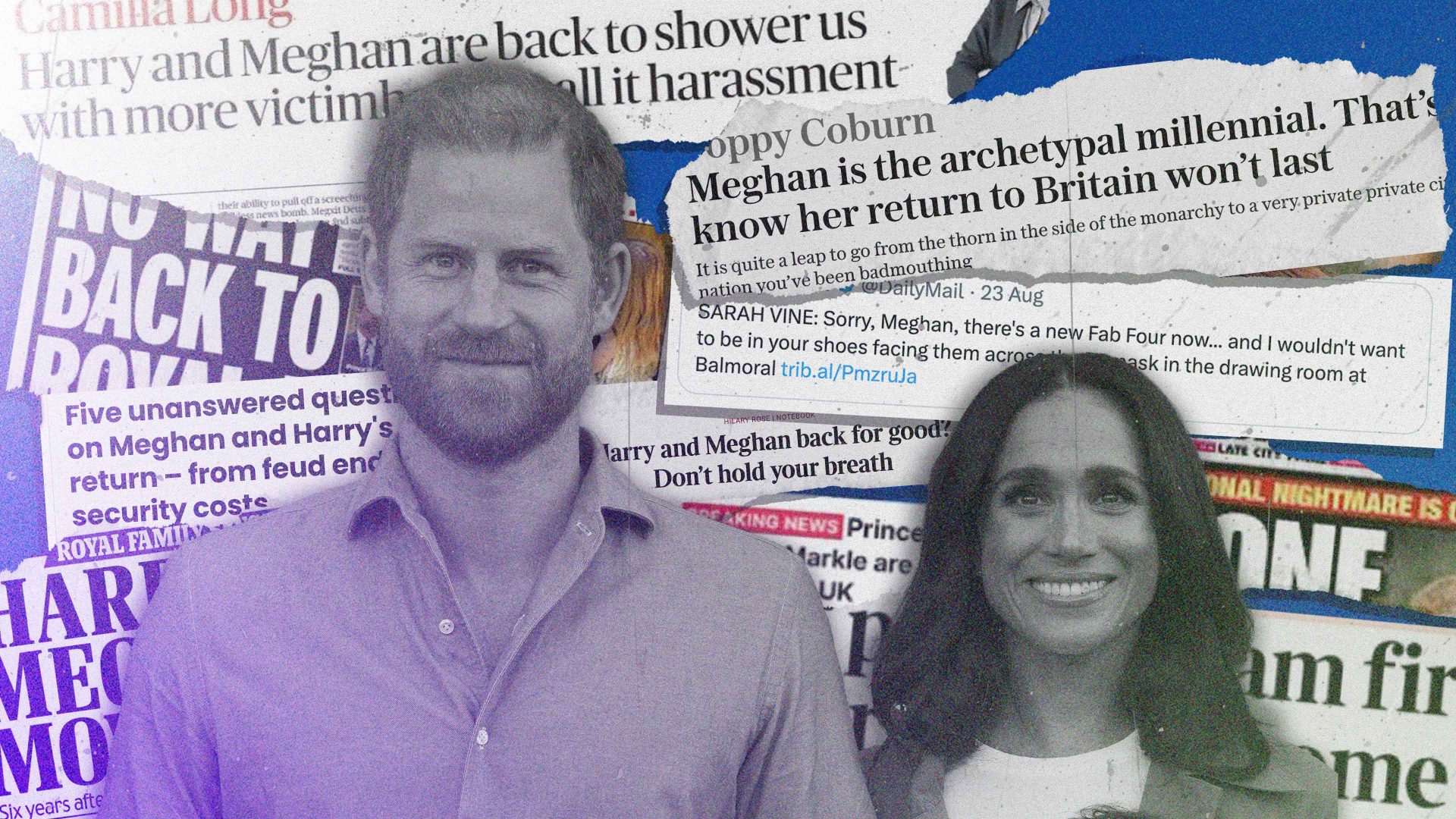
That frankly unhinged level of anger at a stranger was present in another Daily Mail column, this time from the perpetually peeved Sarah Vine. The columnist, who has written thousands of words about the couple over the years, inevitably focused on Meghan who she previously called a “weapons-grade narcissist” for such crimes as wearing a black turtleneck that resembled one that Diana once wore. Now, she deems the Duchess surplus to requirements:
“Where once Meghan seemed like a breath of fresh air, a much-needed injection of carefree glamour into a rather stuffy and old-fashioned institution, now they have no need of her.”
Suggested Reading

The Daily Mail’s dangerous obsession with Meghan
Nothing has happened yet. The Sussexes have not yet returned. But that doesn’t matter because the press is engaged in a huge collective effort of projection.
Columnists like Vine imagine scenarios and present them as the truth. So it is that she praises Catherine, Sophie, Camilla and Anne as if they are people she knows – “grafters, not grifters” – rather than something closer to soap opera characters with whom she has a rather sad parasocial relationship. When Vine says that Harry and Meghan’s return “could become toxic”, it’s a wish, not a warning.
At The Daily Telegraph, which tussled with The Sun for credit over the ‘exclusive’ on the couple’s return, Poppy Coburn demonstrated that being snide for money isn’t the preserve of older columnists. Put up as the paper’s Gen Z representative, she calls Meghan “an archetypal millennial” and writes: “Picture Meghan Markle (sorry, the Duchess of Sussex) in your mind. What words would you use to describe her character? Ambitious? Tenacious? Saccharine sweet, like a jar of $14 raspberry jam?”
If pressed to describe Meghan, I’d borrow Mariah Carey’s words when asked for her opinion on Jennifer Lopez: “I don’t know her.” It’s a phrase most of the columnists writing at length about Meghan would do well to keep in mind, but it would, of course, put a crimp in their word counts and make it difficult to hit their deadlines.
For The Sunday Times, Camilla Long raged that the story is “the next instalment of a soap opera of which none of us ever wanted to be a part”. Of all the unbelievable things pumped out over the past week, that must be near the top of the list. Not only does the British press want many more episodes of this soap opera, it craves walk-on parts with every fibre of its being.
In The Times, Hilary Rose, long assigned to the bitching about Harry and Meghan beat, pumped out two columns about them in the space of 12 hours. In the first, she wrote that “the one thing they truly excel at is being royal-adjacent, photogenic and gobby”. Lucky for her that they do, because it provides such a wealth of copy.
Suggested Reading
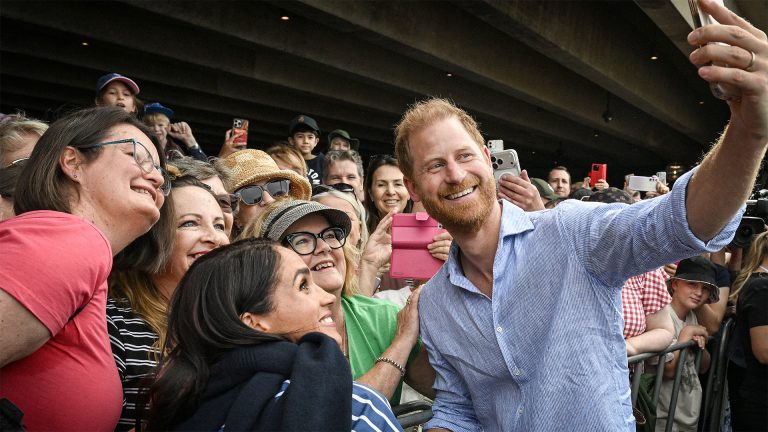

How the Aussie media got Harry and Meghan’s visit all wrong
The following day, Rose asked readers: “Where are you on the H&M spectrum? Don’t care? Shocked? Full of righteous indignation?” Again, we’re back to the question of weirdness. If you’re shocked or filled with righteous indignation about the living arrangements of two people you don’t know and will probably never know, that’s very much a you problem.
AN Wilson in The Times comparing Harry and William to Agamemnon and Achilles? Weird. Amanda Platell in The Daily Mail expressing her heartfelt worries about King Charles? Weird. The Sun pretending that the royals’ annual summer holiday in Scotland was “a summit at Balmoral”? Weird.
Richard Kay writing thousands of words, again, about Harry’s dead mother? Weird. Camilla Tominey likening the news to Bobby Ewing stepping out of the shower in Dallas? Weird (and dated).
We must point out how weird these people are. Despite their self-images as tribunes of the people, newspaper columnists are odd, and the way they write about the royals, especially Meghan and Harry, is especially bizarre.
The only thing separating them from those people who turn up outside Buckingham Palace decked out entirely in Union Flag clothing is that they get a byline and a fee. The not-at-all interested 60 per cent are the true voice of the nation.
Mic Wright’s Breaking: How the Media Works, When it Doesn’t and Why it Matters is published in paperback by Blink on August 28