I was first introduced to Tesco’s meal deal when I moved to this country 10 years ago – £3, Bob’s your uncle.
But now you need a “Clubcard” to get your meal deal at £3.85, otherwise you’ll be charged £4.25. You also need your Clubcard to get your coffee at a normal price, your bread, your yoghurt, and so on.
I’ve come to hate the yellow stickers that have polluted the shop and the dual-pricing system they so proudly display. The deal? Hand over your data or it’s going to cost you.
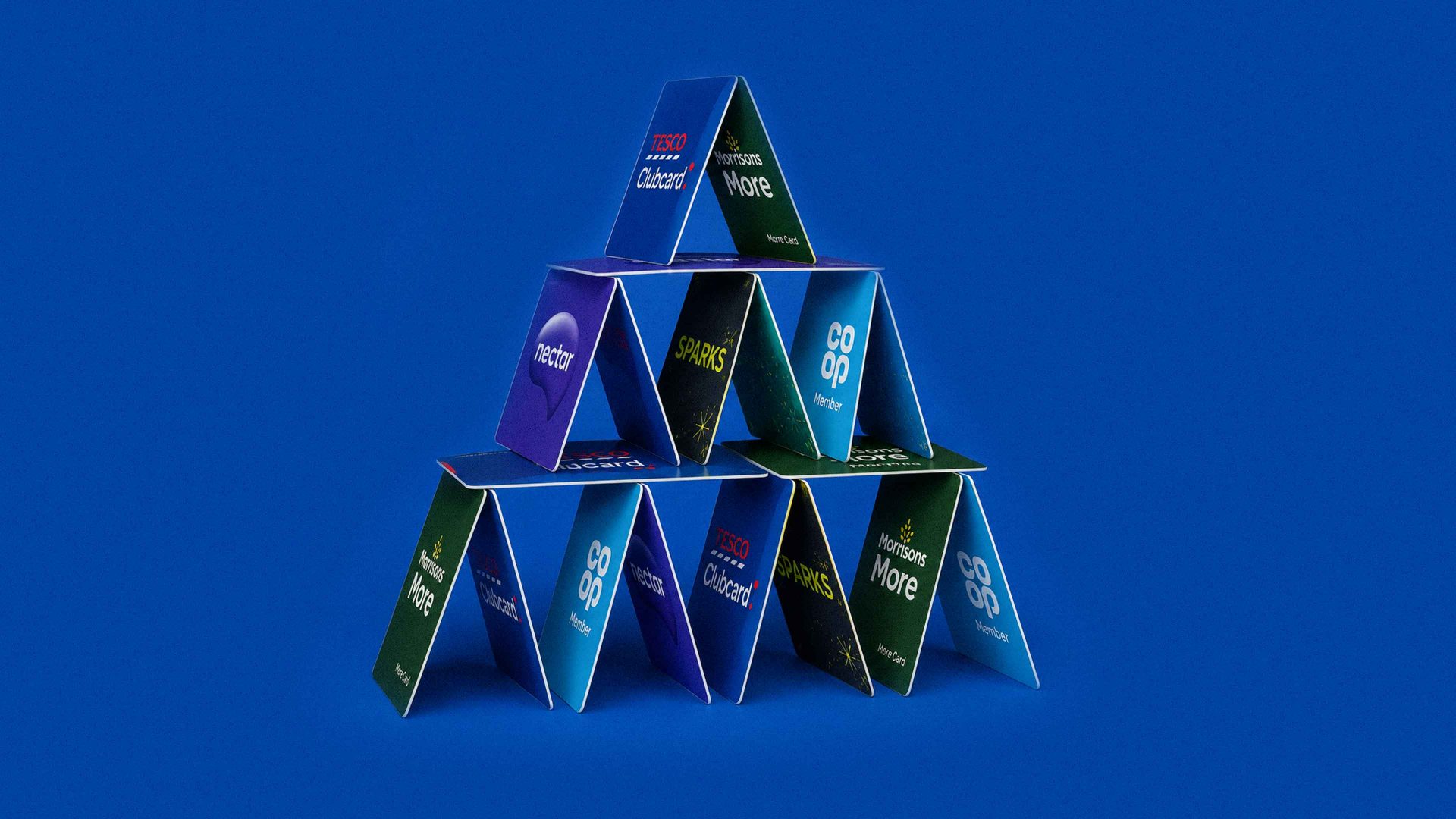
Loyalty programmes are everywhere and they are a devil’s bargain. Supposedly a tool to reward repeat customers, they are now something you have to sign up to if you don’t want to be charged inflated prices.
In March, Which? revealed that, across a list of 245 branded items, shoppers without a loyalty card paid more for their groceries at Tesco and Sainsbury’s than they would have at Waitrose. It’s not that you get incredible discounts if you are a member, it’s that you get charged more if you are not.
No wonder, then, that according to Ipsos, 54% of UK consumers agree that loyalty cards benefit the shops more than the customer. Yet 95% of us have one or more loyalty cards. Because we don’t really have a choice any more, do we? It’s scan your card, or get f****d.
On the internet, it is very much known that if something is free, you are the product. This means that you pay for Instagram, Google and Facebook with your personal data. Fine.
But when you go to the shop, you pay – so how come you are now expected to hand over a bunch of your data on top of it? Sure, some shops keep the collected information in-house, like Waitrose or Co-op, but others share the data collected on their loyalty cards with advertisers. Tesco and Sainsbury’s do this.
Suggested Reading

AI job interviews are good for only one thing
Please note – Tesco is not just a shop. According to dunnhumby, its own customer data science subsidiary, it is also the “ultimate media partner to brands”, with access to the data of “24 million Clubcard households”. That’s a lot of data, and if you hold a Clubcard, it’s your data.
Think purchase history – what you bought, where, when, how much, how often – plus online and in-store behaviour, and much more. All that information is being used to influence your next shop.
Sainsbury’s does the same, and its Nectar card spans more than just supermarkets, since it also works at Argos, Esso, Habitat and hundreds of other shops.
Of course, you don’t have to sign up to every loyalty programme. You can say no, if you can afford it. But it’s hard, isn’t it? Especially as, from 2020-25, UK food prices rose by 38%.
And every single time you use a self-checkout at Sainsbury’s, you hear “Remember to scan your Nectar card”. It assumes that I have one. It pretends to be benevolent, when what it should really say is “give me your data and I’ll give you a mediocre discount on your basket”.
Suggested Reading


Will AI destroy capitalism?
Plus let’s not forget that some people can’t say yes even if they want to. Most schemes require a UK address, an email or a smartphone, which not everybody has. So if you are homeless, a tourist, or elderly and unfamiliar with apps, these schemes actively penalise you.
In the meantime, since I am not at financial liberty to forgo loyalty cards, I’m thinking of getting slightly creative with my information. Wrong name, wrong address, wrong age. Someone reading my data might one day exclaim: “Wow, this 90-year-old man living at Tesco House, Welwyn Garden City, sure bought a lot of Coke Zero and salt and vinegar crisps this summer.”
There is no regulation of loyalty schemes, or of what shops can do with the data they collect. But really, if you are going to take our data, make it worth our while. How about 10% off everything? You know, because “every little helps”.