
“Yes, yes!” Isaiah Berlin told me many years ago. “Maynard was most certainly the cleverest man I ever met.”
This, from the greatest liberal thinker of the postwar era, was quite a tribute to John Maynard Keynes (1883-1946); especially when you bear in mind that Berlin, in his extraordinary intellectual life, had also encountered Sigmund Freud, Bertrand Russell, Albert Einstein, Pablo Picasso, TS Eliot and Ludwig Wittgenstein.
Eighty years after his death, Keynes is principally associated with a school of theoretical principles and a suite of specific strategies – demand management, fiscal stimulus, grand intervention – that acquired the stigma of obsolescence after the crises of the 1970s and the advent of Thatcherism.
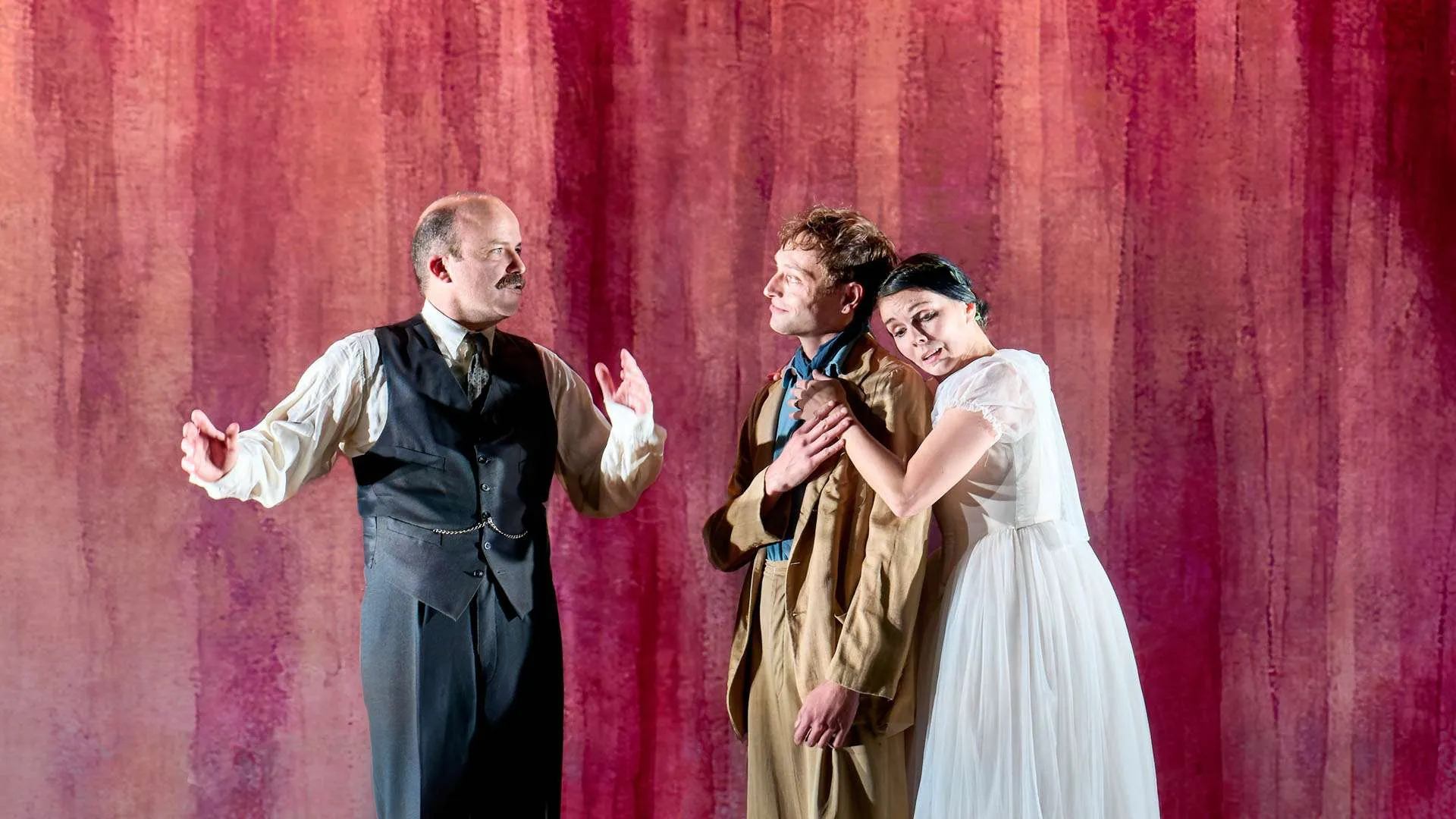
But in James Graham’s splendid new play, The Standard of Living (Theatre Royal Haymarket, London, until December 12), Keynes the man is rescued at last from the dismal thicket of statistics, arcane theory and modern Treasury orthodoxy.
Played with characteristic grace by Rory Kinnear, the economist, engaged for more than three decades in domestic and international statecraft, is portrayed as a figure of astonishing intellectual and cultural range, but also beset by anxiety, fearful of failure and deeply vulnerable.
In Nicholas Hytner’s absorbing production, we see Keynes the Whitehall warrior, the impassioned opponent of the punitive reparations imposed on Germany at Versailles in 1919, champion of the 1942 Beveridge Report and, alongside the US Treasury official Harry Dexter White (Luke Cinque-White), architect of the Bretton Woods agreements of July 1944 that shaped the postwar global financial order.
Yet the play’s binding theme is personal rather than political. Keynes is the patron of his friends in the Bloomsbury Group, conspicuous beneficiaries of his adroit private investments, but is also the clique’s outlier: a man of public affairs amid committed bohemians like his former lovers Duncan Grant (Thomas Flynn) and Lytton Strachey (Pip Carter); Virginia Woolf (Naomi Frederick); Dora Carrington (Agatha Enecio); Vanessa Bell (Claire Price) and her art critic husband Clive (Alex Blake).
Squeamish already about his entanglement in the grubby world of politics and economics, they are positively astounded when he brings his future wife Lydia Lopokova (Natalia Osipova), a prima ballerina with Diaghilev’s Ballets Russes, to Charleston, the group’s retreat in East Sussex. “Maynard,” says Woolf, “that’s a woman!”
Since This House (2012), his acclaimed account of the intricate parliamentary battles of 1974-79, Graham has come to be recognised as the theatrical laureate of national institutions and cultural change. Like David Hare before him and Aaron Sorkin in America, he takes complex, dry or abstract subjects and, through dramatic alchemy, invests them with humanity, humour and emotion.
In Brexit: The Uncivil War (2019), he explored the primal passions that Dominic Cummings (Benedict Cumberbatch) mobilised in the Leave Campaign. In Best of Enemies (2021), he framed the fabled 1968 television debates between William F Buckley Jr and Gore Vidal as the first stirrings of today’s culture wars. In Dear England (2023), Graham turned the story of England’s recovery on the pitch under Gareth Southgate (Joseph Fiennes) into a folk tale about nationhood, patriotism and collective identity in the post-Brexit era. In Punch (2024), which won the Olivier Award for best new play, he X-rayed contemporary masculinity with greater nuance than any number of gotcha documentaries about the “manosphere”.
Suggested Reading

Worried about the AI apocalypse? You’re already living in it
Danny Boyle’s adaptation of Ink, Graham’s 2017 play about Rupert Murdoch’s acquisition of the Sun and the editorship of Larry Lamb, has also been selected for the Mayor of London’s Gala at this year’s BFI London Film Festival.
All this reflects not only a phenomenal work rate but a no less remarkable capacity to detect the pulse of humanity – its passions, doubts, and frailties – wherever his meticulous research takes him.
I experienced the latter first-hand when Graham was working on Coalition (2015), a television drama about the formation of the Cameron-Clegg government, and he kindly invited me to lunch. Though I was busy with my own book on the coalition, it was clear to me before the starters arrived that there wasn’t much the playwright, still in his early 30s at the time, didn’t already know.
As it happens, he has long been intrigued by Keynes, whom he selected for his appearance on BBC Radio 4’s Great Lives in September 2020. “He’s just been there in the code of most of my plays,” he said, “or whispering quietly in the wings.”
What fascinated Graham six years ago, as Britain entered the second wave of the pandemic and Boris Johnson’s government continued to take radical and hugely expensive action, was the extent to which crises compel (or should compel) profound reflection upon the necessity to act, to intervene and to coax a better world into being.
Like most members of the Bloomsbury Group, Keynes regarded GE Moore’s Principia Ethica (1903), which located life’s highest goods in human affection, the pursuit of truth, and the appreciation of beauty, as a work of philosophical genius: “my religion under the surface,” as he wrote in 1938.
Unlike his creative friends, however, he also interpreted the tract as a call to action in the public sphere. As Zachary D Carter puts it in his brilliant book, The Price of Peace: Money, Democracy, and the Life of John Maynard Keynes (2020): “after reading Principia Ethica, Keynes rejected the idea that efficiency could be the central organizing principle of a good society. No simple equation could approximate the best way to live.”
In The Standard of Living, his refrain is: “What is a good life?” He regards economics not as an end in itself, but a means to an end; a system of theory and practice that should be a mighty force in the battle for decency and civilisation.
Among the strongest scenes are those that frame this battle as a rivalry between two friends and fellow intellectuals: Keynes and the Austrian economist Friedrich Hayek (Laurie Kynaston), 16 years his junior, and a fearless evangelist for the rolling back of the state, the liberation of the market, and what became known as “supply-side” theory.
“Economics is not poetry!” insists Hayek. But, in the end, that’s exactly what Keynes thinks it is. For him, establishing the Arts Council of Great Britain and personally financing the Cambridge Arts Theatre were not philanthropic side-hustles. Such undertakings represented all that he stood for and believed in.
In an article for the Listener in August 1936, he wrote that the fixation with specific financial rules – politically chosen, not divinely ordained – had denied the British of “parks, squares and playgrounds, with lakes, pleasure gardens and boulevards, and every delight which skill and fancy can devise. Why should not all London be the equal of St James’s Park and its surroundings?”
Yet, as Keynes and Hayek foresee in The Standard of Living, the latter’s economic philosophy was to sweep all before it in the late 1970s and the decade that followed. According to Tory legend, Margaret Thatcher produced Hayek’s The Constitution of Liberty (1960) at a meeting of the Conservative Research Department in 1975, slammed it on the table and declared: “This is what we believe!”
In a world of radical globalisation, digitally connected markets and (perilously) high levels of debt to meet governments’ routine running costs, it is economically impractical to speak of a return to granular Keynesianism. But it is by no means far-fetched to envisage a fresh embrace of the Keynesian temperament.
‘In a world of radical globalisation, digitally connected markets and (perilously) high levels of debt to meet governments’ routine running costs, it is economically impractical to speak of a return to granular Keynesianism. But it is by no means far-fetched to envisage a fresh embrace of the Keynesian temperament’
Indeed, such a shift has arguably been under way since the financial crisis of 2008 – even if the political class that came of age in the era of monetarism, supply-side orthodoxy and an all-consuming phobia of inflation are reluctant to say so explicitly.
The UK government bailout of banks and building societies, in capital injections and loans, came to £137bn. Meanwhile, the cost of Covid-response measures – which, never forget, made the chancellor Rishi Sunak hugely popular – came to £385bn.
Since Russia’s illegal invasion of Ukraine in February 2022, the state has forked out £44bn on emergency energy-bill support for households and businesses. In his first budget on October 28, John Healey will reveal what additional fiscal intervention may be necessary as a consequence of Donald Trump’s protracted Iranian adventure.
In this sense, and to the dismay of those who hoped in 1989 that the fall of the Berlin Wall marked the end of history, the 21st century, from 9/11 onwards, has been one whose character Keynes would immediately grasp (however baffling he found ChatGPT, Instagram and The Celebrity Traitors).
As I wrote in the dog days of the last Conservative regime, “the case for government (and more of it) in our era is not ideological or tribal. It is empirical and pragmatic.” Consider what figures on the list of urgent issues confronting any responsible head of government in 2026: intergenerational, regional and international inequalities; climate emergency; increasing longevity and soaring health and care costs; a new iteration of digital technology many of whose pioneers believe could wipe out humanity; pandemic resilience; unprecedented population mobility; and a seriously volatile geostrategic landscape that requires all economies to be war economies.
Suggested Reading


Hope is back. An election can wait
In his final book, Keynes for Our Times (2026), the economist’s greatest biographer, the late Robert Skidelsky, concluded that he “would surely have wanted to buttress his argument for ‘sufficiency’ with one of ‘sustainability’,” and would not have “regarded the evidence that AI can (or will soon be able to) outperform humans in most tasks as an argument for setting it free to do these tasks as they pleased.”
Skidelsky notes, too, that “Keynesian states started as warfare states.” This is not to say that governments must start spending like sailors on shore leave; rather that they must acknowledge the pressures of the moment and act accordingly – instead of deferring to a decades-old economic creed as if observing a form of ancestral religion.
This perspective is useful when seeking to understand the instincts and urgency of Andy Burnham. When he rails against “40 years of neoliberalism” and warns, as he did last year, against being “in hock to the bond markets”, I don’t think he is (as is so lazily claimed) demanding a return to the 1970s. Quite the opposite, in fact. He is demanding open minds, not open coffers.
He is urging us all to look out of the window at the scale of the task and the moral imperatives we face as a nation. And this much was clear from the sheer ambition of the strategies he unleashed in his conference speech last week. Whether you agree with him or not, he is not a nostalgist but a hyper-modern creature of 2026.
There are times when the state does indeed need to withdraw, kick back and let the “invisible hand” get on with it. But only a madman would conclude that this is one of them.
True Keynesianism is not a rigid economic doctrine but a state of mind and a philosophy of decency deployed sleeplessly to meet the needs of the hour. “Just act,” says Keynes in The Standard of Living. “Get in the way.” We are all Keynesians now.