Howard Jacobson’s finest novels rigorously and riotously examine the complexities of British Jewish life through a tragicomic lens. “Jew-baiting was what it was,” says a character in 2006’s Kalooki Nights. “And we were all Jews who were doing it.”
Jacobson provides a variation on this joke in his 2010 Booker prize-winning The Finkler Question, when the eponymous Sam Finkler declares he has no antisemitic friends. “Yes, you do,” his friend Libor replies. “The Jewish ones.”
In many ways, Jacobson’s latest novel is business as usual. But on this occasion, the writer darkens his tone and explores Jewishness in the aftermath of real-life events – namely the October 7 attacks on Israel, and what has followed. It is, the book’s narrator reveals at the outset, “the story of how the world lost its mind and also – not incidentally – of how I, Ferdinand Draxler, lost mine”.
Suggested Reading
What if Thatcher had been assassinated?
The novel begins on October 6, calm before the storm. Draxler, a primary-school headteacher, and his wife Charmian, an actress, leave London to spend quality time with their student daughter Zoe in Oxford. Charmian, Draxler tells us, is “only a little bit Jewish by virtue of marital airdrop. I was her nearest device.”
Over the course of the day, Draxler talks Jews and Jewishness: reminding his family that his mother survived the Holocaust by baking cakes for the Nazis; informing us that he wrote a pamphlet in which he argued that Shakespeare’s fools and clowns were Jewish; and noting the “Jewgoyles” outside Zoe’s window.
The following day, news of the attacks breaks, and Draxler’s safe world implodes. His neighbours celebrate and shout, “Gas the Jews!” He listens to voices on the radio and talking heads on TV justifying the killings. He ventures out and encounters activists at the National Gallery and protesters in the street.
Suggested Reading
A united Ireland? It’s more tricky than it sounds
At work, he has a spat with his much-hated deputy, Max Axelberg, who dismisses talk of a massacre as Zionist propaganda. A few weeks later, Draxler learns the hard way that Zoe has pledged her support for the people of Palestine and started “marching, mouthing, shouting, jostling” and tearing up posters of Israeli hostages.
Soon, Draxler finds himself struggling to make sense of the new reality unfolding around him. It proves to be an uphill battle. He attends a party but is so paranoid about how the other guests will react to him that he gets disoriented by his warped “envisagings”. He takes a group of 10-year-old pupils out to paint over inflammatory graffiti, only to fall foul of their parents – including those of a child who, after the clean-up job, “could only get to sleep after counting imaginary swastikas”. And he attempts to make peace with his daughter by explaining in a letter that he is not the “child-murdering Zio-pig” she thinks he is, but in her terse reply, she brands him racist.
Things get worse when a little boy at school asks Draxler if he is complicit in the genocide. Then two Jewish children report that there is a story going around the playground that the Jews were more evil than the Nazis. Draxler’s behaviour becomes more erratic and his mood swings more severe. In this “capsized world”, can he find a way to stay afloat?
Several elements power this bold, compelling and regrettably timely novel. Jacobson’s trademark caustic humour hits the mark in Draxler’s exchanges with his redoubtable mother, “the Nutritionist of Belsen”, and his bouts with the laughable Axelberg, a Jewish convert, or a “Jew by Choice”, who, Draxler remarks, “thinks he is more Jewish than I am.”
Jacobson also impresses with his characters’ meditations on aspects of Jewishness, in particular Jewish guilt. Is it passed down through the generations, Draxler wonders, or can anyone jump on the “shame train”?
Suggested Reading

How Germany turned a bookshop prize into a culture war
Draxler turns out to be the book’s standout strength. At the beginning, I had reservations. Jacobson’s 2012 novel, Zoo Time, was marred by the bitter diatribes of its beleaguered main character, a “foul-weather Jew”. I worried that Jacobson had written a similar book: Howl could have been entitled Rant, featuring as it does a hero who doom-scrolls to get “the sugar-rush of rage” and then fumes about how humanity has lost its way.
Yet Jacobson reins in Draxler’s sound and fury and replaces his tirades with sorrowful soul-searching and reasoned debates. Even when Draxler appears to crack up (such as a segment in which he performs at the Edinburgh Fringe, telling dud gags inside a barrel), Jacobson ensures there is enough method in his protagonist’s madness to keep his mind alert and prevent the book’s narrative from sliding into a soapbox harangue.
Draxler makes for a fascinating creation: a “relentless” father and husband; a man at war with himself and besieged by those around him; a self-proclaimed voice of sanity and a tragic case coming apart at the seams. “Change the subject,” Charmian urges him. “Change yourself.” Draxler is unable to do so, which is just as well, for who he is, how he ticks, and above all, how he howls keeps us turning the pages.
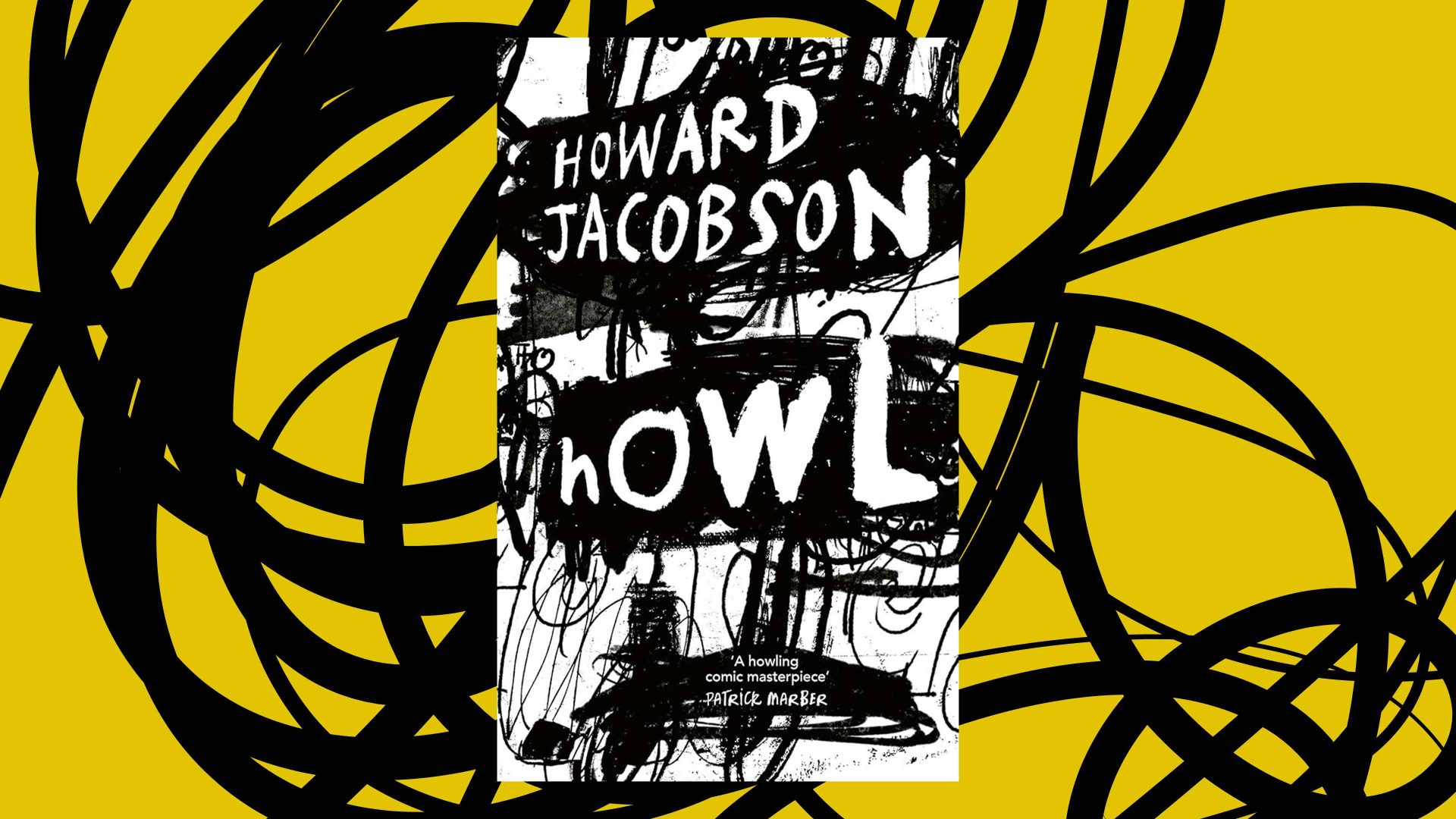
Howl by Howard Jacobson is published by Jonathan Cape.
Malcolm Forbes is a writer and critic based in Edinburgh