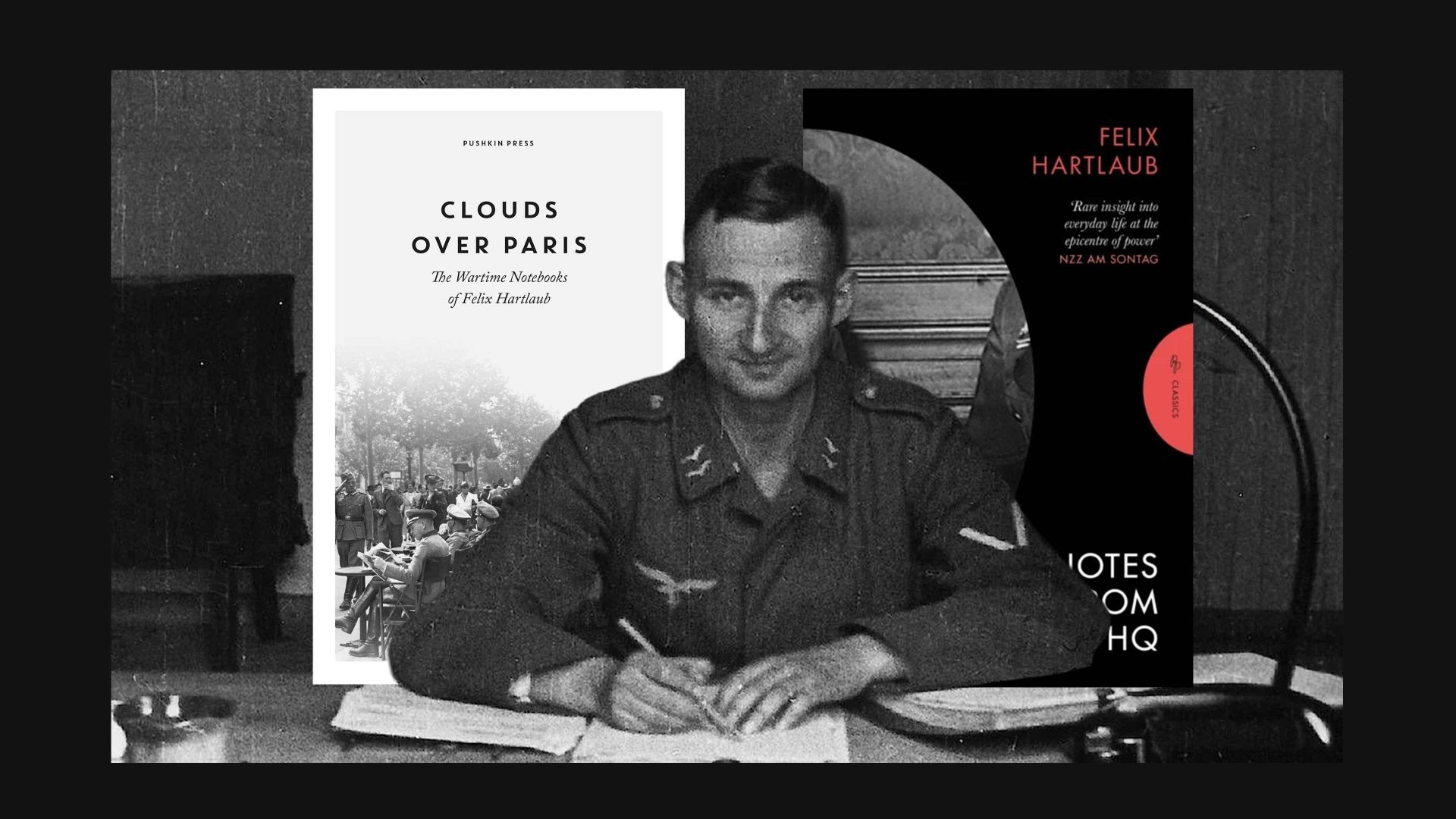
Felix Hartlaub had a good war and a bad end. Drafted into the German army in 1939, he avoided being sent into battle, securing a posting as a researcher for the German foreign ministry in occupied Paris. From 1941, he worked as a military historian, writing the Wehrmacht’s official record of the war. Then, in May 1945, weeks before the end of hostilities, he went missing in Berlin, aged only 31. His body was never found.
Hartlaub harboured aspirations to be a writer. During his posting in the French capital, he walked the streets and parks, making notes of sights and sounds, people and places. His diaristic account of his stay appeared for the first time in English in 2022 as Clouds Over Paris. The book was interesting rather than illuminating. Hartlaub provided a series of impressionistic snapshots of the city but revealed little about the German presence and nothing about himself.
Suggested Reading
Why did royal favourite Anthony Blunt betray Britain?
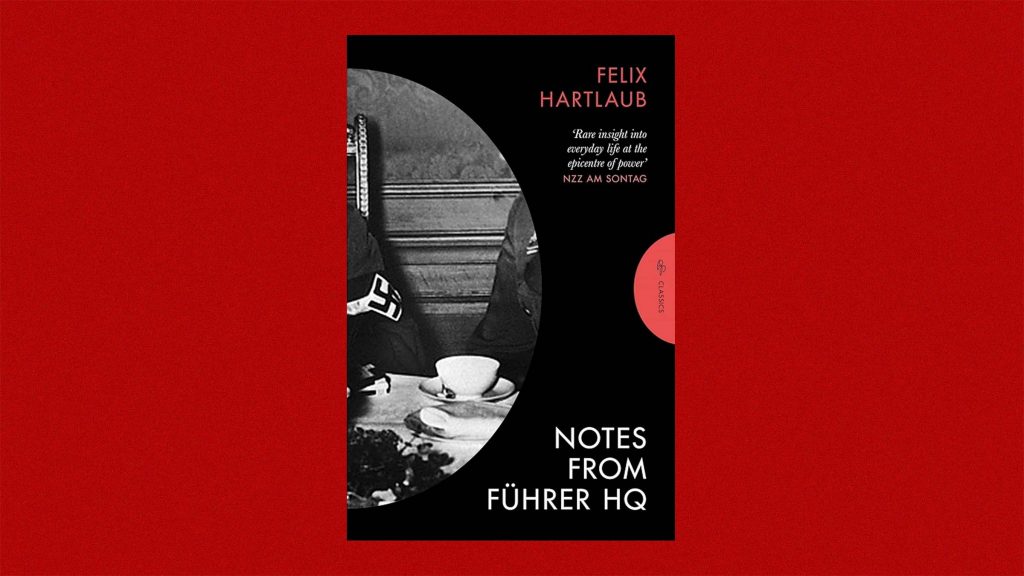
A second book by Hartlaub has now seen the light of day. Notes from Führer HQ could have been as insubstantial as its predecessor. Fortunately, it constitutes a fascinating chronicle of Hartlaub’s time as a military historian. Through his sharp eyes and increasingly jaded mindset, we are given a valuable glimpse of working life within, and everyday life outside, various Nazi military headquarters.
Things get off to a gentle start. In the book’s first section, we find Hartlaub based at a newly built Führerhauptquartier called “Werewolf” near Vinnytsia in Ukraine in 1942. He surveys his surroundings and presents an oddly idyllic tableau of rural calm. We go around the barracks into a huge pine forest; we view women returning home from the fields, or swimming and singing in a river while balalaikas strum and Luftwaffe privates look on.
But in the next section, the book roars to life as Hartlaub changes the scene, brings himself into the picture and takes his reader inside a centre of Nazi power. In his office – which doubles as his bedroom – Hartlaub tries to make sense of the “tangle” that is the Balkans while working around the clock to complete a report on leadership in the region. Obstacles get in his way.
He fantasises about his secretary, Miss Rauschkohl, who enjoys staying up late boozing with general staff officers. He is visited by a major nicknamed Uncle Max, who warns him that his “academic arrogance” and aloofness towards his colleagues is impairing his prospects.
Max adds, half in jest, that Hartlaub can say goodbye to any possibility of a transferral: “You know too much, you’re a marked man, my dear fellow, a special bullet has been cast for you.”
Hartlaub recounts office politics and conflict in corridors. We also learn of the shockwaves that spread through headquarters after the failed plot to assassinate Hitler in 1944 resulted in brutal reprisals against the conspirators.
Just as we are acclimatising to this queasy working environment, Hartlaub switches scene again. His final sections play out within the claustrophobic confines of a command train, a mobile HQ which travels around Germany but might as well be hurtling into the unknown.
Suggested Reading
What the sitcom never told you about the real Dad’s Army
In places, Hartlaub’s eponymous notes can appear fragmentary. However, at their best, they comprise a potent blend of character profiles, commentary on the course of the war and, in one instance, a stream of consciousness that encompasses memories of the Berlin Hartlaub left behind and musings on the civilian world he may one day return to.
Hartlaub comes across as brave. Had his superiors read his takedowns of tactics and personnel (“what we have is one fanatic and a heap of ingratiating rubber dwarves, plus maybe a few workhorses and a couple of rabid hounds”) he would undoubtedly have been shot.
But Hartlaub also emerges as sympathetic. The book’s translator, the ever-dependable Michael Hofmann, regards him as “a subtle introspective among crass destroyers, someone who was with them but not of them.” These remarkable dispatches show how Hartlaub managed to simultaneously keep his distance and get close to the action.
Notes from Führer HQ by Felix Hartlaub is published by Pushkin Press