On the night of May 10, 1941, a German fighter plane crash-landed in the lowlands of Scotland. Surprises would follow for both the injured pilot and the men who captured him.
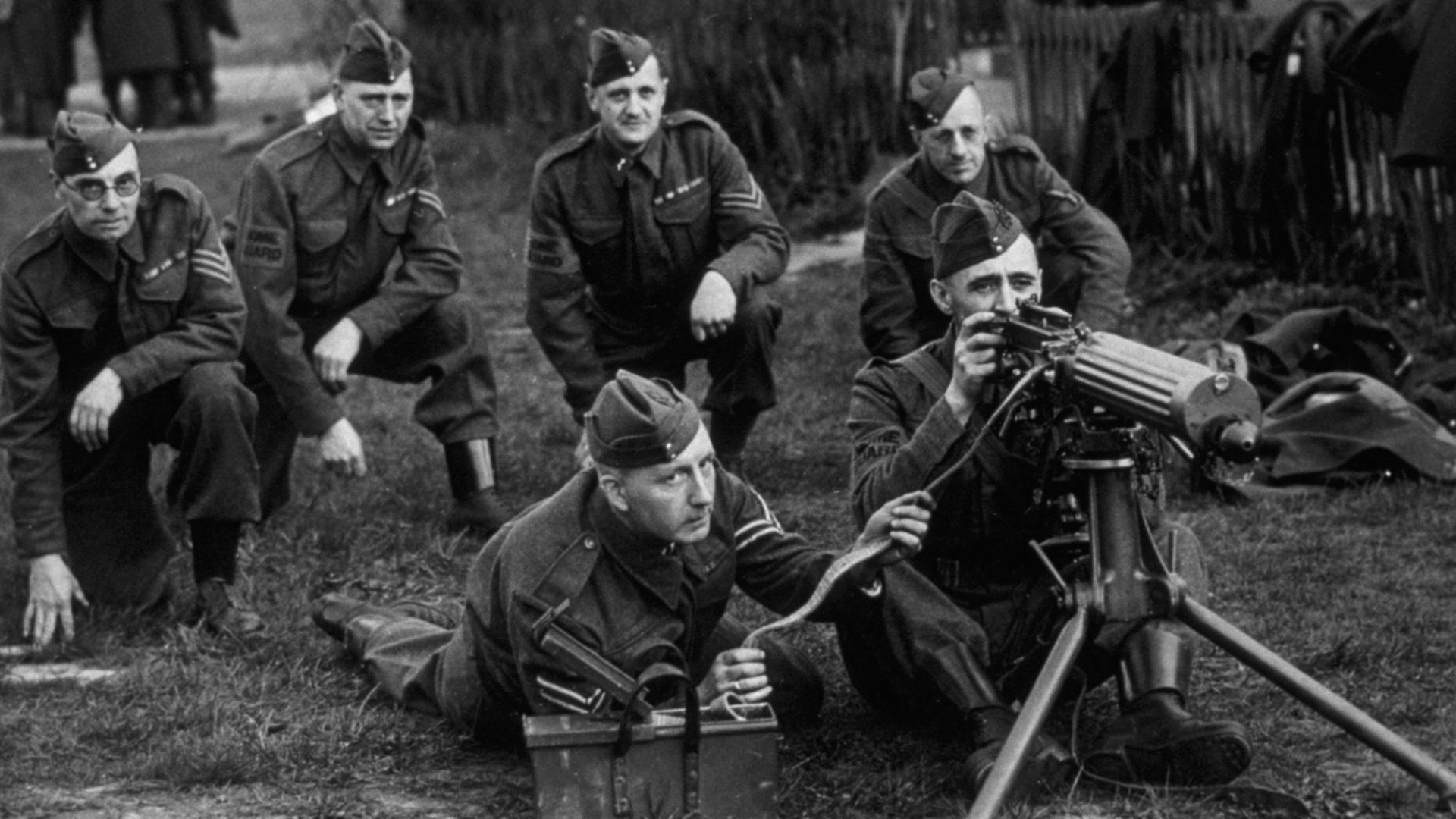
The locals swiftly discovered their new find was not one Alfred Horn, as he claimed, but in fact Adolf Hitler’s deputy, Rudolf Hess. And Hess found that the men – local Home Guards – were a professional military outfit. One member recalled that Hess seemed taken aback by their impressive uniforms and their weaponry, as if he had expected them to be “all sticks and stones”.
Sinclair McKay recounts this tale in his new book. His previous works have been devoted to pivotal places in the second world war – Berlin, Dresden, St Petersburg – but also groups of people who played specific roles in the conflict, such as code interceptors and codebreakers.
Dad’s Army is another book for that second category – its subtitle promises “the glorious true story of the Home Guard”. McKay shines a welcome light on this wartime organisation and shows that, unlike in the much-loved TV comedy, each unit was not a ragtag group of bumbling and bumptious individuals but rather a brave and highly trained force to be reckoned with.
The book begins in October 1939 with Winston Churchill, then first lord of the Admiralty, suggesting that Britain needed a civilian army. His proposal was rebuffed in Whitehall. But the following year, as more countries fell to the Nazis and the threat of invasion became real, a call to arms was issued and the Local Defence Volunteers were formed.
Once Churchill became prime minister, he changed the name to the Home Guard. As McKay notes, “Here was domesticity and plain military courage wrapped up in a name that also conferred a straight-backed dignity.”
The men who enlisted were of all ages and from all backgrounds. None of them were paid for their services, and many also juggled full-time jobs.
This didn’t dampen the desire to sign up: indeed, by 1942, Home Guard recruits numbered almost two million. Their duty was to defend every part of the country, from rural backwaters to industrial cities. In the event of an enemy incursion, the Home Guard was expected to keep the invaders at bay until the real army took over.
To this end, they undertook rigorous fieldcraft training, learning how to set up roadblocks and apply camouflage, throw grenades and use flamethrowers, and engage in fierce hand-to-hand combat. As a consequence of the increasing menace from the skies, some were trained as “parashootists” to deal with incoming Germans from above, while others were turned into anti-aircraft gunners.
Suggested Reading
Why did royal favourite Anthony Blunt betray Britain?
Hess wasn’t wrong to anticipate an ill-equipped welcoming committee. For some time, the Home Guard had an image problem due to short supplies. Local tailors were tasked with turning saggy blouses and baggy trousers into effective combat gear. ARP wardens and firefighters were the priority for steel helmets.
And an absence of appropriate weaponry resulted in men arming themselves with everything from ancient farming shotguns to pikes, golf clubs and garden pitchforks. McKay shows how Noël Coward summed up the problem – and the Home Guard’s self-deprecation – in his 1941 song Could You Please Oblige Us with a Bren Gun?: “Last night we found the cutest / Little German parachutist / Who looked at our kit / And giggled a bit, / Then laughed until he cried.”
The book illustrates other challenges faced, such as class conflict, and reveals that over the course of the war, 1,206 Home Guardsmen lost their lives and 1,800 received serious injuries. But dark junctures are routinely offset by lighter moments. Some are comic and resemble scenes involving Captain Mainwaring and co: an Abwehr spy is rumbled in a Kent pub after clumsy antics; an officer demonstrates the use of a Molotov cocktail and sets fire to his trousers.
Many of those moments are uplifting. There are instances of hard graft and heroism as men pick through rubble for bodies after blitz bombings, often without adequate protective headgear; displays of camaraderie in hostelries at the end of gruelling sessions in the cold; and examples of the Home Guard employing sneaky approaches to best the regular army in war simulation exercises. “Hardly cricket,” mused a platoon commander on one occasion, “but very definitely good Home Guard tactics.”
McKay wanders off-topic in one chapter about Hitler’s own Home Guard. However, it still proves as fascinating as his other sections.
He charts the exploits of various platoons across the nation and homes in on personalities within them, including famous figures such as George Orwell. He tells of units that protected palaces and parliament, and of a secret sect within the Home Guard called the “Scallywags” who were experts in sabotage and killing. In a couple of particularly insightful chapters, we learn about a female MP’s tireless efforts to allow women to play their part in the Home Guard – and the achievements of some of those who eventually joined the ranks.
Meticulously researched and compellingly told, Dad’s Army manages to be both informative and entertaining. We come away from it with a greater understanding of a remarkable organisation, one that, in McKay’s words, was “the definition of defiance”.
Dad’s Army by Sinclair McKay is published by Viking
Malcolm Forbes is a writer and critic based in Edinburgh